
Mind can be kind
Sep 1, 2025
story
Seeking
Visibility
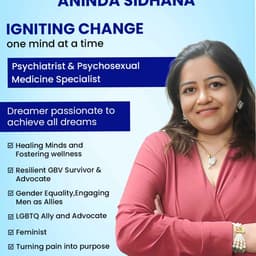

Mind Can Be Kind, Heart Can Be Brilliant
By Dr. Aninda Sidhana
Some words don’t just resonate—they reorganize how we see the world.
I almost missed this one. It didn’t arrive with fanfare. It wasn’t dressed in metaphor.
It felt lived-in.
> “Mind can be kind, Heart can be brilliant.”
In a world that often rewards sharpness over softness, this line stayed with me.
Because it reframes what strength can look like.
It challenges the assumption that kindness dilutes clarity, or that emotional intelligence weakens intellectual rigor.
It offers a third path—one that survivor communities have modeled for generations:
Compassion that doesn’t collapse.
Wisdom that doesn’t wound.
Boundaries that dignify, not punish.
In my work designing survivor-informed, healing-centered systems, I’ve seen how often kindness is treated as optional.
Systems prioritize efficiency, expertise, and authority—but rarely emotional safety.
The result is predictable: burnout, disconnection, and communities that feel unseen.
This quote disrupts that pattern.
It doesn’t just describe a possibility—it names a reality that many of us are already building.
A reality where care and cognition co-lead.
Where emotional literacy is not a soft skill—it’s a survival strategy.
Where kindness is not a detour from brilliance—it’s part of it.
Kindness, when practiced with boundaries and clarity, is not sentimentality. It’s strategic.
It builds trust, deepens engagement, and allows people to show up without fear of being diminished.
Brilliance, too, doesn’t have to be sharp or performative.
It can be expressed through listening, thoughtful design, and the ability to hold complexity without collapsing into abstraction.
This framework matters especially in survivor-led spaces.
Survivors are often asked to be articulate before they’re allowed to be safe.
They’re expected to justify their truths in systems that rarely offer dignity.
But when we honor both the mind and the heart—when we allow kindness and brilliance to inform each other—we begin to build infrastructures that dignify lived experience.
I’ve seen this play out in allyship work, especially with men.
Engaging them in gender equity requires more than awareness—it requires emotional clarity.
It requires the ability to hold discomfort without defensiveness, and to respond with accountability rather than control.
That’s where this quote becomes practical.
It’s not poetic—it’s structural.
It also reflects the leadership I see in survivor communities.
People who speak with precision and presence.
Who refuse to choose between being brilliant and being kind—because they know real healing requires both.
This quote stayed with me because it doesn’t just describe a value—it models a design principle.
It applies to psychiatric care, to advocacy, to leadership.
It reminds us that boundaries are not barriers—they’re bridges.
That emotional safety is not a luxury—it’s the foundation.
To anyone who’s ever been told they’re too soft, too sensitive, too relational:
You are not too much.
You are the architecture.
Let’s keep shaping systems where the mind can be kind,
and the heart can be brilliant—without apology.
- Technology
- Environment
- Digital Ambassador Events
- Digital Skills
- Survivor Stories
- South and Central Asia