
Paths of Practical Peace; Rivers of Quiet Courage
Oct 27, 2025
story
Seeking
Encouragement


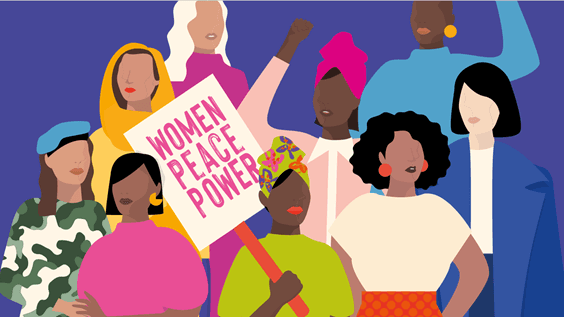
Photo Credit: Google
Women keeping the light
When I think of peace, peace for women is the safety to move freely, access to healthcare and education, and the power to make decisions about their bodies, livelihoods, and futures. It is protection from violence and discrimination, alongside legal systems that deliver justice rather than shame.
Peace means economic opportunity &social support that let women recover from crisis without being forced into harmful survival strategies. It is representation in peacebuilding and governance so that recovery and security plans reflect women’s lived needs and expertise.
Peace for women is daily dignity: quiet mornings without fear, schools that welcome girls, clinics that respect privacy, and communities that value women’s leadership.
It is an active, sustained process of removing barriers and amplifying women’s agency so that safety and prosperity are durable, not temporary.
I keep thinking of Zahra’s hands — calloused from fetching water that comes later than it used to, steady when she stitches a torn school uniform, quick when she hides the small radio her brother forbids. Her hands tell the story of every woman and girl I know: the work of surviving, the small rebellions that add up, the careful tending of hope even where the ground keeps shifting.
The First Tremor
When conflict arrives, it rarely announces itself as a single event. It is a series of tremors — a market that no longer opens at dawn, a teacher who no longer comes to class because the road is controlled, a father’s sudden silence when a neighbour is accused of collaboration. In Pakistan, these tremors are magnified by recurring natural disasters and chronic insecurity that reshape lives and livelihoods. Violence takes many forms, both inside and outside the home; it steals safety and the freedom to move, speak, and be seen. Women and girls are pushed to the margins where basic health care, schooling, and legal protections are harder to reach.
Daily Survival
Fatima wakes before dawn to walk two hours for water because the local pump was destroyed in clashes; she returns with children on her back and a list of bargains that might keep the family fed until the next storm. After the 2022 and 2023 floods, millions of women and girls were left needing urgent reproductive health services and protection from GBV, and many remain without steady support one year on. When formal aid is scarce or slow, women stitch networks from kin, neighbours, and distant relatives. They exchange labour, medicines, and the rare cash that circulates in a crisis. They hide their vulnerability to prevent added shame or retaliation, and they learn fast, which meetings to attend and which questions to answer.
Leadership in Crisis
Leadership has a thousand faces. In remote valleys, female jirgas & community councils are carving roles for women in dispute resolution; in urban neighbourhoods, women-run collectives create spaces for dialogue and livelihood; on national stage, women advocate press for better enforcement of existing laws. These leaders are not always visible in headlines, but they shape policy and practice: training police on gender-responsive procedures, running trauma-informed counselling, and negotiating the return of displaced families. Their leadership is practical; it is survival turned into strategy.
The Cost of Courage
Courage carries a toll. Activists face threats, survivors who seek justice meet stigma, and women who step outside traditional roles run the risk of social and physical reprisals. The emotional labour is relentless — keeping children reassured while holding meetings, accompanying a neighbour to court while working the night shift, burying grief so that the morning meal is on the table.
When a woman reports violence, she often becomes the focus of scrutiny rather than the perpetrator, and the pathways to protection and justice are fragmented and under-resourced. After floods and displacement, privacy disappears; overcrowded shelters increase the risk of abuse, and the health consequences for women — reproductive and mental health needs — are profound and ongoing.
Threads of Hope
Hope in these stories is not naive; it is tactical. It looks like a cooperative where women teach tailoring and reinvest profits into schooling; a group of mothers who map safe passages to the clinic; a former combatant who becomes a mediator in village disputes. Women form alliances across ethnicity and class to demand better services and inclusive recovery plans. They use storytelling — radio programmes, theatre, local poetry nights — to keep wounds visible and to humanize those who would otherwise be reduced to statistics. International partnerships and local NGOs amplify these efforts, but the driving energy comes from women who refuse to let crisis define them entirely.
A Map Forward
If you walk the lanes where these women live, you will see practical blueprints for change: accessible health services designed with women’s input; shelters that preserve privacy and dignity; legal aid that helps survivors navigate the courts; and educational programming that fits disrupted lives.
Investing in these measures is not charity; it is prevention. Meaningful inclusion of women in peace processes and recovery planning reduces cycles of violence and makes communities more resilient. Where resources are thin, supporting women’s collectives & community leaders multiplies impact because they already know the most effective, culturally attuned interventions.
Zahra’s hands have a rhythm now. She tends a small stall where girls trade stationery for maths lessons; she volunteers at women’s centre on alternate afternoons; she teaches younger children to read by the light of her kerosene lamp.
When the next tremor comes — and it will — her hands will steady the same way: moving first to shelter those she can, then to rebuild, and then to teach next child to hold a pencil steady against a shaking world.
These stories are not only stories of Pakistan’s women & girls, but they are the ones that linger — not as tales of victimhood but as records of endurance, strategy, and leadership.
They show that even in the shadow of violence and disaster, women are not merely surviving; they are rebuilding the path towards peace.
- Gender-based Violence
- Moments of Hope
- Our Impact
- Stronger Together
- Becoming Me
- Peace Is
- South and Central Asia