
125th International Labor Day (Labor Day in Cambodia)
Jan 21, 2015
story

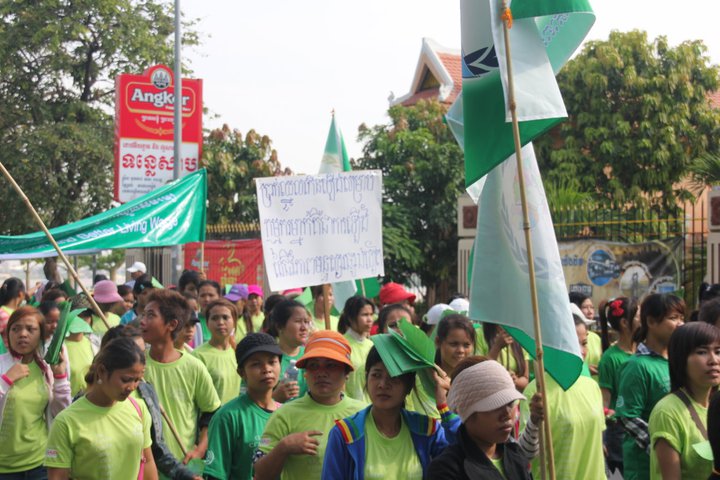
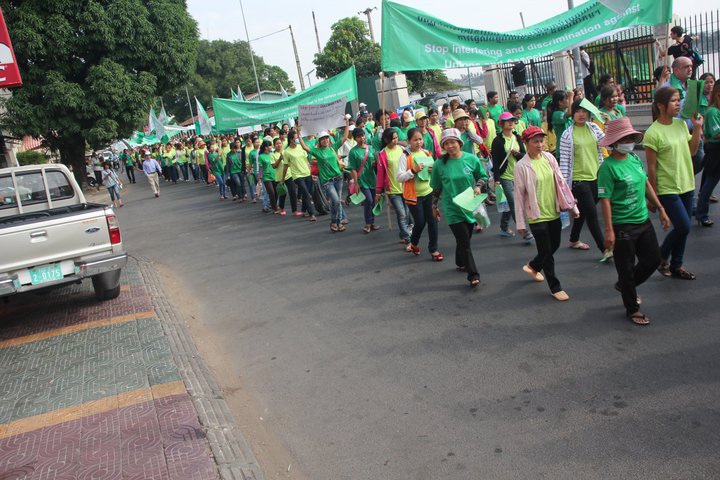
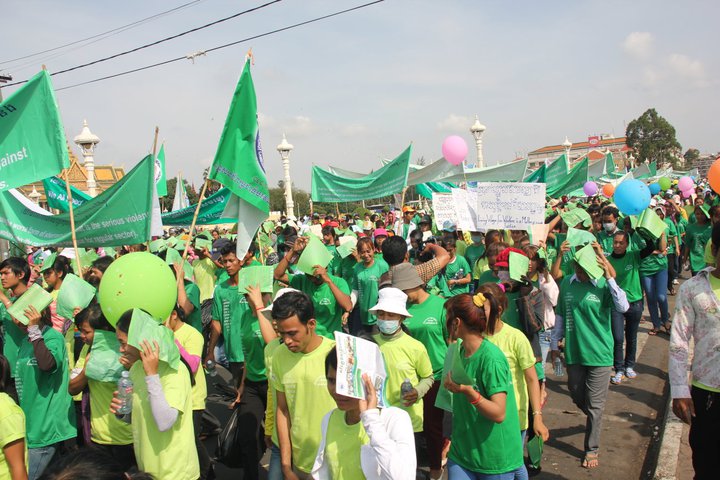
Labour Day is an annual holiday to celebrate the economic and social achievements of workers and is held throughout the world also. In Cambodia, International Labour Day is set to see thousands of workers hit the streets of the capital. The Cambodian Labour Confederation has sent a permission letter sent to Phnom Penh Municipal Hall last week to allow up to 3,000 people to parade through the capital on Sunday. CLC president Ath Thorn asked to use Preah Sisowath for the event, according to the letter.
On May 1st 2011, the Phnom Penh Municipal Hall provided entertainments to the public, in Morning 1st May 2011 from 7:30 A.M to 12: 30 PM at Wat Phnom, concert and comedy will be performed by our famous comedians Neay Koy band for the public. The capital hopes that all citizens, especially, factory employees will attend this joyful event to celebrate the anniversary together.
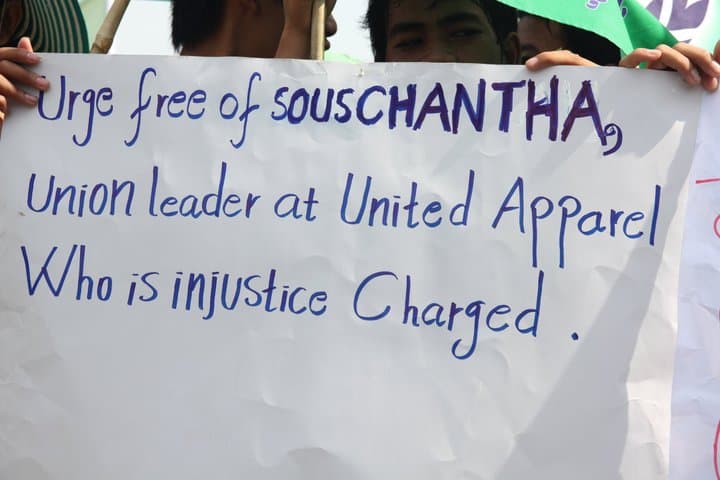
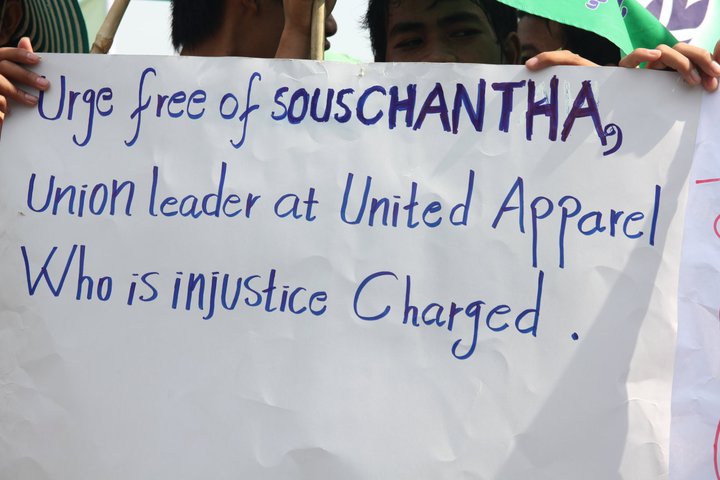
Between 2000 and 3000 workers marched down the street of Phnom Penh to commemorate the 125th Anniversary of International labor day. The march started from CDC (Cambodian Development Council) to the National Assembly where the union representatives submitted the petition to the MPs. The petition was aimed to, among many others, appeal for the right of the workers to have enjoyed the minimum wage in ASEAN countries, and to appeal for the release of Mr. Suos Chantha, trade union representative who is still under detention.
Also, On April 28th 2011, Cambodian Prime Minister Samdech Akka Moha Sena Padei Techo Hun Sen has urged further strengthening of measures to prevent labor disputes that could lead to strikes or demonstrations, saying these would affect the environment of investment and employments, public order and peacefulness of the workers and employees as well.
Prime Minister Samdech Techo Hun Sen was addressing a gathering in Phnom Penh on Thursday to mark the 125th International Labor Day. It was attended by more than 2,800 participants from the legislative and executive institutions, the trade unions, civil servants and employers, employees and workers.
Calling on all the concerned institutions to reduce the labor disputes and to settle them by peaceful means and mutual understanding, he said the factories and enterprises should be regarded as collective rice pots as when they could operate well and get appropriate profits, the owners would be able to improve the livelihood of workers and employees. He also requested all the concerned institutions, organizations and individuals to participate in implementing and strengthening the Labor Law and Law on Social Security Regime.
The good reputation of working conditions should be further maintained, the productivity and product quality of garments and shoes and other areas of production should be upgraded for competition and contribution to the national development.
Prime Minister Samdech Techo Hun Sen appealed for the consolidation of harmony among all employers, workers and employees who, according to him, are important and indispensable partners for social stability and economic growth.
He requested the Employment Consultation Commission to continue researching into national and international economic situations to use as a base for discussions with mutual understanding in reaching a compromise on the increment of minimum wage for garment and shoes making workers.
In July 2010, the monthly base salary for garment and shoes making workers was increased to US$61, which is a positive result with contribution from the ILO and the International Finance Corporation (IFC).
A report presented at the gathering indicates that there are now 518 garment and shoes making factories, or an increase by 49 factories as compared to that of April 2010. The total number of workers is now more than 347,300 with total salaries of over US$21 million a month.
Sources:
http://www.phnompenhpost.com/index.php/2011042948784/National-news/hun-s...
http://www.phnompenh.gov.kh/news-announcement-international-labor-day-1s...
The Cambodian Center of Human Rights
- South and Central Asia