
A Common War to Fight
Jan 21, 2015
story



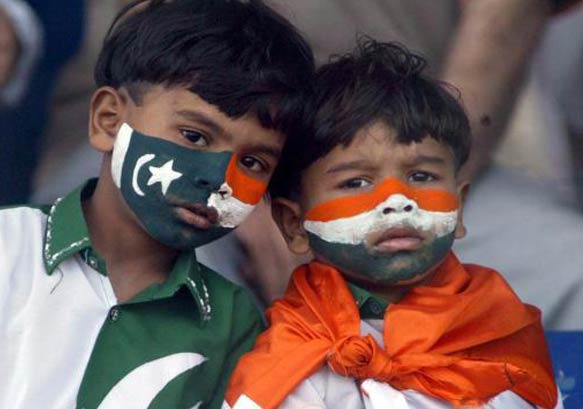
The Report by Thomas Reuters Foundation brings in a study claiming Pakistan and India as the third and the fourth most dangerous countries in the world for women. Though nothing unexpected, this disturbing piece of information makes me question their priorities. The legislations are in place against women crimes in both countries, but it still that fails to make them any safer for their women folk.
What adds fuel to the fire is that they are two nuclear powers, who are consumed with the obsession of building their arsenals in competition with each other. They both spend lavishly, a major chunk of their budgets, to gain state of the art ammunitions available in the arms market.
Despite their rants in the political corridors as ‘enemies’, my heart refuses to accept that. Being a person who has the privilege to call both the countries as her home, my common sense thinks otherwise.
Long before India and Pakistan parted ways, the communities of different faiths lived together for centuries. They shared their joys and sorrows with each other as neighbours. They visited each other on festivals, deaths, marriages with no sense of separation.
Even today the two communities continue to do the same at a personal level. Confrontations in the form of riots do occur. But if one digs out, it is always incited by the invisible vested interest. At an individual level the people continue to coexist and cooperate peacefully.
T
here are stories documented of neighbours, saving the life of a member of the other community, at the time of partition. One hears of hair raising stories of love and care for the neighbours of the other community during riots, even today.
In fact, the mutual attraction and interest at a common man level is phenomenal and fails to lose its steam. The people on the Pakistani side watch the Indian channels as enthusiastically and the craving for Indian costumes and accessaries throbs in majority of hearts Pakistani women. While the Indians embrace Pakistani artists and singers with open arms, they roll up into fits of laughter, at the stand up comedy of Moin Akhter or Omar Shareef. Indian girls fall head over heels on Afridi while Pakistanis are enamoured by Dhoni’s charm.
All this is not a surprise to me; after all they had a common past and still cannot deny to be having a common culture and a common (Hindustani) language.
Are they really enemies? Or is it just an illusion created by the vested interests. ?
The political issues between the two sides have to be settled across the table. The three wars and numerous tensions have proven that wars cannot solve problems. They never have and they never will. War cannot be even risked where 1.4 billion lives are at stake.
When war is not the solution why do they both still pile up arms?
Aren’t the nuclear arms an unnecessary luxury for the two countries? Can they really can afford to keep themselves militarily safe, when the reports rub in their faces the facts, that they are one of the most dangerous locales for their own women.
Should not the two countries be using the much needed expenditure on education, eradication of illiteracy and poverty, especially of the girl child?
Is there not a desperate need to prioritise their expenditures on making lives more liveable for millions of men and women who lead a mere day to day survival, in poor health and abject poverty?
I
s it not behaving like a desperate narcissist woman who spends on diamonds when her kids go hungry for milk?
Is it not a poor investment if we will never be able to use these ammunitions? Investing instead on human lives and especially on a girl child will give far more returns in the form of prosperity and peace in the region. Research has proven that the eradication of poverty is through investment in the women folk.
And will this investment not save both the countries from international embarrassments like the ones in the form of Thomson Reuters report?
As for the reduction of negative emotions and revival of warmth between the two peoples, I think just a jadoo ki jhappi (a warm magic hug) would suffice. Our festivities call for hugging be it on Eid or Holi. Hugging is culturally appropriate for us. The jadoo ki jahappi would be a lot more economical than a nuclear arsenal, in defeating aggression.
They need arms race to hug and not fight each other.
The war both countries need to fight, together, is the war against women crimes, not each other.
- South and Central Asia