
A Feminist Analysis of Gendered Mourning norms in different cultures
Jun 18, 2025
story
Seeking
Feedback


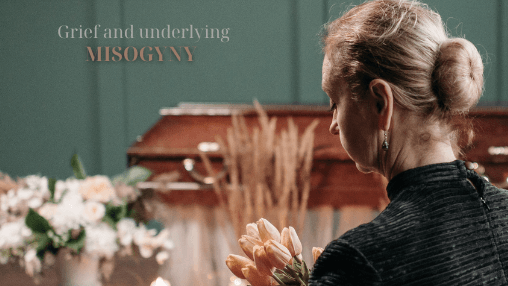
Created through Canva
This story features parts of an essay of mine that aims to further support the claim that misogyny is deeply rooted in various contexts of the human female existence, as formed and preserved through the lenses of the patriarchal structuring of our reality.
More specifically, it examines the sensitive topic of widowhood across different cultures and how certain traditional practices themselves, actually pose manifestations of misogyny, further preserving cognitive biases against women on a systemic level and therefore contributing to their already existing and everlasting oppression.
Kindly note that for the purpose of one of my assessments within the platform im attaching right here a video url from canvas, in which im using some music and editing additions on a presentation of some main points of this story, watching it is optional and kind off discouraged since I find it a bit embarassing as a shy person :)
Moving on with our main theme, It is essential to state that literature often fails to follow an intersectional and cultural sensitive framework. Some studies may reflect oversimplified and biased claims on specific groups deriving from western- centric and deeply rooted and underlying racist approaches.
It is suggested that we understand and respect the social, financial and historical context of the multidimensional phenomena of our research. Therefore, we should be aware of the limitations of the suggested data and recognise the possibility that certain claims might reflect cognitive biases of the researchers and the current wave of literature itself.
Thus, while publishing such information on a global platform I ask you to debuke such statements found in academic sources or add personal knowledge and experiences from your background of origin that could be added.
- Greece – Orthodoxy based
In my country of origin, Greece, widows wear black clothing in certain cases for many years or until they are in the process of marrying someone else. As Papadelos (2023) states some widows even wear black clothes for the rest of their lives, showcasing respect to their deceased husband and taking their widowhood status on their grave. This is something that respectively doesn’t exist as a social expectation when it comes to men mourning their loved ones.
Orthodoxy seems to have rules of specific mourning expectations applying only to widows, for example social isolation and 1-3 years of wearing black clothes. Therefore, men do not experience extensive shaming and the consequences of gossiping from their communities, when re-marrying and re-wearing colourful clothes as women do.
Why it is misogynistic: Such symbolic restrictions are applied only to women showcasing that even the vulnerable state of mourning comes with gender coloured restrictions. These female targetting restrictions further add up to the already existing cognitive biases against women and diminishes their sense of independency and identity outside of their marriages.
- India - Sati or Suttee
Sati poses one of the most extreme manifestations of misogyny as expressed through widowhood traditions. It specifically refers to the burning of the still alive woman on her deceased husband’s funeral pyre as a symbol of her pure dedication to him and a means of spiritually removing the sins of her whole family (Shamsuddin,2020). Sati was outlawed just in 1987, although there have been some reported attempt cases since it’s prohibition in rural areas of India (Ahmad, 2009).
Why it is misogynistic: Beyond the fact that in modern times such traditions would be classified as a systemic a femicide, Sati used to further reproduce the idea that women are nothing more than the extension of their husband, thus human beings of no identity and living purpose outside of their marriage. It was also used as a means of re-marriage and inheritance prevention in certain regions within India, highlighting once again the systemic prolongations and normalisation of misogyny around the globe.
- Sub Saharan, East and Southern Africa - widow cleansing
Widow cleansing refers to the tradition according to which a widow is forced to have unprotected sexual intercourses with a relative of her deceased husband or a paid "cleanser"to make her “pure” again after her husband’s passing. The most known practice is that one of the Luo community in Kenya, known as “tero chi liel in Dholuo” (Agot et al., 2010; Ambasa-Shisanya, 2007; Ayikukwei et al., 2008; Cruz, Mateus, & Dlamini, 2018; Okech, 2019; Perry et al., 2014).
There are however different variations of the custom based on where and from whom it is practised. Common regions and people of practice are Zimbabwe, Eastern and Southern Malawi, Mozambique, Eastern and Southern African regions such as the Luo community in Kenya, Aushi in Zambia and the Nkore tribe in Uganda. (Cruz, Mateus, & Dlamini, 2018; Kalinda & Tembo, 2010; Mabumba et al., 2007; Okech, 2019; Warria, 2018)
Why it is misogynistic: It demonises women for the death of their husband, considers them impure had they not have participated on the ritual, exposes them to severe mental and physical trauma as well as to high risks of contracting sexually transmitted diseases like HIV (Perry et al., 2014).
What about famous women in the West?
Misogynistic ideas around widowhood are not only global but also don't seem to discriminate when it comes to class and fame, as long as they target female individuals.
Here are some, edited so as to obtain anonimity, comments retrived from TikTok videos posted online following a rumor targetting Vanessa Bryant, the ex wife of the famous Basketball player Kobe Bryant who passed away in 2020. With the rumor being that she is allegedly getting married to another person.



While in different parts of the world and under different religious principles, widowhood related practices and norms can possibly reflect patriarchally influenced values. Future research should not only focus on addressing the existence of misogyny in various contexts but also examine such topics with culturally sensitive lenses.
I consider the use of culturally adjustable tools and direct interviews with the indigenous populations a suitable and efficient addition to the current and already existing framework.
If you are interested in reading my whole essay, kindly message me asking for it, as it contains much more in depth information.
Thank you for your time, Eleni <3
- Human Rights
- Gender-based Violence
- HIV/AIDS
- Widows' Rights
- Indigenous Rights
- Behind the Headlines
- Training - Basic Digital Skills
- Global