
Beyond the Rankings: Reclaiming the Pulse of Gender Progress
Aug 9, 2025
story
Seeking
Encouragement
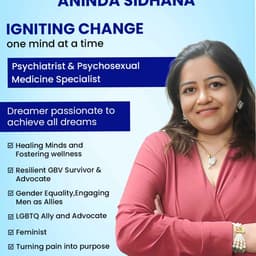
By Dr. Aninda Sidhana
Psychiatrist | GBV Survivor | Gender Equality Advocate
✨ Excerpt
Global gender indices often flatten the very complexity they seek to measure. This reflection threads survivor-centered clarity with policy insight—calling for metrics and media that honor care, courage, and contribution. As a psychiatrist and survivor, I explore how visibility is not vanity—it’s survival
“We measure what we value. And too often, we value what we can easily count.”
At the Gender Policy Symposium, a quiet revolution unfolded—not in rhetoric, but in recalibration. The report The Global Gender Gap Index: The Need for Contextualized Insights dares to ask:
What if our metrics have been missing the very heartbeat of transformation?
India’s maternal mortality decline—from 498 (1990) to 80 (2023)—is not just a statistic. It’s a story of resilience, systems change, and survivor strength. Yet global indices rarely pause to listen.
Female literacy rising to 70% is progress. But what of the girl who walks miles to school? The woman who teaches under a leaking roof? The barriers that remain invisible to rankings?
And what of the 1.4 million elected women in Panchayati Raj—leaders whose agency is erased by metrics that privilege national legislatures? Or the rural women whose labor sustains families, yet disappears in economic data?🧠 From the Psychiatrist’s Desk: Visibility as Survival
As a psychiatrist, I’ve spent years listening to what systems overlook.
I’ve witnessed how invisibility corrodes dignity—how the uncounted labor, the unrecognized leadership, the unnamed grief of women becomes internalized as silence.
In clinical rooms, I meet survivors whose strength is misread as stoicism, whose pain is pathologized instead of contextualized.
And in policy spaces, I see the same pattern: metrics that flatten complexity, rankings that erase resilience, data that forgets the body it claims to represent.
“When we fail to count care, we fail to care about what counts.”
Healing is not just personal—it’s political.
When a woman’s unpaid labor is excluded from economic data, it sends a message: your contribution is invisible.
When her leadership in local governance is dismissed by global indices, it says: your agency is peripheral.
When her trauma is reduced to a statistic, it implies: your story is too complex to matter.
But healing begins when we name what was silenced.
When we build metrics that reflect lived experience.
When we honor emotional labor, caregiving, and community leadership as central—not supplementary—to progress.
📊 What the Report Reveals
This report doesn’t reject global accountability—it reimagines it. It calls for metrics that reflect:
- Unpaid and informal labor, through India’s Time Use and Labour Force Surveys
- Decentralized leadership, beyond national parliaments
- Access and inclusion, not just enrollment and outcomes
- Longitudinal impact, not static annual rankings
It critiques the Global Gender Gap Index for overlooking structural inequities and lived realities—especially in the Global South. India’s ranking in the 2025 Global Gender Gap Report fell to 131st out of 148 countries, despite significant gains in education and health.
🩺 Trauma-Informed Metrics: A New Lens
In trauma-informed care, we ask:
- What happened to you?
- What systems failed to protect you?
- What strengths helped you survive?
Imagine if our global metrics asked the same.
Imagine if gender indices measured not just outcomes, but access.
Not just representation, but recognition.
Not just progress, but presence.
India’s maternal mortality decline is not just a health achievement—it’s a testament to survivor-led systems change.
The rise in female literacy is not just a number—it’s a mosaic of stories: of girls who walked miles, of mothers who taught under leaking roofs, of communities that chose education over silence.
“Visibility is not vanity—it’s survival. And survival deserves to be counted.
📰 Media Representation Matters
Too often, women’s contributions are framed as anecdotal, emotional, or exceptional—rather than structural, political, and essential.
We need storytelling that reflects not just struggle, but strategy.
Not just pain, but power.
Let’s challenge the global gaze.
Let’s build metrics and media that center lived experience.
Let’s move from exclusion to presence.
From silence to survivor-centered clarity.
🌍 A Call to Our Global Community
To my fellow advocates, survivors, and storytellers:
Let’s demand metrics that reflect our truths.
Let’s shape policy that listens before it ranks.
Let’s build media that dignifies, not dramatizes.
Because when we count what truly counts, we build a world where every life is visible.
#InclusiveMetrics #SurvivorVoice
s #GenderJustice
#PolicyWithPresence #MediaMatters #EmotionalLiteracy
#GlobalSouth #NarrativeMedicine #TraumaInformedCare
- Human Rights
- Gender-based Violence
- Digital Ambassador Events
- Stronger Together
- Global