
Book recommendation
Jan 21, 2015
first-story


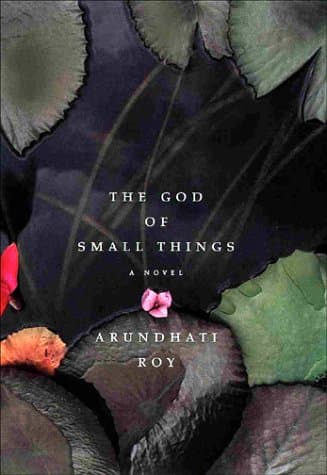
I read this book a year ago. And every page was delicately written by Arundhati Roy.
I loved it. IT was a perfect read, the plot is perfect, the story is nice. But what is more relevant here is to read about how Indian society behaves.
this is what is written on wikipedia about the book:
Indian history and politics shape the plot and meaning of The God of Small Things in a variety of ways. Some of Roy's commentary is on the surface, with jokes and snippets of wisdom about political realities in India. However, the novel also examines the historical roots of these realities and develops profound insights into the ways in which human desperation and desire emerge from the confines of a firmly entrenched caste society. Roy reveals a complex and longstanding class conflict in the state of Kerala, India, and she comments on its various competing forces.
For example, Roy's novel attacks the brutal, entrenched, and systematic oppression at work in Kerala, exemplified by figures of power such as Inspector Thomas Mathew. Roy is also highly critical of the hypocrisy and ruthlessness of the conventional, traditional moral code of Pappachi and Mammachi. On the opposite side of the political fence, the Kerala Communist Party, at least the faction represented by Comrade Pillai, is revealed to be much more concerned with personal ambition than with any notions of social justice.
The story is set in the caste society of India. In this time, members of the Untouchable Paravan or Paryan were not permitted to touch members of higher castes or enter their houses. This extreme form of discrimination was deeply embedded over centuries in the Indian society starting from the time of Portuguese Colonialism during which Christianity/Roman Catholicism became a major religion in Kerala. The Second decree of Synod of Diamper organised by Portuguese Archbishop of Goa, Aleixo de Menezes which allowed Untouchability to be practised by Christians of Kerala.[3] Portuguese soldiers who married Indian ladies and their offsprings were held at high esteem. The Untouchables were considered polluted beings. They had the lowliest jobs and lived in subhuman conditions. In India, the caste system was considered a way to organize society. Arundhati Roy's book shows how terribly cruel such a system can be as the oppressors were immigrants from Persia/Iraq during the rule of Venads Dravidian-Tamil king Ayyanadikal Thiruvadikal in the ninth century as mentioned in the Tharisapalli plates.
Along with the caste system, readers see an economic class struggle. The Ipes are considered upper class. They are factory owners, the dominating class. Mammachi and Baby Kochamma would not deign to mix with those of a lower class. Even Kochu Maria, who has been with them for years, will always be a servant of a lower class.
However, Roy shows other types of less evident discrimination. For example, there is religious discrimination. It is unacceptable for a Syrian Christian to marry a Hindu. In more than one passage of the book, the reader feels Rahel and Estha's discomfort at being half Hindu. Baby Kochamma constantly makes disparaging comments about the Hindus. On the other hand, there is discomfort even between the Christian religions, as is shown by Pappachi's negative reaction when Baby converts to Catholicism.
Chacko suffers more veiled racial discrimination, as it seems his daughter also did. His English wife's parents were shocked and disapproving that their daughter should marry an Indian, no matter how well educated. Sophie Mol at one point mentions to her cousins that they are all "wog," while she is "half-wog."
The Ipes are very class conscious. They have a need to maintain their status. Discrimination is a way of protecting one's privileged position in society.
For these reasons I suggest and recommend this book for it will give you and idea of how Indian society is through the eyes of an Indian woman.
- First Story
- Latin America and the Caribbean