
Breaking the Myths: Feminine and Masculine Are Not About Gender
Nov 3, 2024
story
Seeking
Feedback


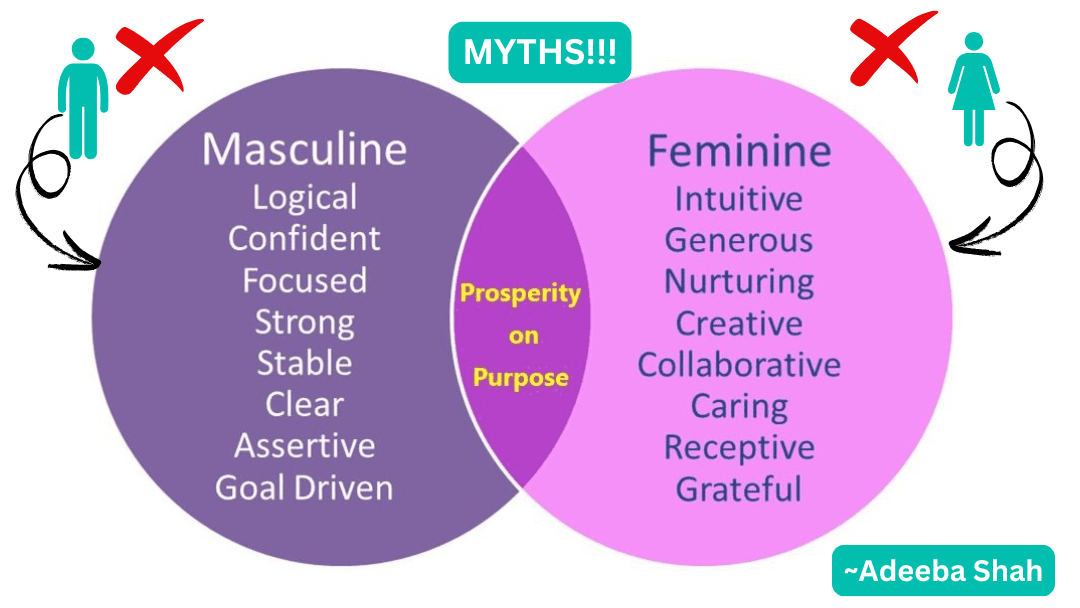
Photo Credit: Adeeba Shah
Myths on Feminine and Masculine
Imagine this: You’re sitting in a classroom, listening to the instructor go over concepts you think you already know—feminism and masculinity. Most people associate these words with gender, right? Feminine, we assume, means “female” and masculine, “male.” But as my instructor’s words unfolded, it became clear just how much we’d been missing. It turns out, we had been looking at it all wrong.
The Real Meaning Behind Feminine and Masculine
In that International Business class, we dove into the origins and true meanings of “feminine” and “masculine,” and it was a bit of a revelation. Feminine, at its core, isn’t about being a girl or a woman; it’s about qualities like softness, gentleness, and openness. Masculine, on the other hand, isn’t limited to men—it represents strength, resilience, and assertiveness.
This shift in perspective changes everything. Instead of boxing us into “girl traits” or “boy traits,” it frees us to understand that both feminine and masculine qualities live in all of us. These aren’t qualities restricted to one gender—they’re ways of being that anyone can embody.
How Society Shaped the Misunderstanding
Growing up, we’re subtly taught that softness is “for girls” and strength is “for boys.” These ideas are reinforced in the media, in families, and even in the playground. Phrases like “boys don’t cry” and “she’s too tough for a girl” sneak into our language, shaping our worldview. But these outdated beliefs are limiting.
When we put softness and strength into separate gendered boxes, we’re missing out on fully developing all parts of ourselves. A man who shows kindness or gentleness isn’t “weak.” Likewise, a woman with assertiveness and ambition isn’t “too aggressive.”
Real-Life Examples of Feminine and Masculine Traits
Think of a caregiver—someone who listens, nurtures, and supports others through difficult times. Those are traditionally “feminine” qualities, but think about how many men fill these roles. Now picture an athlete or a CEO who shows resilience, focus, and strength—masculine traits we often assume. But are they only men? Of course not! Women embody these traits every day.
Understanding feminine and masculine as qualities instead of gender roles can help us embrace and respect all aspects of ourselves. No one needs to suppress their nurturing side or their assertive side based on gender.
Why We Need Both Feminine and Masculine
When we embrace both sides, we achieve balance. Imagine a leader who combines both: strong enough to make tough decisions (masculine), yet gentle and empathetic when leading their team (feminine). This is a powerful combination. Balancing feminine and masculine qualities creates well-rounded, emotionally intelligent people who can adapt to different situations.
Embracing both sides lets us move beyond rigid expectations. It enables men to be caring fathers and women to be confident leaders—without judgment or labels. We all benefit when people are allowed to express themselves fully.
Breaking Free from the Labels
My International Business class taught me to rethink what it means to be “feminine” or “masculine.” Feminine doesn’t mean “girl,” and masculine doesn’t mean “boy.” Instead, these qualities are like colors on a palette, waiting for us to choose and blend to create a fuller version of ourselves.
So, next time you hear someone say “that’s a feminine trait” or “he’s being too masculine,” remember: these qualities don’t belong to one gender. They’re available to all of us. Embrace them, blend them, and let them enrich your life.
In the end, understanding the true meanings of feminine and masculine opens doors—to growth, balance, and freedom from labels. And maybe, just maybe, we can help others see the full picture too.
What's your opinion on this? Do you also recognize feminine as a 'girl' or masculine as a 'boy'?
- Gender-based Violence
- Human Rights
- Positive Masculinity
- Education
- Leadership
- Behind the Headlines
- Global