
Breaking the Silence: My Journey from Shame to Empowerment
May 6, 2025
story
Seeking
Visibility
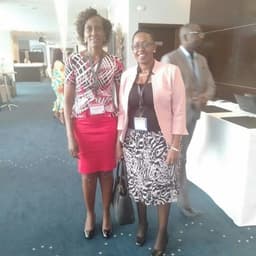
Photo Credit: Kristine Yakhama
I still remember the day I got my first period. I was 12 years old, sitting in a classroom in Moi Forces Academy. When I went to the restroom during a break, I saw the unfamiliar stain on my panty—deep red and confusing. I didn't know what was happening to my body. I panicked.
Back then, menstruation was not something we talked about openly. Not at home. Not at school. Not even among friends. When I went home that day and told my mother, she handed me a sanitary pad, told me I was now a woman.There was no explanation, no biology lesson, and certainly no reassurance.
I spent that first period hiding in shame. My sanitary pad leaked often, and I didn't know how to wash my panty properly without anyone seeing. I missed school because I was scared and unprepared. I remember feeling dirty, like I had done something wrong. That’s when the stigma started to settle in my bones.
But this story doesn't end there.
Over the years, I started questioning the things I was told. Why was I impure when I was bleeding? Why did boys never have to hide anything about their bodies? Why did I have to whisper when I asked for a pad at the shops?
My real turning point came during college. I joined a student organization focused on gender equity. One of our first projects was a menstrual hygiene campaign on college .It was the first time I heard someone say the word “period” into a microphone without shame. The first time I saw free pads being distributed openly instead of wrapped in newspaper and shoved into bags. And the first time I met someone who identified as a trans man who still got periods, challenging everything I thought I knew about menstruation and gender.
That experience cracked open something inside me. I realized how universal yet uniquely silenced our stories were. Whether you were a girl in rural India, a non-binary student in urban Nairobi, or a woman with disabilities in Canada, the themes were the same: silence, shame, struggle. But also, resilience.
In 2019, I co-founded a grassroots initiative called “PadPath”—a community-based project that educates young menstruators in marginalized communities. We started with one school, where we held workshops on menstrual health, distributed eco-friendly pads, and talked honestly about periods, puberty, and pain. We didn’t just talk to girls—we brought in boys, teachers, and parents too. Because the change we wanted couldn’t happen in a vacuum.
At our first session, a 14-year-old girl came up to me and whispered, “I didn’t know I wasn’t the only one who felt scared.” Her words stayed with me.
Over time, we expanded. We began working in refugee camps, where menstruation was often an even greater burden due to lack of access to water, privacy, or hygiene products. We also collaborated with artists and tech developers to create a mobile app in local languages that offers period tracking, educational resources, and a safe space for questions.
One of the most powerful moments in this journey happened during a workshop in a rural village. An elderly woman came in at the end of the session. She had never gone to school, had birthed seven children, and had never spoken about menstruation in public. But that day, she stood up and told the girls, “I was told to hide in a shed when I bled. But you don’t have to do that anymore.”
That, for me, is the heart of menstrual dignity—not just giving people the tools they need, but giving them the freedom to speak, to ask, to question, and to heal generational silence.
Celebrating Menstrual Hygiene Day each year is no longer about pity or charity. It’s about justice. It’s about health equity. It’s about reclaiming our bodies and narratives. Periods are not a problem to solve—they are a part of life to be understood, respected, and normalized.
Today, when I get my period, I don't hide. I use a menstrual cup, talk openly about cramps, and help young menstruators see their bodies not as burdens, but as beautiful, strong, and worthy. I also work with policymakers and local governments to include menstrual health education in school curriculums—not as a side note in biology, but as a right.
I still face challenges. Stigma doesn't disappear overnight. But what has changed is my voice. I now speak without shame. And in doing so, I’ve seen countless others find their voices too.
This is my period story. It began in silence, but it continues in strength.
Let’s keep sharing. Let’s keep breaking the stigma.
- Salud menstrual
- Global