
Check your Food Miles Water footprints when cooking
Apr 28, 2022
story


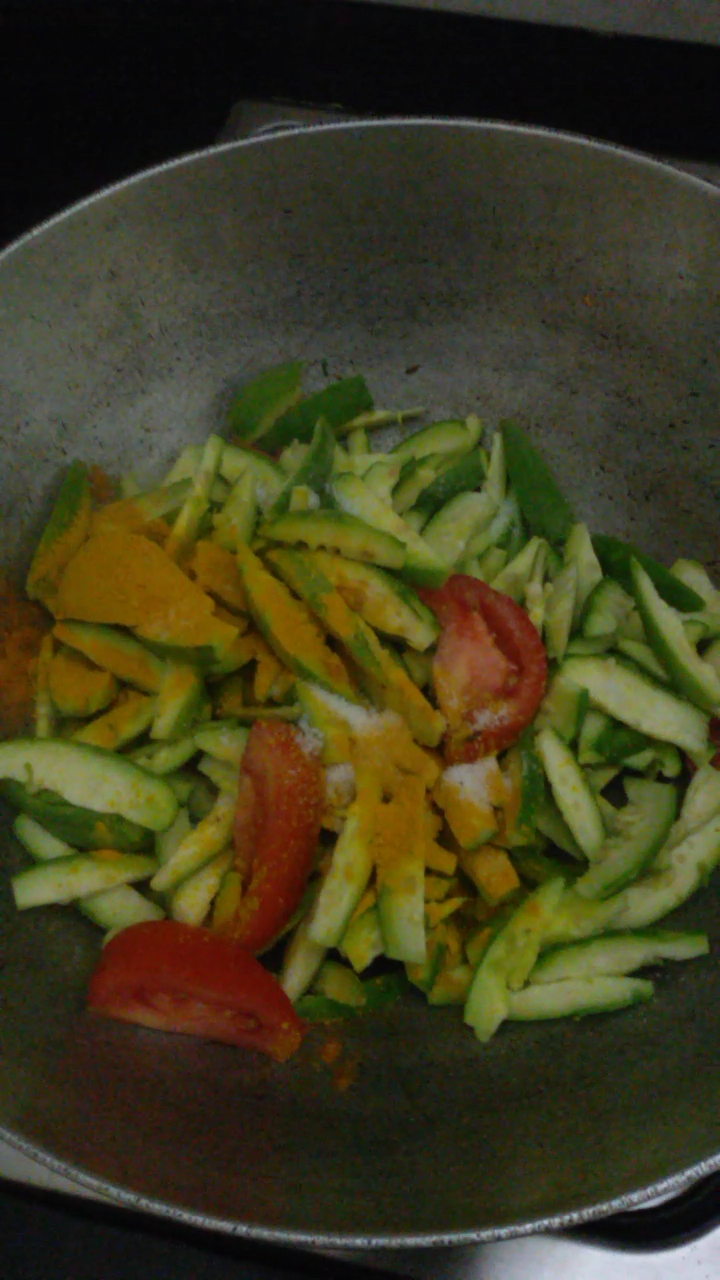
Check your FOODMILES and WATER FOOTPRINTS when you feed your family at home.
Elsie Gabriel
Mentor Climate Reality/Founder Young Environmentalists NGO.
Iam Elsie Gabriel from Mumbai India,I usually make vegetables at home four days a week.These vegetables are local and may not even be found else where like Drumstick leaves which cure high pressure, Pumpkin flower crispier and banana flower curries, but today in my video I have made a ‘Patal’ stir fry[small type of gourd] bought from the farmers in the local market and cooked in water sprinkled over the dish, with a lot of Tumeric and pepper which is healing and anti bacterial. The vegetable itself enhances roughage and has plenty of vitamins. I have outlined as an environmentalists being a woman who cooks and decides what to cook plays a very vital role in our fight against climate change.
What we eat makes a big climate impact. Understanding the labour, travel, manpower, electricity, water, packaging and resources that go into producing our meals can make us more aware of the relationship between the food we put on the tables for our family and climate change. We as women who decide daily what to cook and when to cook, have the power to halt climate change through our daily significant changes at home as Mothers, Housewives, Cooks and caretakers and so on. There are several aspects that contribute to food's climate impact, for example which country does it come from, It is nutritious in its natural form or has it been packaged, how low on the food chain it is, how much energy is used to produce it, if food is grown organically or with chemical fertilizers, and how far it has to travel before it gets to the family table. Did it contribute to Airplane emissions, trucks and pollution? The distance between the farm to plate should be as short as possible. Food that is grown closer to home will therefore have fewer transportation emissions associated with it, and also be fresher and support local farmers. Specially in India specifically in my state of Maharashtra Farmers commit suicide because of loss of income ,if we in India can support what is grown by our local farmer we have honoured his hard work and have respect for our food which has grown on our own soil. And also the distance food travels decreases, so does the need for processing and refrigeration to reduce spoilage.
While it's good to buy locally grown food for many reasons, 'food miles' which is the distance food is transported from the time of its production until it reaches the consumer actually make up a relatively small percentage of the overall carbon footprint of food — approximately 11% on average, according to research. How the food is grown makes up a much larger percentage — roughly 83%. So it all adds up eventually. Every effort counts.
- Environment
- Girl Power
- Health
- South and Central Asia