
chemmani mass grave
Jun 29, 2025
first-story
Seeking
Connections

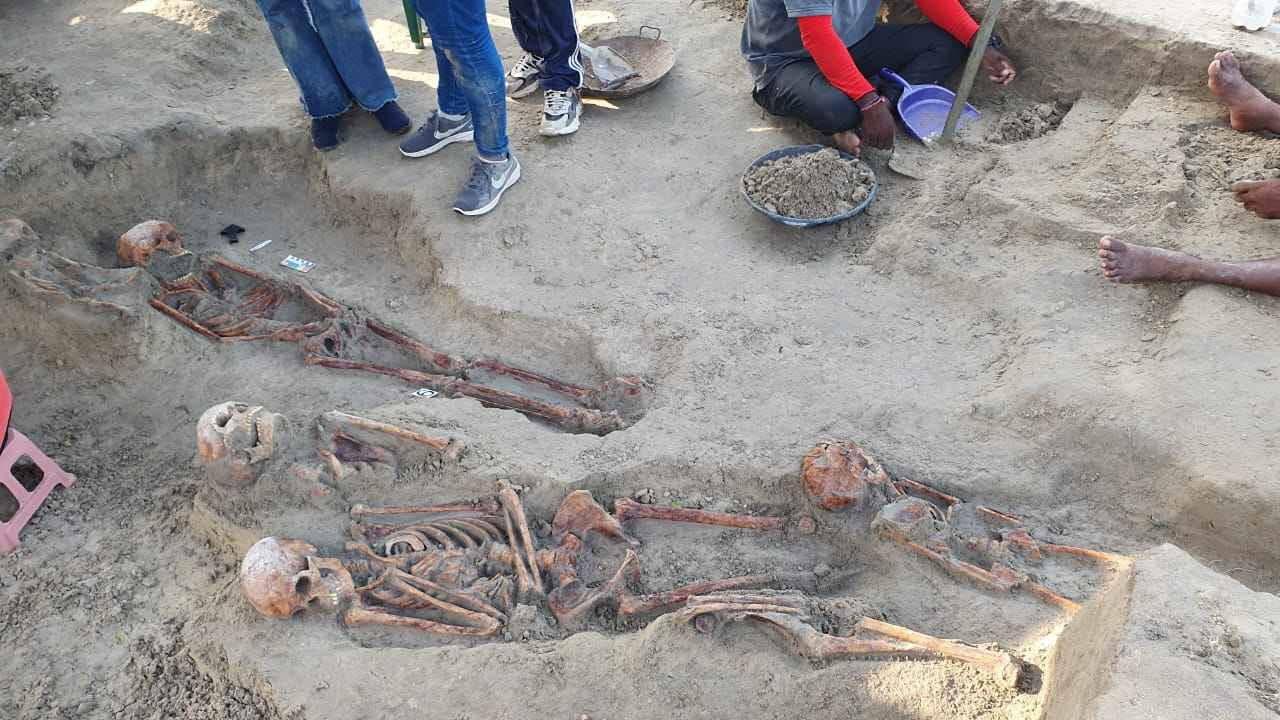
Photo Credit: Mayurapriyan - Jaffna
chemmani mass grave
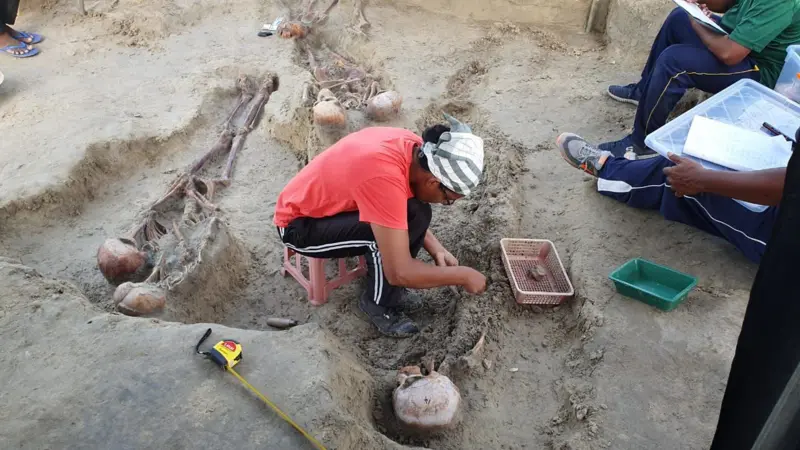
Chemmani Mass Grave in Jaffna
By Rekha Nilukshi Herath
On June 23, the Association of the Relatives of the Enforced Disappeared in the North and East, together with several civil society organizations in the Northern Province, launched a protest at the Chemmani mass grave site in Jaffna. They demanded a fair investigation into the discovery of human skeletal remains near the Chemmani Hindu cemetery.
The protest, held under the theme "Unfading Light," began near the entrance to Jaffna, close to the Chemmani area.
This demonstration was organized from June 23 to 25, as the Jaffna Magistrate's Court had ordered the resumption of the third phase of excavation at the Chemmani site on June 26.
According to Vaishnavi Shanmugananthan, a lawyer and a key organizer of the protest, the ongoing discovery of skeletal remains without any government action to resolve the issue led them to demand international attention to the Chemmani mass grave and justice for the Tamil people.
She further stated that storytelling sessions, documentary screenings, and the presentation of petitions related to this issue to a senior United Nations official scheduled to visit Jaffna were also part of the protest.
On February 20, 2025, several human skeletal remains were first discovered by a construction team during development work at the Chemmani Hindu cemetery area in Jaffna. Following this, the police in Jaffna were informed of the incident by the responsible officials.
Under an order from the Jaffna Magistrate's Court, an excavation team led by senior archaeologist Prof. Raj Somadeva from the University of Kelaniya, together with the Jaffna hospital’s forensic medical officers, court officials, local police, and bomb disposal officers, was appointed to carry out the excavation.
Initial Excavation Halted Due to Rain
The Jaffna Magistrate's Court had ordered that the excavation be conducted under expert supervision. Accordingly, from May 15 to 17, 2025, the first phase of excavation took place, during which fragments of two human skulls were unearthed. However, due to bad weather, the initial phase was temporarily halted.
Second Phase: Remains of 19 Individuals Found
The second phase of excavation took place from June 2 to 7 under the supervision of the Jaffna Magistrate. During this period, skeletal remains belonging to 19 individuals were discovered. These remains were located about three feet below ground level.
Experts informed the Magistrate that further examination was needed to determine the time period and identities of the remains. They requested an additional 45 days to continue the excavation.
The court ordered that the recovered remains be securely stored under the supervision of forensic pathologist Dr. Sellaiya Pranavan at the Jaffna Hospital. On June 9, the court granted permission to proceed with further excavations.
Voices of the Mothers
Vairamuthu Niranjandevi, who traveled from Kandival in Kilinochchi to participate in the protest, shared her sorrow “I had seven children. Three of them went missing in 2009. My son disappeared on March 22, 2009. My eldest son, Vairamuthu Vaikuthan, went missing on November 2. On December 5, my daughter, Vairamuthu Pradhayani, also disappeared. For 16 years, we have been searching for them. We even went to the Office of Missing Persons, but they said they had no information. I don’t know if we’ll ever find our children.”
Surenadren Prameshwari, from Iranamadu, Kilinochchi, said her son Surenadren Sudhakaran disappeared while receiving treatment in a hospital:
“During the final stages of the war on May 14, 2009, my son’s leg was injured. We cared for him for two days and admitted him to the hospital on May 16. We were taken to a camp in Vavuniya, where we asked about his condition, but no one told us anything. We searched hospitals and reported to the commissions, but no information came.
When we were resettled in Iranamadu, two patients who were treated with my son at the temporary hospital on Seetha Medical Road said he received treatment for seven days but disappeared on the eighth. The military took him for treatment. There are eyewitnesses who saw this. So how did he disappear? Why didn’t he return? It’s been 16 years, and we still don’t know what happened to him.”
UN Human Rights Chief Welcomed in the North
UN High Commissioner for Human Rights Volker Türk arrived in Sri Lanka on June 23 for an official visit—nine years after the previous visit by Zeid Ra’ad Al Hussein in February 2016. According to the UN Human Rights Office, Türk was expected to hold discussions on a wide range of human rights concerns, including accountability, reparations, and justice for victims of rights violations.
On June 23, Türk met Prime Minister Dr. Harini Amarasuriya at the PM’s Office. A press release stated that the Sri Lankan government informed the UN official of its attention to social transformation, institutional reform, and protection of human rights.
Türk also met Foreign Minister Wijitha Herath, Opposition Leader Sajith Premadasa, and other Members of Parliament. On June 25, he visited Trincomalee, where he interacted with victims of rights violations. Many people there carried placards demanding land return, freedom for political prisoners, action on mass graves, and justice for the disappeared.
Speaking to the media, UN spokesperson Jeremy Laurence said, “The High Commissioner has paid close attention to the victims’ concerns.”
Minister Faces Protesters’ Wrath in Chemmani
Fisheries Minister Ramalingam Chandrasekaran faced a severe backlash when he visited Chemmani to pay respects by offering flowers. Surrounded by an angry crowd, the minister was verbally abused and nearly attacked. He was seen abandoning his slippers at the protest site and fleeing.
Protesters accused him of betrayal, shouting “You are part of the same government that fought the war with Mahinda. Don’t come here! You are a traitor!”
The rejection of Minister Chandrasekaran highlights that war-related betrayals and lost loved ones are still remembered by the people. This may also explain why parties like the National People's Power (NPP) struggle to win votes in the North, due to past decisions by party leaders to support the war.
- Human Rights
- First Story
- Widows' Rights
- Survivor Stories
- Member Introductions
- Behind the Headlines
- South and Central Asia