
Closing the divide beyond STEM classrooms
Apr 25, 2024
story
Seeking
Visibility


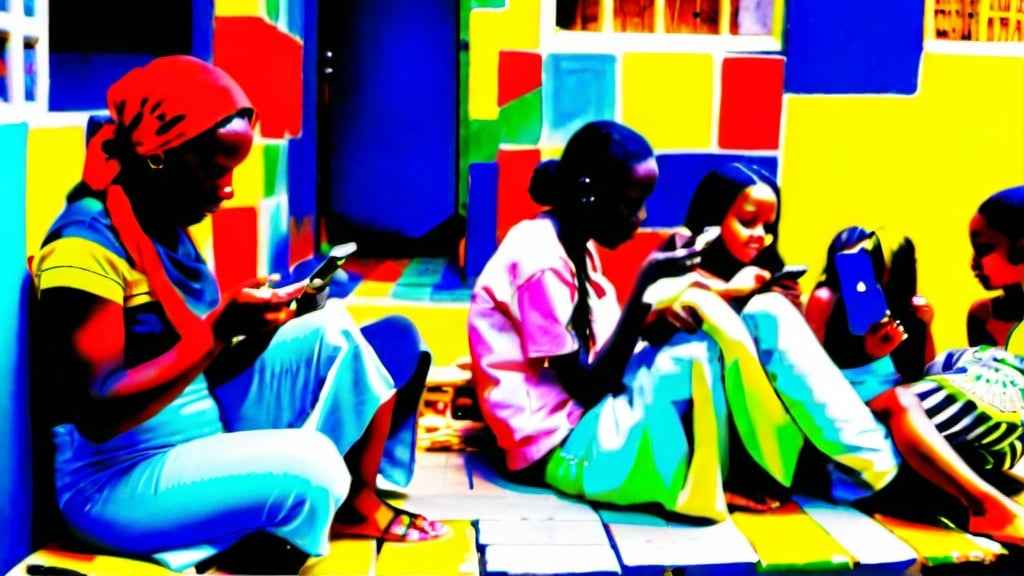
Photo Credit: Edna (Openart AI)
AI generated image of girls using smart phones
In our last community workshop, the participants were required to fill in some self- evaluation questionnaire. As part of the workshops, we are working the women to assess their needs, capacities and prepare for where they want to be moving forward.
These forms were sent to me online and were supposed to be filled as such- very simple and straightforward questions that could take less than five minutes.
But we faced a big challenge: almost all the participants cannot use digital technologies; and just a handful possess smart phones which could be used for the exercise.
So what was the solution? Get printable version of the questionnaire and have them filled manually, then come back and feed the 20 forms on an excel sheet. The challenges of digital illiteracy and lack of access are time and resource consuming!
Today is International Girls in ICT Day! This year's Girls in ICT Day celebrates the theme of 'Leadership', highlighting the crucial need for strong female role models in STEM (Science, Technology, Engineering and Math) careers.
Some 63% of the world's total population, a total of 5 billion people, use the Internet today. Digital technologies have advanced more rapidly than any innovation in our history – reaching around 50% of the developing world's population in only two decades and transforming societies.
Digitalization is one of the greatest transformative opportunities of our time. Yet too few people can truly access its benefits. Despite improvements, in 2022, only 36 percent of Africa's population had broadband internet access. Though mobile internet availability has increased in the continent, broadband infrastructure reach and the quality of available services still lag other regions. Furthermore, Africa has one of the widest digital gender gaps worldwide, with the greatest disparity between men and women using the internet (35 percent versus 24 percent in 2020, according to the International Telecommunication Union (ITU)). Divides in the availability of high-quality digital services persist in all countries, particularly in remote and poorer subregions. This is compounded by Africa’s large usage gap due to several factors, including major affordability constraints, the limited availability of locally relevant content and inadequate digital literacy and skills (The World Bank)
Factors such as low literacy and income levels, geographical restrictions, lack of motivation to use technology, lack of physical access to technology, and digital illiteracy contribute to a digital divide, resulting in nearly 2.9 billion people around the world (an estimated 37% of the population), particularly women and girls, lacking a telephone, computer, or internet access (wilsoncenter.org).
As we mark this year’s International Girls in ICT Day, it is imperative for us in the women's and feminist movements to accelerate efforts to bridge the long standing digital divide. We need to consider how more funding can be moved to communities to catalyze access to internet, computers, smart phones, and innovate ways to make them sustainable.
Access to higher and continuous education will also be made easier if more girls and women can have internet access closer home. Rural economies can also be built on e-commerce for farm products to get direct markets and cut down cost of transportation and exploitation by middle men. The ripple effect of stronger economic growth will also propel access to digital technologies in these left out communities.
Bridging the digital divide requires more than academic qualifications in STEM careers as everyone will need to have some level of access and literacy to utilize the technologies.
The bridge that we need to build on the technology highway should lead to more destinations than formal classrooms.
- Economic Power
- Technology
- Education
- Girls in ICT Day
- Global