
COFAPRI INVOLVES DRC RURAL WOMEN IN ECONOMIC EMPOWERMENT
Feb 25, 2025
story
Seeking
Action


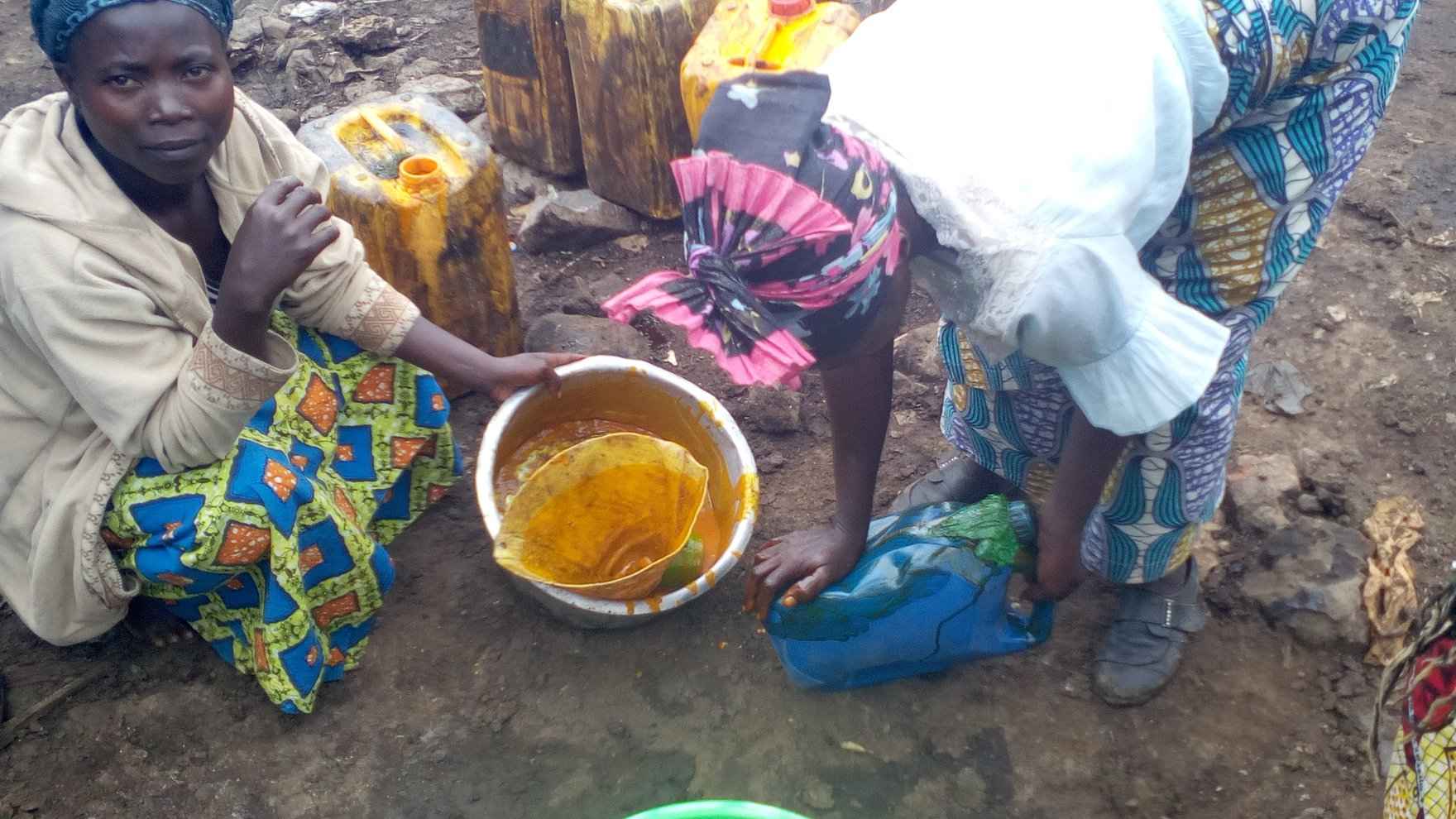
COFAPRI women in small business (retailing palm oil in Katana village)
COFAPRI empowers rural DR Congo women economically to help them overcome violence. The women in rural DR Congo have been experiencing more violence towards them since the advent of the unending wars the country has been experiencing since 1996.
These wars sadly worsened their existing situation, which was already alarming due to local traditions that discriminate against the woman and her daughter. Women and girls have little or no access to school education like men and boys do; according to cultural law, the former cannot inherit their parents’ property. Cultural laws carry a lot of weight, especially in the rural regions—and this means that women have no right to own a plot of land, have no word in public, are mostly obliged to remain in the kitchen cooking and often not allowed to do business or work outside their homes, etc.
All these factors have caused the rural women and girls in the DR Congo to shed tears of sorrow and discouragement. This has terrorized and humiliated them and their daughters, leaving them in total despair. This situation has also culminated in further victimization by family and society.
Walking their own way
The Congolese Females Action for Promoting Rights and Development (COFAPRI) is working tirelessly to break this cycle of violence by helping survivors to heal and remake their lives, delivering care to the victims, and bringing them together for mutual and sustainable support.
"We want to see the DR Congo rural women and girls fly with their own wings, walk with their legs, see with their eyes, and work with their hands and brains. Through innovative skills programs, we help them to achieve some economic autonomy. We involve them in activities that generate income because we want their total empowerment and participation for their better future and, of course, that of their communities and society. This skill development is done through our organization’s empowerment program, which is helping them to address violence non-violently and increase their income, as well as their ability to cater for themselves, their families, and their wider communities. Rural DR Congo women's empowerment remains the key solution to their personal, family, and community problems." Bahati Valerie, cofounder and executive secretary of COFAPRI.
In fact, individual, family, and community economic and social empowerment of DR Congo rural women needs to be solidified in order to help the survivors regain their value that they have lost due to rape and domestic abuse that have been so rampant in the country for ages.
COFAPRI envisions an optimistic future for both the women and the girls in the villages of the country. It equally aims at sharing these women’s ambitions in order to bring about sustainable transformation in their personal lives, their respective families, and communities.
The program COFAPRI has implemented for the women and the girls includes animal rearing, sewing and knitting activities, and small businesses. In addition, we sponsor the school education of children born of raped mothers by paying their school fees and providing school materials. This was motivated by the fact that the survivors Women and children have totally sunk into the oblivion of their families and society. The sexual violence that is directed towards women and children in the DR Congo is not a mere side effect of warfare but also an approach of methodic fighting that the fighters use in order to cause terror and humiliation in the minds of the women and children. This situation damages the family and community economy due to the unbearable and weakening effects on the body and the moral wellbeing of the victim.
Altering attitudes
Through grassroots meetings, COFAPRI is channeling rural DR Congo women’s pleas about their experiences; we work in teams made of both genders in order to change attitudes that foster violence against women and girls in families and in communities.
COFAPRI believes that survivors of social and cultural oppression can still move forward to a positive future. The survivors of rape need to heal, learn new skills, and become empowered. We believe that when the survivors are economically empowered, they are far less likely to face discrimination in their homes and communities.
In fact, the economic emancipation of women in the rural DR Congo can ultimately move the women into greater gender equality and less violence.
"Rural women’s economic empowerment will successfully help in reducing violence against women if the social construction is changed as well, because violence would not exist without a society that nurtures it via its discriminatory traditions.
Take the example of a woman who has been working and has been earning a decent income. Once married to a violent husband, she can escape from the marriage because she is economically powerful and independent.
A Complex Tactic
If the DR Congo legal system was strong enough, the rate of violence toward women in the villages and in the whole country would have significantly scaled down. As the law in the country is fragile, COFAPRI has decided to discuss the issue with family members and see what contribution every family can bring to this cause.
Indeed, COFAPRI is endeavoring to embark parents on appropriate family and social upbringing, as this can influence the psychology of children, and ultimately when they grow mature to become women and men. This is the reason why we think that COFAPRI’s concern with economic empowerment is imperative, and detecting the main causes of domestic violence and economic violence for rural women in the DR Congo remains vital these days.
"If we are economically empowered, we may not necessarily face less victimization. But this has the sole advantage that we have the choice of opting out of an abusive marriage or family, since we can take care of our children and our personal needs.
We feel the root causes of gender-based violence are entrenched in our cultures and the socialization of the boy child. An abusive man may not have the courage to physically abuse us if we are well informed and educated.
We are rearing animals, we sew and knit, we are doing business thanks to COFAPRI and all those kind people here outside, and our children are going to school thanks to COFAPRI; is this not empowerment?" COFAPRI member and rape survivor.* COFAPRI sponsors the education of her daughter.
Concisely, it becomes clear that empowering the rural DR Congo women and girls survivors of sexual and domestic violence economically needs auxiliary education and a change in cultural traditions.
This said, economic empowerment, together with life skills, school education, and modified cultural norms against women, may protect the women and their daughters from domestic and social gender-based violence. It is crucial to recognize that the social norms, alcoholism, ego factors of the husbands, and gender biases in the communities and societies of the rural DR Congo are also factors that fuel the violence against women and girls.
It is now that we have to ascertain that DR Congo rural women and girls women have access to formal or informal education so that they are able to take charge of themselves and walk the wonderful and peaceful path of the future.
* Name withheld to protect privacy for security and safety reasons.
- Positive Masculinity
- Education
- Economic Power
- Gender-based Violence
- Stronger Together
- Africa