
Do I Look Like I Am Bipolar?
Apr 28, 2022
first-story
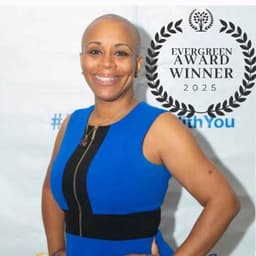

Do I Look Like I'm Bipolar?
©2021 By Lady Charmaine Day
There are many stereotypes that exist about what bipolar disorder is (i.e., an unsuccessful, unaccomplished and deranged person). I don’t fit the profile of what someone who has bipolar can accomplish or looks like. I am a 50 year-old African-American woman who holds a bachelors degree from Cornell University, a masters degree from Columbia University and over twenty years of Fortune 50 and non-profit human resources experience. These days I am a mental health advocate, an ordained pastor, have a spiritual show called Taboo Talk, and have authored and published eight books, including my autobiography Size 7 1/2: Walk a Mile in My Shoes, memoir One Step From Insanity: Actual Words From the Psych Ward, and motiviational and inspirational book H.E.E.D. S.I.M.P.L.E. wherein I detail my descent into mental illness. And while I may not “look” like I am bipolar, I too, because of this diagnosis, have been stigmatized, demonized, misunderstood, underestimated, marginalized and called crazy. Because of this, I am writing this story to educate others about the disease and to minimize the stigma that surrounds the condition.
My Descent into Madness
So, how did my journey with bipolar begin? For starters, I’ve suffered a lot of abuse in my life. From age zero to five, I had been physically and mentally abused by my father. Then, from age five to nine, I was repeatedly raped and mentally abused by my step-father. In 1996 I found myself in a marriage that I felt was emotionally, mentally, and sexually abusive. By 1997, I wanted out of the relationship, but my religious beliefs and sense of not wanting to fail wouldn’t allow me to leave. I felt depressed, isolated, dead and empty inside until, one day in 1997, I hadn't slept for 3 days and everything sped up. I said and did very bizarre things, acting totally outside of myself. I literally thought that I was “Wonder Woman.” Everything started running on nanoseconds, and I could just about do anything that came into my mind at the speed of light. Finally, after I was disruptive at both my workplace and in my graduate program at Columbia University, my family admitted me to the psychiatric ward at my local hospital where I spent two weeks and was diagnosed with having bipolar disorder. What I had been experiencing was called “mania” or a manic episode. Mania is the word that describes the activated phase of bipolar disorder. According to the National Alliance on Mental Illness (NAMI), symptoms of mania may include: an elated or happy mood, or an irritable, angry, unpleasant mood, increased physical and mental activity and energy, racing thoughts and flight of ideas, increased talking, more rapid speech than normal, ambitious, often grandiose plans, risk taking, impulsive activity such as spending sprees, sexual indiscretion, alcohol abuse, and decreased sleep without experiencing fatigue.
Depression is the other phase of bipolar disorder. According to NAMI, symptoms of depression may include: a loss of energy, prolonged sadness, decreased activity and energy, restlessness and irritability, an inability to concentrate or make decisions, increased feelings of worry and anxiety, less interest, participation and enjoyment of activities normally enjoyed, profound feelings of guilt and hopelessness, thoughts of suicide, change in appetite (either eating more or eating less), and a change in sleep patterns (either sleeping more or sleeping less).
What is Bipolar Disorder?
Dr. Moshe Lewis, who has served as a facilitator for the National Alliance on Mental Illness (NAMI), says, “bipolar disorder, or manic depression, is a psychological illness where people can have one or more episodes of severe mood swings that can range from depression to a euphoric state also known as mania. These changes may be subtle or dramatic and can vary greatly over the course of a person’s life as well as among individuals. For example, in mixed states one can have features of depression and mania at the same time. Over 10 million people in America have bipolar disorder, and the illness affects men and women equally. Bipolar disorder is a chronic and typically a life-long condition with recurring episodes of mania and depression that can last from days to months. Some people can rapidly cycle back and forth between these episodes. This means people with bipolar disorder can be very high functioning overachievers with episodes of depression and non-productivity that really slow them down and can make them suicidal without proper diagnosis and treatment.”
My Long Road Ahead
From 1997 to 2009, the medications prescribed to me were being dispensed in the incorrect combination and dosage to help me As a result, I suffered with severe side effects which included drooling, staring off into space, weight gain, loss of sexual desire, hand tremors, loss of long term memory, the inability to color coordinate and hospitalization in 2002 and 2005. In 2007, I left the human resources profession to pursue my passions of Christian consulting, writing, radio, television, and publishing full time. Between 2007 and 2009 I became an ordained pastor, started my radio and television show, Taboo Talk, released a CD single on i-tunes, published the three books I had written during my time on the psych ward, including my autobiography Size 7 1/2: Walk A Mile In My Shoes and One Step From Insanity: Actual Words From The Psych Ward, had a couple of book signings, and was also inducted into Barnes and Nobles’ Hall of Fame for the three books I’d authored.
Also during this two year period I became a mental health advocate and presenter for the National Alliance on Mental Illness’ In Our Own Voice Program (NAMI IOOV), Minister (and rapper) Kurtis Blow asked me to head up his Hip Hop Church in New York. On January 15, 2009, publicist Terrie Williams invited me to give my personal testimony about living with mental illness during her Open Book on Broadway for which I received rave reviews. Simultaneously, my Blogtalkradio show, Taboo Talk, was being heard throughout the world, and I had dedicated Facebook fans and friends following my daily words of wisdom. Everything was going great until I relapsed because my medication dosage was, again, not working for me, which resulted in me having another manic episode. However, during this particular manic episode, I exhibited behaviors that were totally contrary to my personality; I was espousing irrational ideas, speaking untruths, having racing thoughts, speaking without ceasing, and darting about rapidly. I also had delusional thoughts. One morning in April, after not sleeping for several days, I awoke to thoughts that someone was trying to kill me, and that I was the Queen of Egypt. I said horrific things about people on my company website, Facebook page, Twitter and in e-mails, and hosted two radio shows that were incoherent and purely insane. I even summoned the police to my home, but they did not come. Then, to really make matters worse, I walked out of my apartment completely naked, clad solely in a wig and slippers. I walked naked down the streets of my neighborhood and into my favorite local restaurant where I told the wait staff that they were fired, and used the proprietor’s telephone to call the police–this time they came and promptly carted me off to the psychiatric ward. This time I was on psych lock down from April to July 2009. While there, my home was burglarized and someone spray-painted graffiti on the wall near my apartment with an arrow leading to my door that read, “I am bipolar!” I was publicly stigmatized.
By August 2009, I was back doing my Taboo Talk radio show, conducting National Alliance on Mental Illness In Our Own Voice Program (NAMI IOOV) presentations, and I started a new Facebook Fan page called Lady Charmaine Day. In December 2009, NAMI submitted my name to the producers of the Dr. Oz Show who were doing a segment about the five warning signs of depression. After sharing my life story with the producers, I appeared on the December 16, 2009 show that featured a panel of seven women who overcame their symptoms of depression. I was assigned to discuss weight gain as a warning sign of depression. In 2010 NAMI asked me to be a state trainer for their IOOV program. They flew me to St. Louis where I became certified to train presenters on how to conduct successful IOOV presentations. I facilitated two training sessions that year and graduated over 40 new NAMI presenters. My Facebook fan page grew to over 500 members and my Facebook friends count soared to over 1,400 and I was also reunited with and became married to my high school sweetheart, Warren Benjamin, via the social networking site. In February 2011 I released my fourth book, “Trinkette's Wisdom for Every Day Living.” In May 2011 I was inducted into NAMI's Hall of Fame for my significant contribution to their In Our Own Voice Program. In December of 2011 I wrote the sequel to my autobiography called H.E.E.D. S.I.M.P.L.E. Which shows how I learned to go from unconsciously and unhappily living to being happy and consciously enjoying life. Steps that anyone can implement for total mind, body and spirit wellness.
In 2008 I created Unlimited Help On-Line Ministry. Unlimited Help Ministry is an international 35,000 on-line member non-denominational Christian ministry which is done through my website www.ladycharmaineday.com, my app,, the free Lady Charmaine Day Android and Iphone app, my social media and Taboo Talk internet video show to help dispense my God-inspired messages.
I co-authored with Brooklyn Mike aka Mike Troy, a book of Christian comedy/philosophy called "MINDF.U.C.C." I wrote a book of self-help called Lady Day'a Pearls of Wisdom about how to have good mental health, happiness, healthy lifestyle, peace of mind and personal growth. My latest book is a on-line business and self-help book called "Cyber Hustle." In recognition of my book sales, March 2009, I was inducted into Barnes and Noble Hall of Fame.
I am the host of “Taboo Talk” which I created and have been producing since April 2008. From 2008-2010 Taboo Talk was a Christian Television show that aired on Time Warner MNN in Manhattan and on BronxNet in the Bronx. From 2008-June 2020 Taboo Talk was a radio show that aired on blogtalkradio and Itunes. Today Taboo Talk is a video series that can be seen anytime at your convenience on my website:
https://www.ladycharmaineday.com/taboo-talk-virtual-show.html
I started my own line of clothing called G.I.R.S.H. (an alien nation with their pets symbolic of Christians on earth). I am also a singer, writer and composer of music. In 2008 I released my first cd single called “The L.C.D. (the lowest common denominator)
December 16, 2009, I appeared on the Dr. Oz show that featured a panel of seven women who overcame their symptoms of depression. I was assigned to discuss weight gain as a warning sign of depression. In acknowledgment of my accomplishments, Cambridge’s selected me to be a 2008-2009 Who’s Who Among Executives and Entrepreneurs.
I have been a mental health advocate since 1997. Since 2008, I have volunteered with National Alliance on Mental Illness New York City Metro as a presenter and state wide trainer for their In Our Own Voice Program (NAMI NYC Metro IOOV). May 2011,in recognition of my significant contribution to their In Our Own Voice program, I was inducted into the NAMI Hall of Fame. November 2015, I was honored to receive the NAMI NYS 2015 Media Award for her outreach work regarding mental health. In 2019, I became a NAMI NYC Metro's Hope For Recovery course trainer, a Lead Presenter for NAMI NYC Metro's Ending The Silence program and profiled on WebMD as a subject matter expert on the mental health and wellness lived experience.
Living with Bipolar Disorder and Looking Ahead
One crucial lesson that I have learned during this journey is that bipolar disorder does not discriminate. It can happen to anyone of any race, religion, or socio-economic status, to people who are brilliant and well educated, as well as those who struggle with math. In the psych wards where I have been, I have witnessed all types of people in recovery from this illness. Because bipolar disorder has a genetic link, others in my family have also been diagnosed with the disease. My mother, Mrs. Arlene Day, was diagnosed as being bipolar in 2004—seven years after me—in her late 50s. She had been an untreated and undiagnosed manic depressive person since I was a child, which explains her eccentric behavior and some of the unfortunate and traumatic events that I experienced during my childhood. Like me, she has also become a mental health advocate and NAMI IOOV presenter and was inducted into the NAMI Hall of Fame for her IOOV presentations in May 2011. My mother has been one of my greatest supporters, uplifting me without fail and never forsaking me, even when I was at my worse and it was too painful for her to bear.
It took me years to learn to love and like myself and accept every part of me including the fact that I have a mental illness; and to realize that I am still made in God's image, and that He doesn't make mistakes. This has moved me to have compassion and unconditional love for myself; and I have been kinder towards myself ever since. I now also provide moral support and encouragement to others through my books, motivational speeches, Taboo Talk show, Facebook fan page, social media, app, website, and private consultations. More importantly, I have forgiven everyone, including myself, for my past transgressions. I have also learned, and now want to share, that insanity is denying who you are and tying your self-image to everything but what matters most, you. Without a true vision of who you are, you are internally dead (empty, without hope and purpose). When you know who and whose you are, life really begins to unfold. Since human beings are comprised of a body, spirit, and mind, all three must be taken care of and taken into account when managing any kind of illness, but especially bipolar disorder. I have learned that when living with a mental illness you must take care of your body with proper nutrition, exercise, rest and vitamin supplements. You must also work very closely with your medical provider to secure the best possible treatment. This includes educating yourself about available treatment methods and medications for your condition, and articulating any side effects you may experience to your doctor immediately so that he/she can make dosage adjustments as necessary.
Regarding your spirit, I have learned from experience that being spiritually grounded will help get you through the darkest days you will face living with a mental illness. Know that you can achieve spiritual health by praying consistently, reading your scriptures and books on your faith, and by meditating to quiet your mind so that you can achieve spiritual balance. You also need to nurture your mind by reading positive affirmations, listening to uplifting music, and by only watching television shows that espouse and promote healthy ideas that can teach you new things and help you to expand your horizons. Finally, by helping others, you will also make yourself feel good as you are making a contribution to society and at the same time stimulating your mind. I consistently give of myself to others via my Taboo Talk show each week, writing messages on my Facebook Fan page, giving NAMI IOOV presentations at state-wide trainings, and volunteering with Cornell University's Alumni Admissions Ambassador Network (CAAAN). When you are right spiritually, on the correct medications for your brain/body, and are feeding your mind positive thoughts and affirmations, you can only be one thing: HEALTHY, SANE, and HAPPY.
According to NAMI, after an accurate diagnosis, most people can achieve an optimal level of wellness with bipolar disorder. However, medication is an essential element of the successful treatment of the illness. These days I diligently take my medication, which includes a anti-psychotic, an anti-anxiety and a anti-depressant. I also see my psychiatrist and therapist regularly. It has been twelve years since my last relapse. I attribute my success on the road to recovery to a combination of the right medications, an informed doctor, my faith, a loving family and equally supportive friends, who all serve as my support system. I have bipolar disorder and while I may not “look” like I am bipolar, I have experienced the negative side of this disease. I feel it is time for me to use my voice, knowledge and personal experiences to empower those living with bipolar disorder (and other mental illnesses), and to educate society at large about bipolar disorder in order to de-stigmatize and address misconceptions surrounding the diagnosis. I certainly plan to do my part.
Lady Charmaine Day is a pastor, publisher, published author, motivational speaker and talk show host who specializes in helping individuals transform their mind, body, and spirit utilizing the principles of Jesus Christ.” For more information, please visit: www.ladycharmaineday.com.
- Health
- First Story
- Northern America