
Education: How a Poor Village Girl Became a Teacher of the World
Aug 28, 2020
first-story
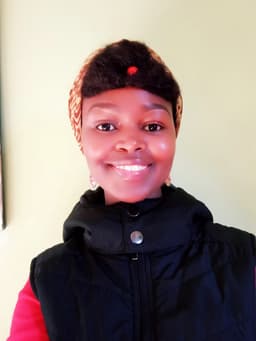

My name is Nini, a one month old sister on World Pulse and a villager still trying to figure out city life, two decades on.
In my village, there are two kinds of houses. The mud kind that will fall in the rain, and the kiln-baked brick kind that withstands any weather. Ours was the mud kind. During the rainy season, the top half of its windward wall would soak up rainwater and fall. When we needed secure shelter, all we had was the uncomfortable intrusion of wind and rain. It felt as if we were always rebuilding, always cold, always unsafe.
I desperately wanted a home, a house where I could curl up in the cold and be warm. I was determined that I would get one when I grew up. To achieve that, I decided that the solution was to marry someone in the army. Army men were salaried, had good bonuses and their wives always lived in comfortable homes. At fourteen, my highest ambition in life was to become an army wife. My children too would get educated because an army husband could afford it. At least that is how it seemed to me.
The above photo was taken when I was 15. My friends and I have just completed the last examination of primary school (year 8) and are feeling very important and grown up. At this point in my life, I thought that once you finished primary 8 you got married, because it is what most of the girls in the village did. The boys would go off in search of unskilled work and return to marry the girls. I had completed primary school without yet having found my army man, for every such man in the vicinity of my village was already married.
My educational journey up to this point was well decorated. From grade 1, I finished top of my class every term of every year, as long as I was in school to sit for my examinations. When I failed to sit for my exams on one occasion having been sent home for $5 worth of tuition fees, the mean grade for our class fell considerably, bringing the overall school's position in the cluster of schools down. After this incident, it was evident that I was too valuable to the school to be absent, and the school kept me on even when my family had not paid the family levy. I was happy to remain in school, but sad that that favour had not been extended to my siblings as well.
At this village school, we had no class readers or story books to fuel our imagination. There was no library, only the notes that the teachers wrote on the black board for us to copy. But o how I had a quest to know things! So I read the dictionary. I wrote stories to read to my friends. I gave speeches in English. I read newspapers borrowed from a teacher whose family member had returned to the village from the city. I somehow got hold of a few Danielle Steele's and James Hadley Chase's novels and soaked them in. A decade later, someone would tell me that those books weren't children's literature. I told her that I did not remember them that way, but just as stories. Words describing worlds to get lost into. New names, new lives, new places. A window into the world.
Although they did not have the means to fund my education, my parents gave me every opportunity to excel. My mother excused me from after-school house chores while in year 7 and 8. On the weekends, I helped with chores until the afternoon when I would be free to resume studying. Such a generous concession towards a girl child was unheard of in my village. But my mother, who had been forbidden from attending school in the 1950s because she was a girl, wanted her daughters to have every opportunity she could afford them. My father would read my report cards and explain them to my mother o so proudly. And although it was uncertain whether I would complete my education, my parents ensured that I understood its importance, and that I gave it my all.
At fifteen, I was an A-student, with no dreams. I did not dream of being anything because I could not be anything. To be anything one needed good education, and good education cost money. Since most of my older siblings had not completed high school, it would be a dangerous thing to dream. I therefore finished my exams and went home to wait for my army prince to come and pluck me out of our fallen house, and take me to my kiln-baked brick castle.
Except, my soldier did not come. Instead, a dream found me. A dream that brought me here. You see, I got a very high score in the year 8 exam and gained admission into the most prestigious girls’ high school in the heart of Nairobi. I was the smartest girl in my district for that school year and, so to speak, put my village on the map. Since I had made history in my village, they could not bear the grief of producing a district star only to let her fall through the cracks. Besides, everyone was as proud of me as though I was their own daughter and wanted to do all they could for me. They therefore pooled together enough money to pay my admission fee and secure my place in the school. If I was enrolled, they said, I had a place. My spot would always be there, and I could finish school whenever money was forthcoming. And so off to the grand city I went, a babe in the woods who had seen neither a computer nor a TV set, and more scared than she was excited.
Those four years of high school were the longest, loneliest, most disrupted period of my life. I could not understand the conversations of my TV watching, street savvy city classmates, and they could not understand how I could have lived a whole 15 years and know nothing of the world. During school holidays in the village, my former classmates felt they had nothing to offer a girl in a fancy city school and kept to themselves. What of my supportive parents? They could not begin to comprehend how things worked in the city to answer the myriad of questions in my mind or help me navigate my anxieties.
Education alienated me from my community, my support system so that wherever I was, I was on my own. Only I could dip into this well, and whatever I found was mine alone to evaluate, absorb, or discard. It was during this time that I developed my fierce independence as a protective shell against a world in which I no longer belonged. It is a shell I have been slowly demolishing, to let people in, to grow in empathy.
My learning was highly disrupted because if you did not pay, you did not stay. There were school terms where I spend as much time out of school as I did in school. I was always catching up. I never did catch up. Being in school felt as if the one thing I longed for was being dangled in front of me, only to be moved further the closer I came. You see, since finishing school was touch and go, I still could not dream of a life beyond my village. Here, poverty had created many a school dropout, and until I had a high school certificate in hand, I would not be safe from its powerful clutches.
My city classmates admired my self-control and discipline because I did not buy chocolates and potato chips in the school canteen, and I always finished my meals. They admired my independence and my parents’ faith in me when I went home on my own at the end of the term, while they waited for their parents or relatives or chauffeurs to drive them home. Some wished they could be like me. What did they know?
I did not bother telling my school mates that I could not afford chocolates and crisps and chauffeurs. What could these privileged kids understand of being poor? Of the many times I got lost in this big city but could not tell my parents to protect them from the worry and the financial expense of resolving to pay their bus fare to bring me to school? Of the time I got lost and desperate on my way back to school, and was rescued from a sexual predator by a stranger who took me to her home for the night because I was in school uniform, making sure I got in the right public transport to my school the next day? Of how terrified I would be during the day-long journey between the school and my village? Of how much I wished they would share their fancy food with me? Of growing up too early out of necessity? No, I would let my poverty afford me some dignity and elevate me to the status of a role model.
In this school, I realised for the first time, that we were poor. Very, poor. And that the salaried village folk in ‘comfortable’ homes were poor too. I was so amazed at the sheer amount of money that some families seemed to have. How did they get it? What sort of jobs paid such money? I did not consider they might own large businesses, for my idea of a large business was the village general store whose owners I now knew, were poor. But I understood one thing then: that I needed a new dream. A dream of my own that involved no man, no soldier. But how could I dream with the threat of being evicted from school for good always over my shoulder?
I however had one thing in my favour: mine was a high-ranking school, and completion rates for such schools are very important. The school administration knew that I owed too much and my trips home to collect tuition fees I owed yielded nothing. During my second last year, they decided to let me stay in school on bursaries and goodwill. I owed a lot of money when I finished. But I finished! I got a high school certificate, my permission to dream of being here and sharing a stage, with you.
The goodness of God in getting me into this school and giving me such unwarranted favour with its administration astounds me, because the alternative is bleak. Had I missed admission to that high-ranking school by one point, I would not be any less smart. But I would not be here. You would not be reading from me. I would not know you. I would be just another untapped potential on the margins, voiceless, invisible, dependent. This prospect makes me shudder.
For me, education was the dream that gave me the power to dream. Education gave me options. It opened my eyes to a vast world beyond my village and taught me that a girl could have views, pay her own way and be more than a wife. More importantly, education made me a resource and immersed me onto a global stage. My village school friends however did not make the prestigious school that could let them learn first and pay later, their outcomes are quite different. Education separated us, which sounds oxymoronic.
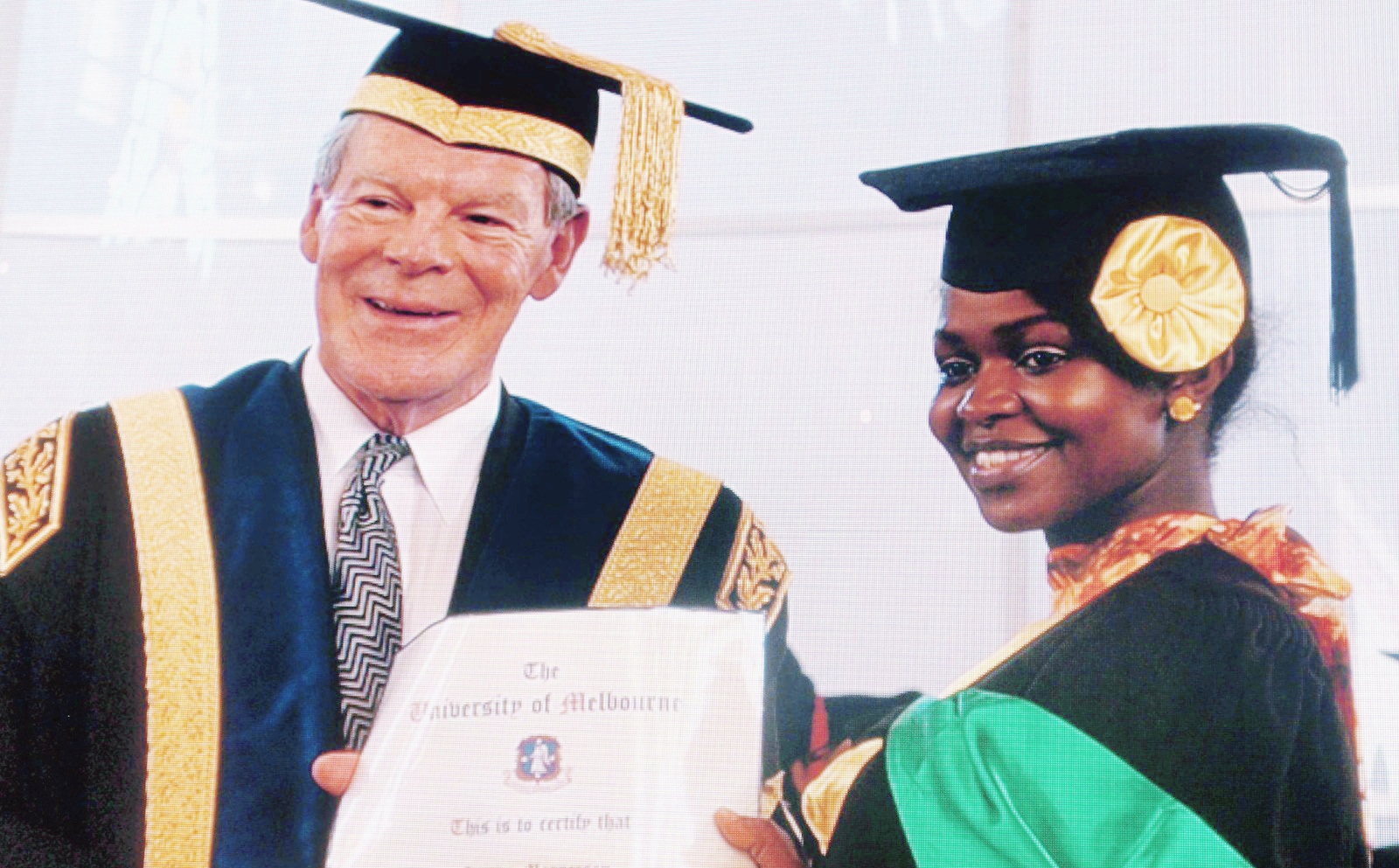
A dream found me, and that is how a village girl without a dream can know you, speak with you, write. I love writing. I always seem to have so much to say! This dream culminated in a double degree in Education and English & Linguistics, followed by a Master of Education in Specific Learning Difficulties. My degree became the second for my village, and its first in two decades.
Since moving to Australia, this underprivileged village girl has had the very great joy of teaching students from every continent, both as a schoolteacher, and as a teacher of English to international students and migrants resettling into Australia. I would sometimes summon my village self into the classroom, as I help my student from Brazil or Russia or Portugal or Iran or Egypt or Indonesia with their syntax, and marvel at the wonder that is education. This wonder that has the power to trans-locate people geographically and socio-economically. This wonder that has the power to elevate a village girl into a teacher of the world. I concluded that even if I never did anything else in my life, I am a wee thing of a village girl from the middle of nowhere, teaching the world! Even I could not have dreamt that!
About 3 years ago, I put teaching on hold to work with a Not-for-Profit as a mentor to migrant students and young graduates to help them blossom in their identity and establish themselves as life givers in their contexts. I also teach them how to draw from the love of God so that they can give more than themselves, because love loves to give. This has afforded me work flexibility so that I can be more present in the lives of my three young children during their formative years.
Education is my rags to riches story. More than making a village girl employable, education has enriched her to live in the world and made her a resource in that world.
Thank you for reading.
Stay sparkly :)
Nini Mappo
A villager in the city.
_________________________________________________________________________________________________________
"You establish peace for us O God. All we have accomplished you have done for us." Psalms of David
- Economic Power
- Girl Power
- Education
- Human Rights
- First Story
- Africa