
Education the wild journey
Mar 7, 2025
story
Seeking
Feedback


Towards the end of last year, I watched on Television where
the Rotarians from District 9214 where celebrating their 99th District
conference in Munyonyo Conference centre. This had people from Uganda,
Tanzania, USA and I believe other parts of the world too. On the opening day, it
was about education and literacy - themed ‘know my school uniform’,
participants had to put on school uniforms portraying which schools they attended
and where they came from. It was a very
colorful event and I was blown away by the smartness of the participants. It
was really well organized and they also mimicked a real classroom ambience
where some pupils or students bully those who fail to answer teacher’s
questions in class. The theme really blew me away
However, with all the smartness and pomp, what caught my
attention was one gentleman who was interviewed from the way he dressed. He was
putting on a short which was in patches, carried a sling bag with plastic cup
and when he showed what was in the sling bag, there were two books cut into
halves. He was also walking barefoot and this portrayed the real life our rural
children go through.
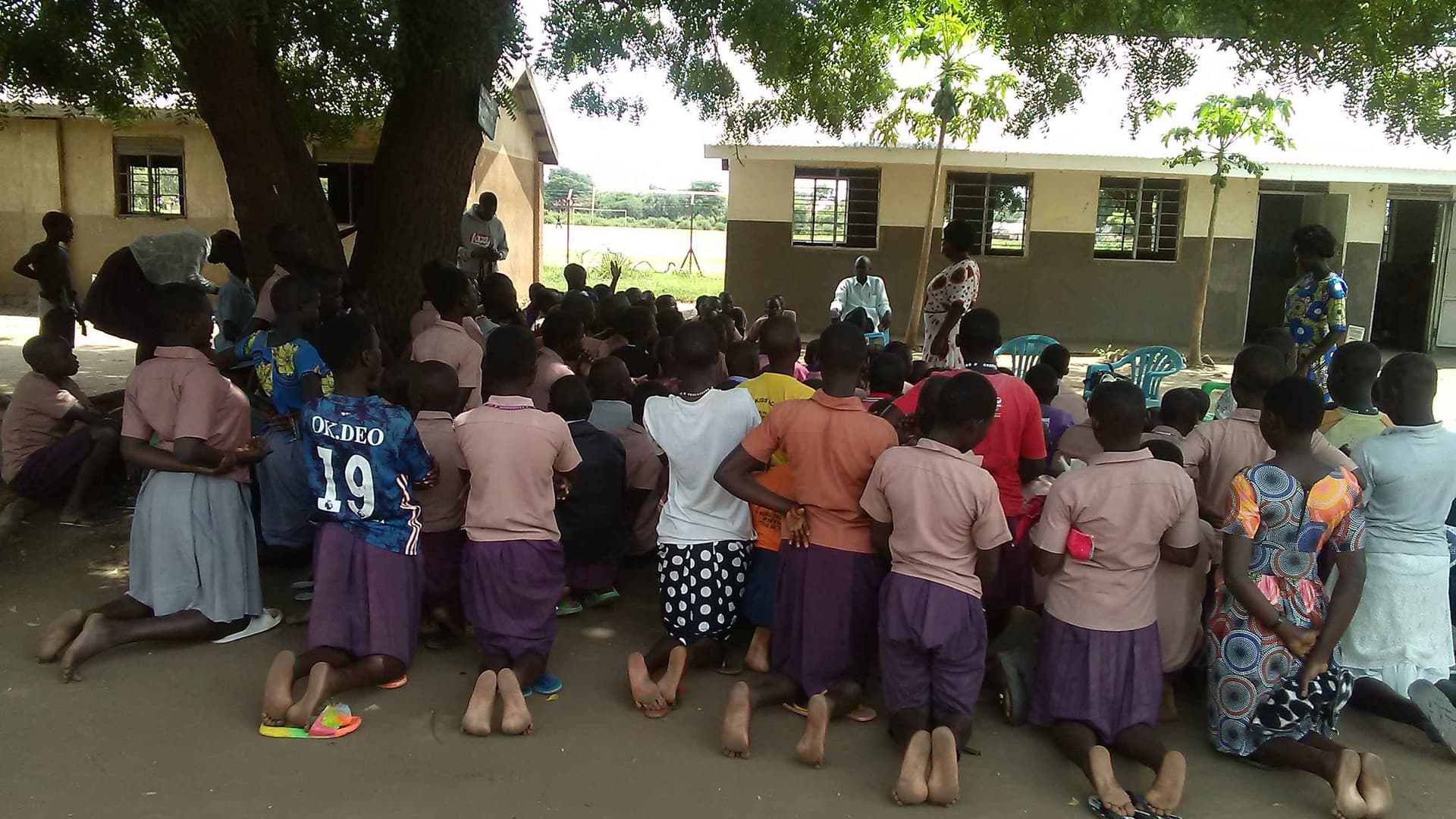
This therefore brought me to the reality of the children I
meet in the villages and their classrooms. In Uganda today, some children are
still learning under trees or dilapidated grass thatched houses moreover, made
of mud and wattle.
This is also accompanied by children walking long distances
in the bushes putting their lives at risk. Our rural school children up to
today lack even the basic necessities to enable them attend school well. Some
pupils still sit on the bare ground and some teachers still use sticks to write
in the soil for the children to see. If at all there is a chalk board in class,
you find it’s either put leaning on a tree or leaning on a wall three quarter
of it broken. Other times there would be no chalk even to use on the chalk
board. Some of these are government aided schools.
The harshness of a rural child is not only seen in the way
they dress in their uniforms but also their physical appearances. Most rural
children have poverty staring them in their faces. Some come to school without
tasting anything at home. They wake up early to trek miles on empty stomachs to
reach their schools with the hope education will one day lend them in a better
place. Their parents work hard to ensure they secure their basic needs
including money for school fees. I have seen parents equally toiling to make
ends meet and yet nothing major happens.
Recently, I was in my village doing my normal work and in
one school, I was met with the same scenario. School children with torn and
parched uniforms and walking barefoot, looking emaciated and malnourished.
Out of the many hundreds, only a few will make it to the
universities or tertiary institutions. Even the few who make it, might not be
lucky enough to get gainful employment. Work spaces are shrinking too and those
who already have the jobs even in their advanced ages are not willing to leave
their positions for the young ones.
Parents are battling heavy school dues and every term or semester,
school fees keeps increasing and many children keep dropping out of schools.
The worst affected are the girl children who are also very unlucky enough to
become child mothers. Imagine after trekking to school for a period of five to
seven or even ten years, and leaving school without any papers to show.
What is the future of education in the world today?
- Africa