
Everyone Should Cry for Congo: A Reflection After Watching City of Joy
Jun 18, 2025
story
Seeking
Feedback
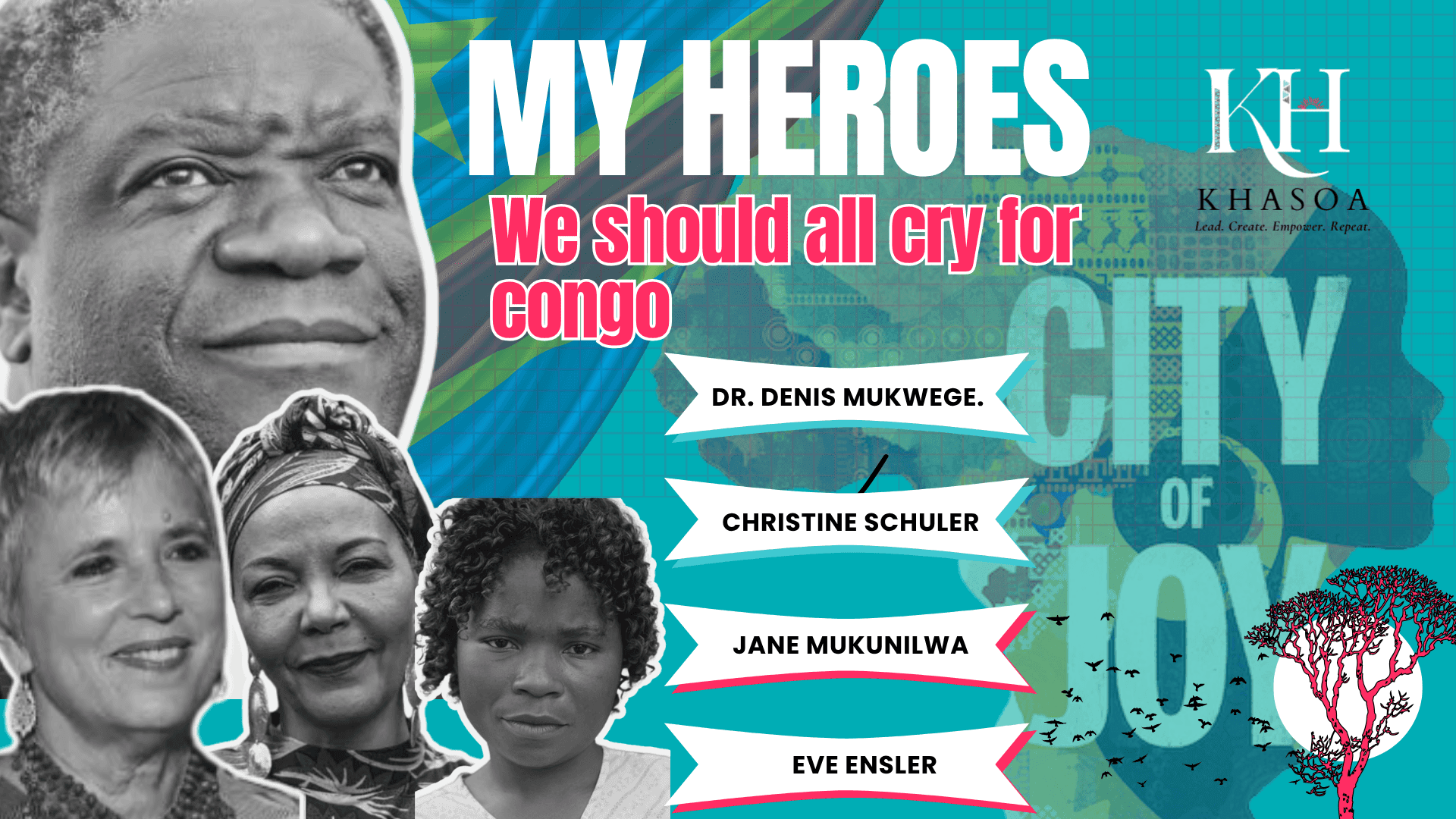
Graphic for the Heroes of CITY of JOY
I didn’t plan on watching a documentary that night. I was simply looking for a film to lift my mood, an African movie, something vibrant, something joyful. It had been a chaotic, heavy day. My business life felt like it was spiraling, and all I wanted was a few hours of rest, something light to soften the weight on my heart.
I even thought of taking a picture for Instagram, something soft and aesthetic, a caption about rest, a post about a “self-care night.” But then City of Joy appeared on my screen, and something changed.
I don’t usually watch trauma-based content. I never watch documentaries. I avoid them. I know how they wreck me. But that night, something pulled me in. Just 60 minutes, the runtime said. Just an hour. But I already knew, deep in my gut, this would not be just an hour.
I read the synopsis. And with every word, my soul stirred.
This wasn’t just another documentary. This was Congo. These were women. These were my sisters. My people. And I owed it to them to watch. To witness.
So I pressed play.
And within minutes, I was no longer watching a film. I was grieving. I was raging. I was learning. I was unraveling.
The Deepest Wound Isn’t Just Violence, It’s Silence.
As the story of City of Joy unfolded, I was struck by the brutality that so many Congolese women have endured for decades, used as weapons of war, raped, discarded, shamed. Their pain is not collateral damage. It’s deliberate. Systematic.
All for what? For minerals. For the gold that lines our watches. For the coltan that powers our phones. For the luxury of the West, and the silence of the world.
The sheer horror of it made my heart clench. How can a few men, corporate heads, political tyrants, armed leaders, decide the fate of unborn children? How do nations justify the bleeding of a people just to enrich themselves?
And what shocked me most was the inhumanity of it all. These women aren’t just abused. They are cast aside. Blamed. Forgotten. Like rags tossed away after use.
And then comes City of Joy, a sanctuary, a reclamation space. A place not just of healing, but of resurrection. A space that dares to teach grown women the most fundamental truth, You are human.
Can you imagine that? A center where women are taught how to feel human again. Where they are taught joy. Self-defense. Sisterhood. Where their tears are not silenced, but held. Where they are given back to themselves.
The Real Superheroes Walk Among Us
I cannot speak of this place without honoring its builders, Dr. Denis Mukwege, Jane Mukunilwa, Christine Schuler Deschryver, Eve Ensler.
Today, these are my heroes. Not celebrities. Not politicians. These are the true giants. The warriors of light. The defenders of dignity.
They didn’t wait for world governments to act. They didn’t sit comfortably in safety. They went into the storm and built shelter for its victims. They didn’t need hashtags to validate their purpose. They are purpose.
If you ever ask me where to donate, where to channel your money, your voice, your faith, donate to City of Joy. They are doing the work of angels. Of ancestors. Of revolutionaries.
The Dream of Long Legs
There’s a moment in the film that broke me.
The director of City of Joy shares how many Congolese children dream of growing long legs, not for sports or pride, but to run. To escape. To flee violence. Let that sink in. That a child’s wildest dream is not toys, or books, or even safety. But legs strong enough to run away.
And I thought, how dare I complain? How dare I sit in my room and feel hopeless about business losses or a wrong financial decision? How dare I call a bad day suffering, when children dream of survival as their only luxury?
This Film Rewired My Soul
As I sat through that film, I realized something I hadn’t fully processed in years, I’ve always wanted to save the world.
As a little girl, that was my prayer, my dream, my fantasy, I wanted to fight the bad guys, protect the vulnerable, rescue the lost. But life happened. Reality happened. And slowly, that fire dulled. I began to doubt. I began to narrow my goals. “Maybe I’ll just help women in Kenya,” I told myself. “Maybe that’s enough.”
But City of Joy shook me awake.
No. The fight is bigger. The pain is bigger. The injustice is global. And if you're reading this and you feel the same anger, the same burning, you’re not alone.
We need to reclaim our audacity. The audacity to care. To act. To speak. The vulnerable are everywhere, and their blood is in our silence.
What Is All This Wealth For?
What is the point of wealth that is built on blood?
How much is enough for one man? For one corporation? For one country? How much do we need to accumulate before we ask, Who paid the price?
We often talk about “rich nations” and “poor nations.” But let’s be honest, there are no poor nations. There are plundered nations. There are looted nations. There are people whose land has been robbed, whose dignity has been auctioned, whose wombs have become battlefields.
Congo is not poor. Congo is rich, Too rich. That’s the problem.
We Are Not Helpless. We Are Just Distracted.
Everyone should be angry. Everyone should be crying for Congo. Everyone should be signing petitions, supporting survivors, calling out the names of countries and companies that profit from this pain.
Everyone should be teaching their children where their phones come from. Everyone should question why peace is a luxury in Africa.
The laughter of the women in City of Joy, that radiant, bold, defiant laughter, deserves to echo beyond the hills of Congo. It deserves to reach the boardrooms of Silicon Valley, the parliaments of Europe, the classrooms of the world.
We Must Remember Who the Real Heroes Are
If Hollywood ever dares to tell an African superhero story, let them come here. Let them come to Congo. Let them watch these women, broken, brutalized, and still dancing. Let them see what superpowers really look like.
Not flying. Not shapeshifting. But surviving.
And rising. And loving. And living again.
So, This Is My Stand.
I may not be Congolese. But I am African. And that is enough.
I may not have experienced their war. But I am a woman. And that is enough.
If you have a voice, use it. If you have a platform, post. If you have funds, give. If you have children, teach them. If you have privilege, dismantle the systems that gave it to you.
Because the world we live in isn't broken. It was built this way.
And if we are ever going to heal, we must name the pain, honor the survivors, and rebuild from a place of truth.
To the women of Congo, Your strength is unmatched. Your stories are sacred. Your joy is revolutionary.
And we,we who are watching,must never forget.
- Girl Power
- Peace & Security
- Human Rights
- Gender-based Violence
- Moments of Hope
- Becoming Me
- Global