
FOR GOOD KARMA
Nov 5, 2023
first-story
Seeking
Visibility


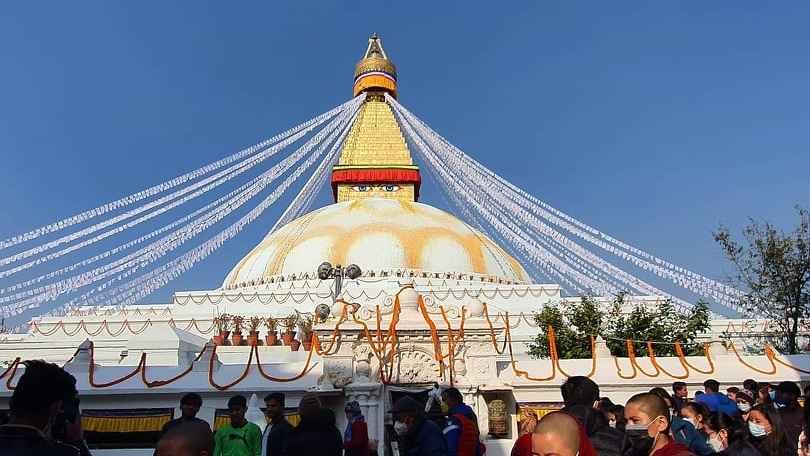
Prayer flags (LUNGTA) and scarf offerings (KHATA) - renowned Buddhist cultural objects that aspire to circulate good relations for all sentient beings - are often used in mountain summits, pilgrimage sites, trekking routes, mountaineering rituals, and across ceremonial and social events in Nepal. From ancient times, these objects were made of biodegradable materials in Himalayan communities. However, since the 1970s, industrial production of LUNGTA, KHATA with cheap synthetic materials has created a serious issue: these ancient practices have contributed to widespread pollution due to traditional disposal methods of burning and burial.
I was raised with Buddhist values and saw the use of khata and prayer flags in our everyday cultural practice. She felt guilty using synthetic ritual objects that create ecological harm. Although this ecological concern is widespread, the Himalayan communities had no market alternatives to attempt a significant behavior change
I firmly believe in traditional wisdom that inspires us to take action today to create the future we want. So,I decided to change my individual practice and produced my own biodegradable ritual objects. Soon I realized the astronomical scale of use of synthetic ritual objects, and started pushing my immediate network to initiate the change - as insignificant as it may seem - that can add up eventually. Despite the pandemic, this push for biodegradable alternatives soon resonated across Nepal and in other places where there are significant buddhist practitioners. In 2020 Along with a few women from my neighborhood started an initiative of Sustainable Buddhist Practices. My goal is singular to preserve culture sustainability and environment.
This project approaches the issue with a solution that draws on indigenous knowledge from Himalayan communities to regenerate traditional craft of creating biodegradable LUNGTA, KHATA as viable alternatives to the synthetic ones, it partners with existing social networks of monasteries, faith leaders, environmental organizations, tourism agencies, and conservation institutions to reframe the problem as a spiritual concern for coexistence with nature and sustainability. Our project started in 2020, and we have successfully mobilized home-based marginalized women in production of biodegradable LUNGTA, KHATA in Kathmandu.Our biodegradable prototypes have received wide acceptance by Himalayan communities and institutional users in Nepal and elsewhere.In Dec 2021, we partnered with Boudhanath Area Development Committee to install biodegradable prayer flags in the monumental Boudha Stupa - a UNESCO world heritage site - for the first time in 60 years since usage of modern synthetic flags began. Our ultimate hope is that our Ethical Standard becomes an industry-practice for Tourism and eventually a regulation is instituted that requires biodegradable prayer flags and khatas. Looking ahead, we now aim to create subsidized partnerships with local organizations and community enterprises in increasing production of these biodegradable objects and provide training workshops, supply chain coordination, access to wholesale markets so that the general public can, at competitive rates, reconsider use of synthetic ritual objects that actually cause harm. We believe that sustainable cultural practices and human-centered production will create the necessary condition for everyday individuals to choose biodegradable alternatives. This will also respectfully convince strong religious sentiments.
These ritual objects not only limit pollution and promote conservation, but also highlight traditional culture that project Himalayan community to the world.
The recent findings of microplastic above 8000 meters, close to the summit of Mount Everest, indicate the issues of not only climbing equipment but also synthetic ritual objects such as Lungtas and Khatas that are littered everywhere. However, there is no recognition of these synthetic ritual objects as a source of pollution, mostly because of the religious and cultural value it holds
Simplicity in our consumption and reverence to natural ecosystems are the only reasonable approaches to solve challenges of an inefficient global economy that produces single-use resources and everlasting waste. Our project builds on traditional knowledge of biodegradable materials to recover our spiritual values of compassion and interdependence. We are championing cultural wisdom of an ancestral faith system to offer material solutions to an exacerbating modern environment crisis.This project has come to fruition at a time when scientific reports claim that micro-plastic are now found in human bodies, and investigation of its impacts are ongoing. This project realizes that inaction is not an option.
This can set a global example for other parts of the world that cultural and community practices as these can also contribute to fight against the global climate crisis we are facing today.
These practices which hold high value in the Buddhist Himalayan community will surely be continued for generations but this project wants to ensure that is done in a healthy way while still preserving our cultural values.
- Environment
- Arts & Culture
- First Story
- Climate Change
- Spirit Awards
- World Pulse Changemakers Lab
- Global