
From Diversity to Unity: How Young Leaders Inspire Change Through Culture
Sep 29, 2025
first-story
Seeking
Connections

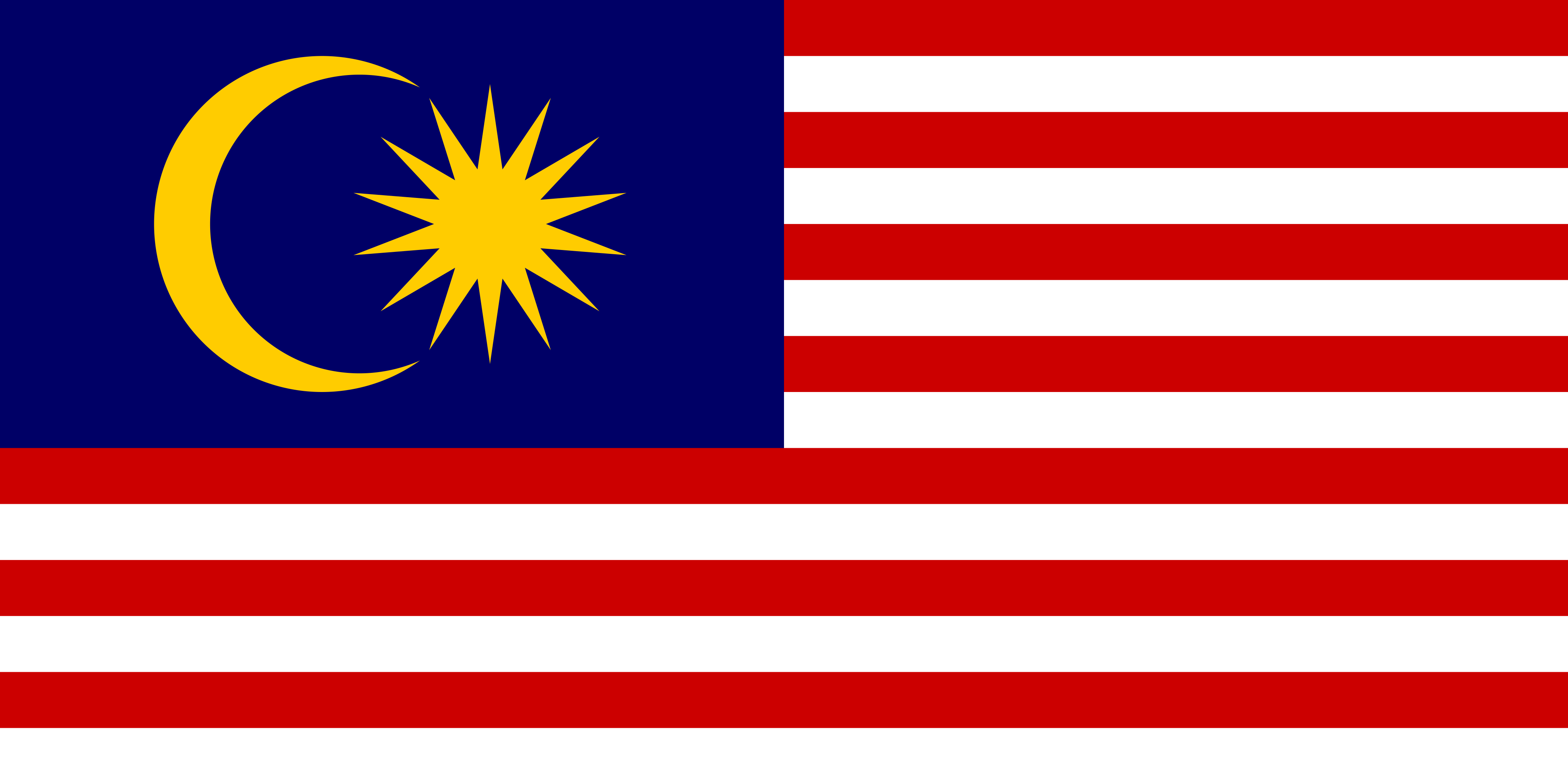

Youth, Culture, and Leadership as Tools for Unity and Positive Change ✨
Growing up in Bangladesh, and later studying in China and Malaysia, as well as traveling to India and Thailand, I learned that culture is more than traditions, food, or music. It is a language of connection. Each time I entered a new country, I carried my own culture with me, but I also discovered the richness of others. These experiences shaped me into a firm believer that youth-led cultural initiatives are one of the most powerful ways to build understanding and inspire change in today’s world.
Culture as a Bridge, Not a Barrier
Too often, cultural differences are seen as obstacles. Misunderstandings between communities can create fear, prejudice, and even conflict. Yet when young people take the lead in cultural exchange, those same differences become bridges of learning. I saw this firsthand when I participated in an international cultural festival in China. Representing Bangladesh, I shared our food, songs, and traditions with students from more than twenty countries. In return, I experienced their cultures. What could have been barriers turned into friendships and lasting respect.
Youth Leadership and Inclusion
Culture grows stronger when led by young people. As Vice President of the International Student Association at Donghua University, I worked with students from across the world to organise events that highlighted traditions, celebrated festivals, and discussed social issues. These activities were not just entertainment—they created spaces of inclusion. Students who once felt isolated found belonging. Dialogue replaced silence. Leadership through culture meant everyone had a voice.
Inspiring Positive Change
Cultural initiatives are not just about sharing; they can also drive social impact. As a youth leader, I have seen how music, art, and storytelling inspire conversations about education, climate change, and peace. For example, a cultural performance can highlight the importance of gender equality, while a photo exhibition can draw attention to climate action. These initiatives go beyond awareness—they motivate communities to act.
A Global Responsibility
In today’s interconnected world, youth-led cultural initiatives also support the Sustainable Development Goals (SDGs). They contribute to SDG 4: Quality Education by promoting intercultural learning, SDG 10: Reduced Inequalities by including marginalised voices, and SDG 16: Peace, Justice, and Strong Institutions buy building understanding. By linking culture with global challenges, youth can show that local traditions have global value.
Call to Action
From Bangladesh to China, Malaysia, India, and Thailand, I have seen how young people can connect through culture. Every young person has a culture worth sharing, and every community has something to learn. We do not need to wait for governments or institutions to create change. As youth, we can begin in small ways—organising cultural clubs, writing articles, hosting online events, or even sharing our stories. When we exchange culture, we exchange humanity.
Culture is not just heritage; it is a living tool for building peace, respect, and progress. If more youth-led cultural initiatives are supported, the world will not only be more colourful but also more united.
I am Jahidul Islam, a Bangladeshi postgraduate student at Donghua University, China. With international leadership experience across Bangladesh, China, Malaysia, India, and Thailand, I am passionate about youth empowerment, cultural exchange, and sustainable development.
- First Story
- South and Central Asia