
**From Historical Injustice to AI Ethics: A Path Towards True Accountability**
Oct 14, 2024
story
Seeking
Visibility


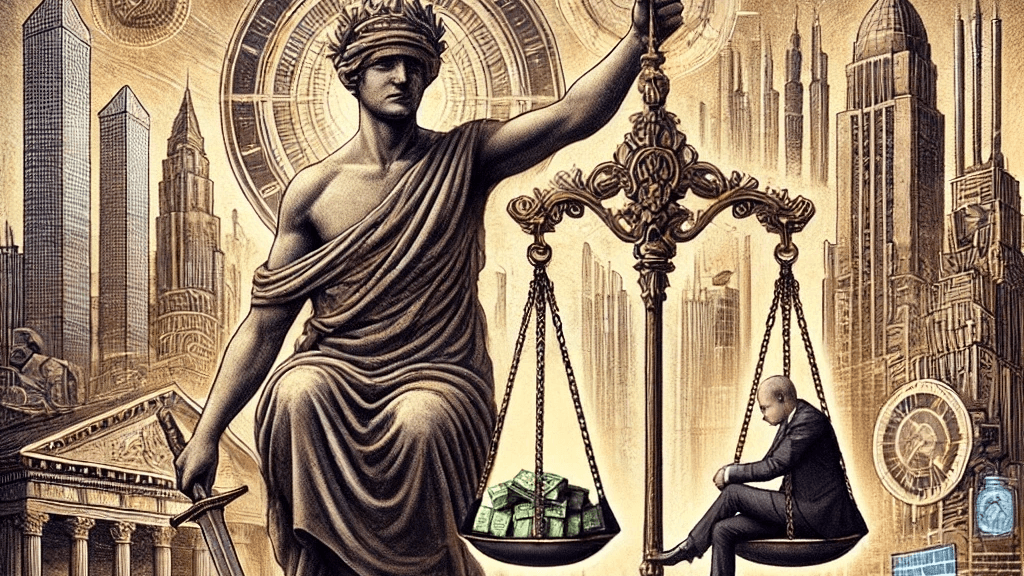
Photo Credit: FL
**From Historical Injustice to AI Ethics: A Path Towards True Accountability**
The "national narrative" in France refers to the way in which the country's history is told and taught, often through a lens that seeks to unify citizens around common values and a certain vision of national identity. This narrative has been shaped by major events such as the French Revolution, the two World Wars, and the development of the Republic. It often highlights the ideals of liberty, equality, fraternity, as well as the heritage of the Enlightenment. However, this narrative contains areas of darkness, and it is here that complex and philosophical questions arise, notably those of colonization, slavery, and land expropriation.
**Colonization and Slavery: The Forgotten of the National Narrative**
Colonization and slavery are elements of France's history that have long been minimized or presented in a way that favored the vision of a France bringing "civilization" to the colonies. This perspective serves to mask the violence, injustices, and abuses of power that accompanied these processes. Colonization led to the expropriation of land and resources, the imposition of social and cultural structures, and often brutal economic exploitation.
The transatlantic slave trade, in which France played a significant role, is another dark facet of history that has long been eclipsed by the national narrative. For centuries, millions of people were uprooted from their lands, reduced to slavery, and treated as commodities. Even though laws like the Taubira Law of 2001 recognized the slave trade and slavery as crimes against humanity, this recognition remains insufficient to heal the wounds left by this past.
**The Expropriation of Land: A Complex Legacy**
Land expropriation is at the heart of the injustices of colonization. Colonized lands were taken from indigenous peoples and redistributed to settlers or European companies, creating land inequalities that still persist today. In Algeria, for example, French colonization confiscated the lands of many Algerians to give them to settlers, leading to a brutal reorganization of society and means of subsistence.
Throughout the African continent, as well as in other territories like the Caribbean, lands were seized, and populations were displaced, sometimes forcibly. These actions left deep scars in the affected societies, not only economically, but also psychologically, culturally, and in terms of identity. For many descendants of the colonized, the question of land remains painful, as it evokes a form of dispossession that fundamentally altered their relationship with the world.
**Denial and Silence in the National Narrative**
The national narrative in France has, for a long time, either hidden or minimized these aspects. Colonization was often presented in an idealized way in school textbooks, as a "duty of civilization," hiding the violence, massacres, humiliations, and resistance of colonized peoples. This created a one-sided narrative that glorified the colonial adventure without taking into account the voices and suffering of the colonized.
There is also a fear of questioning this narrative because doing so would mean questioning the foundations of the Republic and the image that France has of itself as the country of human rights. Fully acknowledging the crimes of colonization and the injustices of the past could lead to demands for reparations, or even official apologies, which poses a major political problem and could create a movement to challenge structures inherited from colonialism.
**A Philosophical and Ethical Problem: The Ethics of Society and the Ethics of AI**
From a philosophical point of view, these questions raise major dilemmas. Can we truly build a common future on a past that is not fully acknowledged? Can we speak of liberty, equality, and fraternity when the history of millions of people is ignored, and when structures of injustice continue to shape today's inequalities?
The failure to recognize colonial violence and slavery in the national narrative reinforces the invisibility of the descendants of these traumatic histories. It perpetuates a symbolic inequality: some voices, some experiences are deemed worthy of being part of the national narrative, while others are relegated to the margins, to the periphery of collective identity.
For some, it is essential to rethink this national narrative in a more inclusive way, to integrate the multiple facets of history, including the testimonies of the oppressed and acknowledging the wrongs that were done. This could help build a fairer society, where the sufferings of the past are recognized, and where the collective memory also includes these elements of complexity, pain, and struggle for human dignity.
This inability to address our own ethical problems as a society also raises another issue: the ethics of artificial intelligence. Currently, many debates focus on how to make AI "ethical." However, can a society that fails to resolve its own injustices, recognize the crimes of the past, and build true equity, really program ethical AI? If the ethics of our human societies are biased, lacking, or deficient, the ethics of the artificial intelligences we create will inevitably be the same. How can we hope that our machines reflect values of justice and equity if our own actions fail to embody them?
**The Question of Reparations and Justice**
There is also the question of reparations: how to repair, or at least acknowledge, the wrongs of the past? Official apologies, restitution of works of art, financial compensation, or even the opening of archives are avenues that have been suggested, but they remain highly sensitive politically. Yet, for many, these steps are essential to truly reconcile the national narrative with the reality of historical facts.
**The Role of the Rome Statute and Non-Retroactivity**
It is quite possible to think that those who ratified the Rome Statute, including the clause on non-retroactivity, had specific interests in how things unfolded. The International Criminal Court (ICC) was created to judge the most serious crimes—genocides, war crimes, crimes against humanity, and crimes of aggression—but non-retroactivity prevents judging crimes committed before the treaty came into effect, that is, before 2002.
There are several reasons why this clause of non-retroactivity may have been introduced, and they are often linked to the political and geopolitical interests of the signatory states:
1. **Protection of Political Leaders**
Some states, including those with a colonial past or those involved in conflicts and human rights violations, would have had much to lose if their leaders or former leaders could be prosecuted retroactively for past crimes. Non-retroactivity provides a certain security to those who have taken part in controversial or criminal actions in the past, avoiding retroactive trials that could damage their reputation or even implicate political elites still in power.
2. **Preserving Political Stability**
Including non-retroactivity could also be interpreted as a way to preserve the political stability of member states. Judging past crimes, sometimes perpetrated by regimes still influential or close to current leaders, risked reigniting internal tensions or even destabilizing governments. Leaders of many countries, even democracies, often have close ties with individuals or institutions that participated in condemnable actions in the past. Non-retroactivity avoids reopening these historical wounds, which could undermine national cohesion or highlight dark areas of the national narrative.
3. **Consensus and Ratification**
The Rome Statute had to gain sufficient international support to come into force and create the ICC. To reach a consensus and encourage as many countries as possible to ratify the treaty, compromises had to be made. Many nations were willing to support the idea of an International Criminal Court, but they did not want this to open the door to prosecutions for old crimes. The compromise of non-retroactivity thus reassured many countries, which were able to ratify the treaty without fearing that their leaders or institutions would be prosecuted for past crimes.
4. **Influence of Great Powers**
It is important to note that some great powers, such as the United States, Russia, or China, have not ratified the Rome Statute or have pressured to ensure their interests are not threatened by the ICC. These powers, although not parties to the Statute, have considerable influence on the international stage and have helped shape the rules of international justice to protect their own leaders.
**The Non-Retroactivity of AI: A Possible Comparison?**
Recently, discussions have emerged about the retroactivity of laws related to the use of artificial intelligence. If someone uses AI to cause harm, it is possible that future laws will provide for retroactivity to hold those responsible accountable, especially if the harm caused is severe. This situation raises the question of whether such retroactivity could set a precedent for other areas, including crimes covered by the ICC.
The possibility of applying retroactive laws in the case of AI shows that, in certain situations, the necessity for justice and accountability could take precedence over traditional principles of non-retroactivity. This could pave the way for a reassessment of non-retroactivity in other contexts, particularly in international justice.
**Democracy and the Ratification of the Rome Statute**
A lingering question is that of the legitimacy of the ratification of the Rome Statute. In most countries, including France, ratification was carried out by parliaments, without direct consultation of the people through a referendum. This means that only a minority of elected representatives made this decision, which can be seen as a lack of participatory democracy on such a crucial issue as international justice.
This raises the question of whether the decision not to apply retroactivity was truly in the interest of the populations or rather in that of the elites in power, eager to protect their own past. To create truly equitable international justice, it may be necessary to involve citizens more directly in these decisions, to ensure that every voice is heard and that justice is truly the expression of the collective will.
**Conclusion: Towards Truly Universal Justice and Ethics**
This plea invites reflection on how we construct our collective history, on the injustices we choose to recognize or ignore, and on the consequences of these choices for our present and future society. The question of ethics, whether societal or applied to technologies such as artificial intelligence, cannot be separated from the question of historical justice.
To move towards a world where technology truly serves the common good, it is essential that we begin by facing the injustices of our past, repairing them as much as possible, and building social structures that truly embody our proclaimed values of liberty, equality, and fraternity. Only then can we hope to program ethical machines and build a fairer society for future generations.
FL
- Human Rights
- Peace & Security
- Technology
- Education
- Stronger Together
- From Thousands to Millions
- Global