
From Sampaguita Hills to Flooded Streets: A Love Letter to My City
Jul 22, 2025
story
Seeking
Action


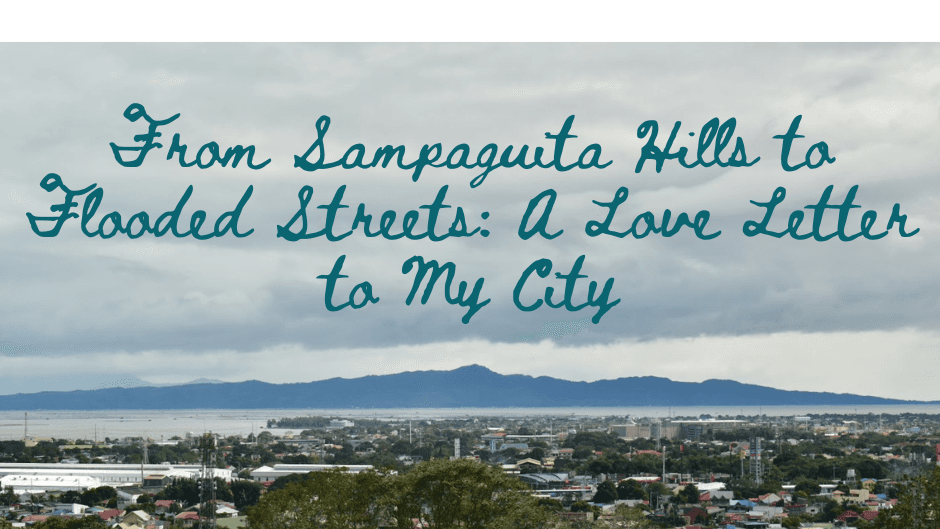
Photo Credit: Dee Personal Collection
Overlooking the city, highway below and the Laguna lake and hills beyond
Growing up, we called our old house “bundok”—not just because it sat perched on a hill, but because San Pedro itself felt wild and gentle, cradled in slopes dotted with Sampaguita trees. The national flower of the Philippines perfumed our summers, its white blossoms blooming along dusty paths. I was born and raised in Manila, like my three siblings, but San Pedro was our summer escape. Back then, coming here felt like a forever journey—and arriving meant we had truly left the city behind.
That nostalgia now serves as solace amid the devastation of unchecked urbanization and the visible toll of climate change.
Decades ago, San Pedro was officially declared a city. Today, it’s known as a dormitory town—a place people return to at night after long days spent working or studying across Metro Manila and nearby industrial parks. Every morning, the South Luzon Expressway fills with commuters rushing out, only to return exhausted under the evening sky, ready to repeat the cycle.
The hills once blanketed in Sampaguita are now crowded with subdivisions and concrete. Our population has exploded, and the quiet intimacy of neighborly life is fading. In the "bundok", asking for salt or sharing food was once an integral part of daily life's rhythm. Now, it’s rare even to know your neighbor's name.
The city is split—lowlands hold the town center, with city hall, schools, markets, malls, and banks. The upper villages, linked by a bridge, host familiar brands like Jollibee and McDonald's, a village-style mall, and access roads that lead to Cavite. I used to marvel at the empty spaces and wide skies during summer vacations. We gathered for mass at the hilltop church, chased the breeze on dusty roads, and wore the earth on our feet—dust in dry months, mud when the rains marked the monsoon's return and the end of summer play.
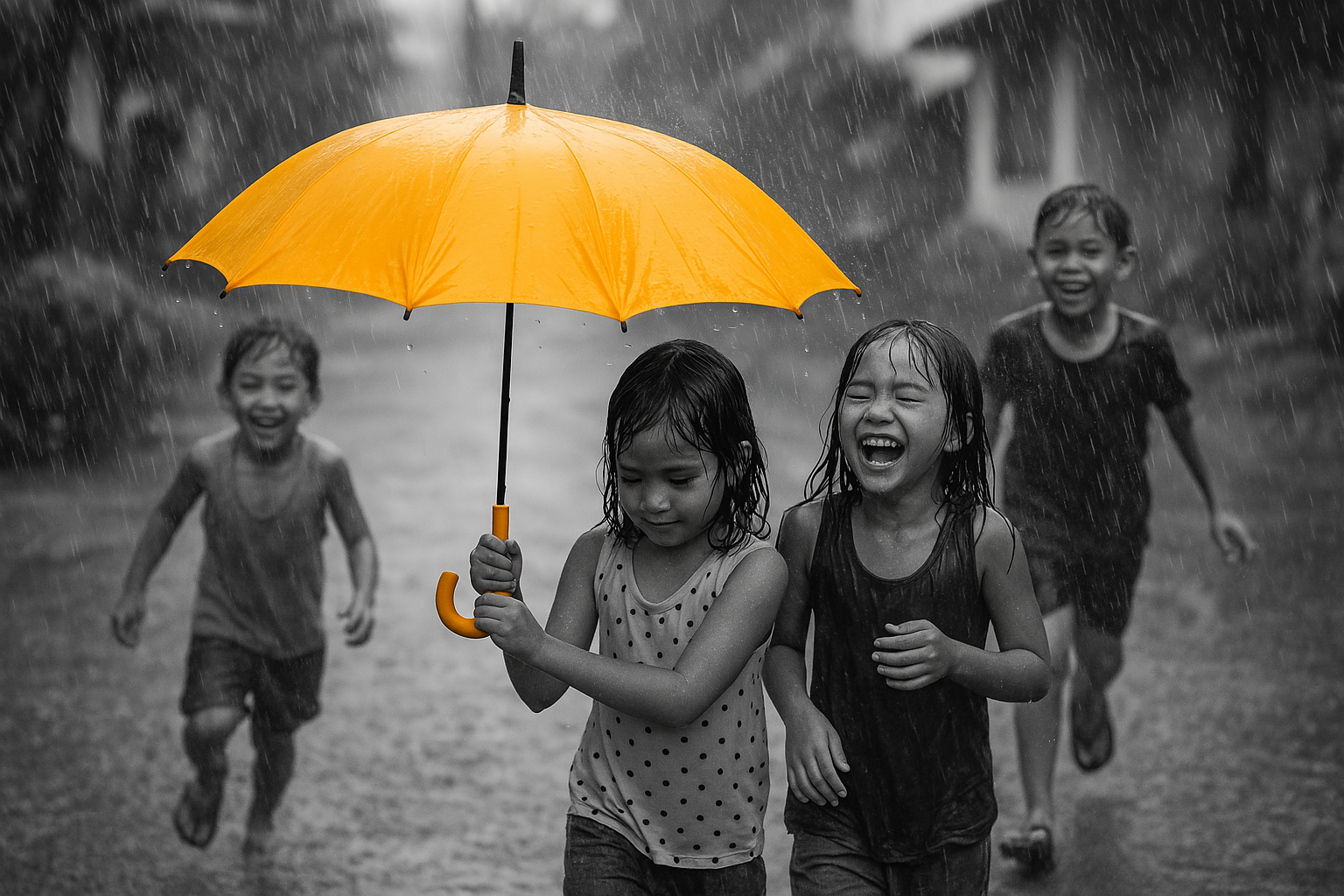
AI generated; Children playing in the rain
When my parents retired here, we became full-time residents. Yet my work kept me remote and emotionally detached from the daily rhythm of the city. Now, back for a while, I’m witnessing what comes after summer: the monsoon, in all its beauty and destruction.
I scroll through disaster updates daily—from news reports, group chats, and relief requests through my Rotary Club. I’m not used to worrying when the rain doesn’t stop overnight. But now I do. I know that the lowlands will flood, and I know that Laguna Lake—so long entwined with San Pedro’s identity—is rising once again.
What’s more unsettling than the water is the indifference. It doesn’t take a storm to cause flooding—just a short burst of rain, and we’re ankle-deep. Streets that never flooded before are now submerged. And yet, garbage piles grow, drains clog, and little changes.
I wonder whether anyone has truly studied the urban shifts in our city—the transformation of water flow, drainage, and waste systems as we built upward and outward. Have we mapped the tides of Laguna de Bay and built with its rhythms, or are we being pulled under by complacency?
With a new mayor and governor, I hope for fresh momentum. Our DRR programs must be more than reactive—they must be visionary, realistic, and sustained. I hope our taxes work not just for infrastructure but for integrity.
I want to see more trees in our hills, less traffic choking the village roads, and more people inspired to be stewards of our environment. I want children to dance freely in the rain again.
San Pedro's people deserve a life of peace and dignity. We deserve to feel safe in our homes, take pride in our city, and be confident that our leaders are listening. We deserve mornings where the Manok ni San Pedro call isn’t a symbol of struggle—but a wake-up call, a song of progress.
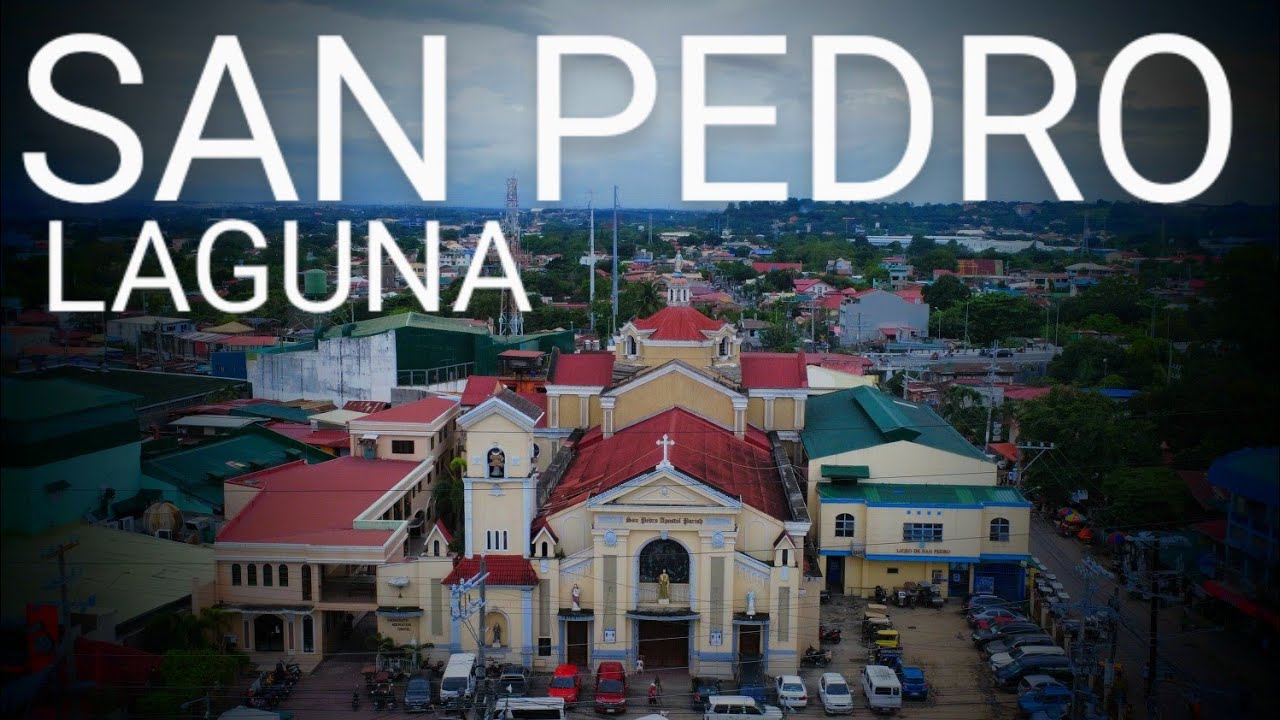
Online photo, aerial view of the San Pedro Apostol Parish (St. Peter the Apostle Parish), town centre
~ dee end ~
- Environment
- Our Impact
- Climate Change
- From Distraction to Collective Action
- Behind the Headlines
- Global