
GHANA: Raising the Alarm on Teenage Pregnancy
Apr 30, 2019
story

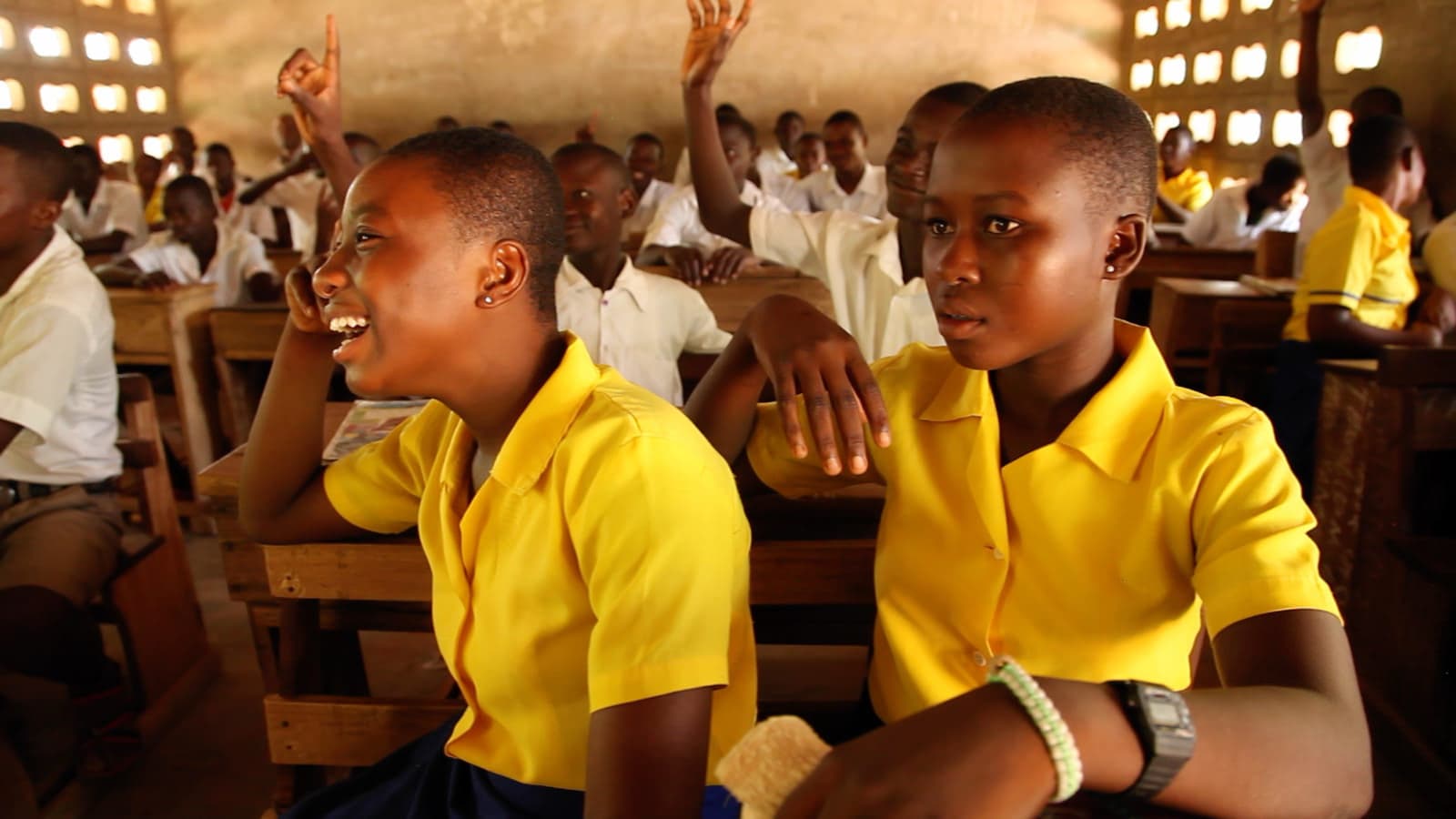
Photo by GPE/ Stephan Bachenheimer (CC BY-NC-ND 2.0)
Araba urges action to equip girls with the information they need to own their bodies and make their own choices.
We don’t want to be rushed into adulthood.
In my village, junior high school is the highest education level available, which means that most students are finished with school by age 15. Afterward, girls compete with each other to give birth.
Becoming a young mother has prestige. A girl’s family members celebrate when shegives birth and they dress in white to christen the babies. If a girl reaches her 20s and she has not yet given birth she becomes the talk of the village—people think she is barren.
I ask, why the hurry? Even As we grow into adolescents, we are still enjoying our childhood. We still play and share innocent laughs. We gossip with our peers on our way to fetch water from the village standpipe. We have girly discussions on menstruation, boys, pimples, and the latest beauty products to use. No one should take away this treasured part of our lives. We don’t want to be rushed into adulthood.
I avoided becoming pregnant at a young age because of my class teacher, the only mentor I had in my village. I was a precocious girl by nature and I told myself I would follow her example to become the next female teacher. My mentor drummed it in my ears well: I can only achieve my dreams through education. Therefore, I did not stand for mediocrity. My fondness for my mentor motivated me to resist conforming to the village standard for young girls and to instead pursue my own standards.
Most girls in the village do not have a mentor to look up to. I have to lift my eyes and face the reality here. Teenagers themselves celebrate teenage pregnancy, with all its health and economic complications. They aren’t driven to pursue their goals and be “somebody”. And even if they are driven, they aren’t always able to make choices about their own bodies.
Mansa is a 19-year-old young woman with two children who got pregnant when she was 14. I asked her, “Why did you not protect yourself if you knew you were sexually active? ”
Mansa has heard of drugs that prevent pregnancies, but she doesn’t have much knowledge about them or access to them. She doesn’t buy condoms for fear of the sellers labeling her as a ‘bad girl’.
Mansa told me she tried to abort her first pregnancy when she discovered it. A friend directed her to a lab technician who operates in secrecy as an ‘abortion doctor’. He wouldn’t agree to perform the abortion until he had raped her, leaving her with bruises. Mansa went through with the abortion, but this ‘sex ultimatum’ deterred her from returning to this man for subsequent abortions. Once her first child was born, Mansa was seen as an adult, and she felt she had to continue having children.
Mansa’s story made me wonder why issues of birth control and abortion are hushed and silenced. Abortion is frowned upon in my village, a taboo meant to ensure that girls preserve themselves until properly married. But most of the young ones are sexually active. Many clandestinely employ dangerous chemicals to abort unwanted pregnancies or, like Mansa, go to fake doctors who sexually abuse them.
Girls dare not report abuse meted out by supposed ‘abortion doctors’. They suffer alone from the abuse and shame. They bear the brunt of the loss and pain.
Young women need information in their adolescent yearswhen they are developing their sexual drives and curiosity. When I was in school, there was scant information on abortion or sexual and reproductive health and rights.
I lost three classmates who died from using crude methods to end their pregnancies. They had no information to arm them in the most volatile stage of their lives. We need to educate girls on the pros and cons and guide them to make their own decisions.
Abortion is illegal in Ghana except in certain extenuating circumstances such as rape or incest, orwhen the mother’s life is in danger. When will it be totally legal without qualifying it? We Need to get good professionals who can provide abortions and save lives. Why does all the shame fall to girls? Where Are the boys who are responsible for their pregnancies? Where Are the men who are getting children pregnant?
Precocious child as I am, I am raising the alarm. I say let’s do something about the knowledge gap. Let information on choices flow easily and readily to every teenager in the village. Let girls own their own bodies and make their choices.
Story awards
This story was published as part of the World Pulse Story Awards program. We believe everyone has a story to share, and that the world will be a better place when women are heard. Share your story with us, and you could be our next Featured Storyteller! Learn more.
- Girl Power
- Health
- Education
- Sexual and Reproductive Rights
- Africa