
GHANA: Reusable Pads a Sustainable Solution for Girls
May 13, 2020
story
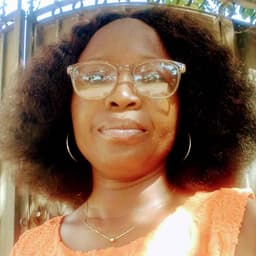
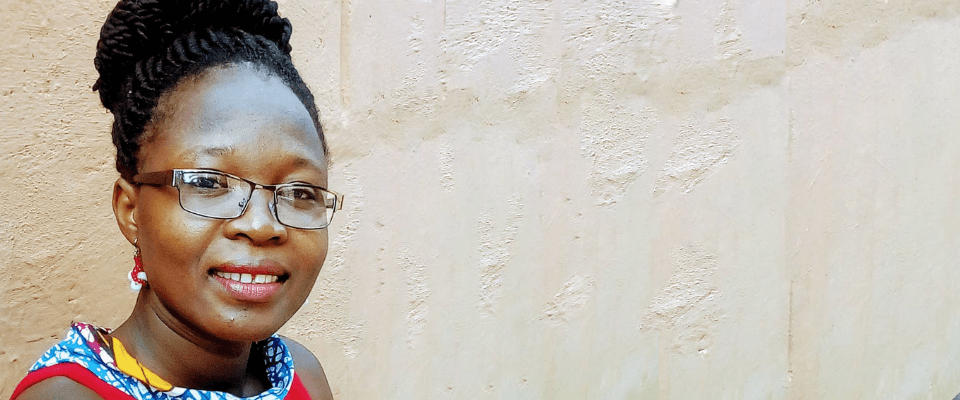
Lisbeth A. Salifu knows from experience that managing menstruation in Ghana is a challenge, especially for girls. Reusable pads, she says, will help.
The stigma attached to menstruation has made our girls shy. They want to handle things on their own and in secret.
I remember the day vividly; I always laughed over it. How my first period came seemed so strange to me at the time. I was 14 years old, and it was the weekend. My friends and I had just finished playing and resolved to climb a mango tree to pick some of its fruit.
In the middle of the climbing and the picking, I felt something like urine, but not urine, flowing into my pants. For some time I tried to ignore it, but the more I ignored it the more came. Eeii! You Sisters know what I’m talking about. As the feeling intensified, I decided to look. Low and behold there was dark-colored blood staring at me. Seeing this I screamed, “It’s blood! ” Drawing the attention of my friends who then all came running toward me.
In typical childhood style, a circle was formed, and I was placed in the middle. At age 14 I was the eldest; if I couldn't figure out what it was, then who could? I Remember one of my friends telling me that I was sick and should go home. As we all contemplated the cause of this sudden illness, one of our boy schoolmates overheard us. He was a little older than me and came to my rescue. He said, “Go home and tell your mother. You are not sick. ” What a relief it was to hear I was not sick! Straightaway I Headed home, faster than ever.
As soon as I arrived, my mother could see what had happened. My dress was already soaked with blood. Quickly she called me, “Come, and can I see your dress? ” I Stood murmuring about how it had happened. I asked her if I was sick, and she said “no, ” just as the schoolboy had.
Then she told me to go and fetch water and shower, and when I finish showering, I should come to her so she can dress me. Eeii! Dress Me? A 14-Year-old girl? (My Eyes were rolling. ) “But I Always dress myself, ” I replied. She ignored me but shouted, “Get away, you are smelling! ” Ha! It Was true—i was beginning to smell. I could smell it myself. I began to worry again that something was wrong. “But what could it be? ” I Asked myself. Only time would tell. I did as she commanded.
When I returned, I saw my mother had torn a clean rag into pieces. She told me to wear the rags in my pants and to place them where the blood was coming. She also gave me extra rags and asked me to replace the first ones once they were soaked. In that moment, I realized this was not going to be just a one-day event. She continued, telling me to wash the rags and hang them under the sun to dry thoroughly. I took her advice in good faith, and that was it. I kept washing and changing rags for almost nine whole days, and then one day, the bleeding stopped.
I remember being so glad when it stopped. I told my mother, and all she said was “Don't worry when it comes again. ” I said, “Okay, ” shyly and left.
It was after a week or two that my class at school had a lecture about menstruation. Our teacher told us about how an egg is released from our ovaries each month to travel to the uterus through one of our fallopian tubes; how the lining of the uterus ultimately sheds if the egg is not fertilized; and that finally, it is this shedding that is our “period, ” or menstrual cycle.
With this lecture, and this new knowledge, I felt the greatest relief. It was then I began to appreciate my period when it came. I felt proud that at last I could be referred to as a woman. Even with all the challenges I faced when it came, I was happy that it did.
I must admit, though, that when I started having my period my school attendance dropped. This was due to the cramps that accompanied it, and also that fact that I did not want to soak myself during lectures. I would stay home the first few days of my period, when it was heavier, and between the fifth and seventh days, I would muster the courage and go to school. But I would leave for home early, between mid-morning and noon.
I also learned about the cultural impact of having a period. In my family, when a woman is on her period she is exempt from cooking for the family. So, when it was my turn to cook, if it was during my period week, I would be exempt. Initially, I thought this practice was out of love for me. I thought it was so I could rest because I was in pain. However, I soon learned it was actually because during her period a woman is considered very dirty and too unclean to cook and feed others. I couldn’t believe it! This Myth persists in Ghana today.
Recently, a BBC reporter made a documentary about menstruation and the girl-child in Ghana. I was shocked to hear that in one of the districts of the eastern region, it was taboo for girls on their period to cross a particular river in order to get to school. This river was considered a small god, and the belief was that it would be made dirty by girls crossing it while on their period.
I asked myself, why should the fertility of a girl child be taboo? Children Are a blessing from God, they say. Even the Bible agrees with this statement, so why should God’s blessing be a curse or be dirty? To Date I am still seeking the answers to these questions.
The stigma attached to menstruation has made our girls shy. They want to handle things on their own and in secret when it comes to their periods. Some parents also shy away from discussing menstruation with their daughters. They think teaching their girl child about menstruation and sex will “spoil” her—that she will explore the secret of making babies and go after men. On the contrary, sex and menstruation education will protect her. It will give her information on how to prevent pregnancy and why she should abstain from sex.
Around my senior year in high school, I started using disposable pads. To this day I do not like the way we dispose of them, especially considering the poor hygiene systems in our part of the world. Some burn them, but due to the liquid absorbed, they are hard to burn. Others flush them down the toilet, but with the lack of good potable water in Africa, the result is water wasted. In the end, the pads are thrown all over. We do not have a good way to dispose of them.
Also, disposable pads are expensive in Ghana for an ordinary schoolgirl. Every month each girl must budget 5 ghs—the equivalent of 1 usd—for pads.
When I joined World Pulse, I learned about a reusable pad that is very easy to use. It’s one of the best pads I have tried, and even though it’s in a rag-like form, its comfortable and professionally designed. It’s produced by Real Relief, a reusable menstrual pads company. These pads are environmentally friendly and less expensive than disposable pads. A pack of six will last for four years, and all you need to do is wash them and dry them in sunlight.
As part of my efforts to help girls in Ghana manage menstruation, I am working hard to bring them RR reusable sanitary pads. It’s not an easy undertaking, but we are looking for partners to assist us in importing, supplying and then selling these reusable pads to our girls.
They are less expensive compared to disposable pads, environmentally friendly (as they won’t result in littering), and above all, they are very comfortable and safe to use.
If you or someone who know would like to partner with us in Ghana, please reach out to me here on World Pulse via private message.
STORY AWARDS
This story was published as part of the World Pulse Story Awards program. We believe every woman has a story to share, and that the world will be a better place when women are heard. Share your story with us, and you could receive added visibility, or even be our next Featured Storyteller! Learn more.
- Salud menstrual
- Africa