
Growth is messy, my sisters! The beautiful chaos of midlife reinvention
Mar 19, 2025
story
Seeking
Connections
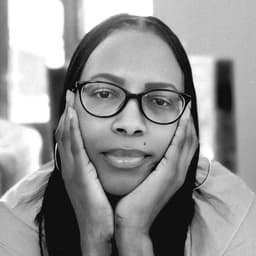


Photo Credit: SlobodanMiljevic/Getty Images via Canva Pro
The deepest growth happens in those spaces between who we were and who we're becoming.
There's a special moment in a woman's transformation that rarely gets talked about enough. It's not the event that forces change, nor the inspiring "after" story we see read about.
It's the sacred in-between: that raw, honest space where we've outgrown our former selves but haven't yet become who we're going to be.
This middle space is messy, confusing, and absolutely necessary for real change.
As I approach fifty, I find myself deep in this in-between space. The woman who built a career on planning and measuring success, who ran family life with efficiency, who knew herself mainly through her roles—she exists now only in memory. The structures that once gave shape to my days and my identity have changed so much that I sometimes feel like I'm living someone else's life.
My children have grown into their independence, changing our relationship from caregiving to a beautiful friendship. My professional identity, built over decades, suddenly feels like clothes I've outgrown. Even my understanding of marriage has completely shifted, showing me that what I once saw as permanent was actually just one chapter with its own natural ending.
This unraveling isn't happening in neat, orderly stages. It's all happening at once. Messy, overlapping, with no clear map to follow. And maybe most unsettling: there's no going back. The woman I was—competent, certain, defined—has been taken apart, and the woman emerging doesn't yet feel like home.
The darkness before becoming
In many wisdom traditions, darkness comes before rebirth. Ancient alchemists called it the nigredo—the blackening phase where things break down before transformation can start. Indigenous cultures worldwide honour periods of rest and renewal, understanding that life's biggest transitions often require sinking before rising.
I'm learning to honour my own dark phase. On hard days, I feel myself coming undone at the seams. The roles I played with confidence—professional, stay at home-mother, wife—now feel like clothes that no longer fit, showing my vulnerability underneath.
This shows up in my body: a hollow feeling in my chest, nights when I can't sleep as possibilities and fears chase each other in endless circles, moments when I feel both too visible and completely unseen. My body itself seems to be renegotiating its place in the world, no longer willing to follow rules that don't serve its deeper wisdom.
For those following my journey through previous writings—yes, I'm still here in what I call the "sacred chaos." This transformation isn't following my preferred timeline. The universe, it seems, works on its own schedule, not concerned with my wish for a neater process.
Womanhood in the in-between
As women, we know these threshold experiences. Our bodies navigate transitions throughout our lives—from our first periods to childbirth to menopause. Each transition carries us across boundaries, asking us to integrate new parts of our identity while letting others go.
Anthropologist Victor Turner described this as liminality—that crucial phase when a person is no longer their former self but hasn't yet become their new self. It's a space where old rules no longer work, but new ones haven't yet formed. For women at midlife, this carries special significance—we stand at the crossroads of biological change, cultural invisibility, and potential spiritual awakening.
At almost fifty, I'm navigating this threshold with half a century of experience, yet often feeling like a beginner.
These moments of deep uncertainty mark the threshold experience. They are also, I'm discovering, the only path to authentic transformation.
Beyond bouncing back: the power of staying present
Earlier in life, I thought resilience was strength. I prided myself on bouncing back—from work setbacks, from parenting challenges, from relationship difficulties. Resilience served me well then, helping me recover from disruptions while maintaining my sense of who I was.
But midlife transformation asks for something different. It requires endurance—the ability to stay present within the unraveling itself, to witness the breaking down without frantically trying to rebuild the familiar pattern. Resilience assumes a stable self that can be recovered; endurance recognizes that the self itself is what's changing.
This endurance has feminine qualities. It's not about gritting teeth and pushing through, but about opening to the process, surrendering to the wisdom of uncertainty. It's about trusting the deep intelligence of transformation—the same intelligence that guides seeds to sprout in darkness.
The supports carrying me through this process aren't what I expected. Yes, therapy helps. Writing offers both mirror and window. But my most powerful support comes from reconnecting with my internal mothering presence—the wise feminine voice that knows how to hold space for becoming.
Mothering ourselves through change
For decades, my inner voice was mostly critical, evaluating everything against impossible standards. This voice—absorbed from cultural messages about women's worth—measured success harshly: perfect or failure, worthy or unworthy, enough or never enough.
Through years of inner work, another voice has emerged—one that speaks with the compassion of a good mother. This voice doesn't deny reality but holds it differently, the way a mother holds a child learning to walk: with patience for the stumbles and faith in the capacity to rise.
When I sat at my computer preparing to submit writing professionally for the first time, the familiar critic whispered:
You're not qualified. You've spent your life helping others shine. Who are you to claim this space?
But the maternal voice countered:
You're learning. Every writer begins somewhere. The only way to become is to begin.
When I felt overwhelmed by the simultaneous unraveling of multiple identities, the critic insisted:
You should have figured this out by now. Other women manage transitions with grace and apparent ease.
The nurturing voice responded:
Transformation isn't meant to be graceful. It's meant to be real. And this messy, uncomfortable space is exactly where new growth happens.
This mothering presence embodies what Carl Jung called the anima—the integrated feminine principle of compassion, intuition, and receptivity. But transformation needs balance. Alongside this nurturing force, I have also awakened the animus—the directive, fatherly energy that provides structure and movement without rigid control. Just as the mother nurtures growth, the father archetype offers guidance and direction, ensuring that transformation isn’t just felt but acted upon. Together, these energies create the internal balance necessary for true reinvention
When inertia threatens to keep me frozen, this directive energy prompts:
Take one small step. Then another. Movement creates clarity that thinking alone cannot.
When fear suggests I should wait until I feel ready, it counters:
Readiness is a myth. Begin anyway, and readiness will find you in the doing.
Together, these inner voices—the nurturer and the director—guide me through this threshold space. Neither would be enough alone. The nurturer without the director might keep me comfortable but stuck; the director without the nurturer might push me forward but at the cost of healing.
The magic of becoming
As I navigate this in-between space, sometimes stumbling, sometimes finding unexpected strength—I'm learning that the chaos itself has value. The discomfort isn't a sign that I'm doing it wrong; it's evidence that I'm doing it at all.
I don't know exactly who I am becoming. The emerging self reveals herself in glimpses—in moments of unexpected courage, in new boundaries, in the growing clarity of my own voice. But I know I am becoming. And perhaps that's enough for now. To trust the process, to stay in the crucible long enough for transformation to complete its work.
This is the deep connection between radical authenticity and midlife transformation. Both require us to stand in the discomfort of becoming and say:
This is raw. This is happening. This is me—unfinished, unapologetic, and exactly where I’m meant to be.
The world doesn't need more women pretending to have it all figured out. It needs truth-tellers willing to inhabit the sacred chaos of transformation and light the way for others walking their own paths.
What about you, sister? Are you standing in your own in-between space? Are you feeling the letting go of who you were and the uncertain emergence of who you're becoming? If so, we can witness each other's becoming—honouring the necessary chaos not as failure but as the sacred forge of reinvention.
Here’s to the fire, the forge, and the fearless—rising like the phoenix, reborn from the ashes. Onward!
- Girl Power
- Stronger Together
- Moments of Hope
- Global