
Healing Justice Toolkit
Aug 11, 2025
story
Seeking
Action
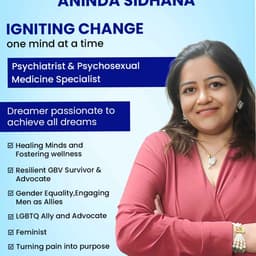

🛡️ Healing Justice Toolkit: Transforming Gender-Based Violence (GBV)
Curated by Dr. Aninda Sidhana
---
🌍 SECTION I: Understanding GBV
Definition
Gender-Based Violence (GBV) refers to any harmful act—physical, sexual, emotional, economic, or structural—inflicted on someone due to gender identity, roles, or power dynamics. It is rooted in inequality and sustained by silence.
> “GBV is not just a wound—it’s a warning. A system screaming to be reimagined.”
Why We Talk About GBV
- To reduce risk through prevention and mitigation
- To promote resilience via survivor access to care
- To support recovery through community capacity-building
Root Causes
- Patriarchy and toxic masculinity
- Gender norms and stereotypes
- Institutional neglect and legal gaps
- Economic dependency and social stigma
- Conflict, displacement, and humanitarian crises
---
🧩 SECTION II: Forms & Dynamics of GBV
| Type | Description | Examples |
|------|-------------|----------|
| Physical | Bodily harm | Hitting, burning, confinement |
| Sexual | Non-consensual acts | Rape, harassment, exploitation |
| Emotional | Psychological manipulation | Gaslighting, threats, humiliation |
| Economic | Resource control | Financial abuse, denial of assets |
| Digital | Tech-enabled abuse | Cyberstalking, image-based abuse |
| Structural | Systemic neglect | Legal bias, policy exclusion |
---
🚩 SECTION III: Red Flags of Abuse
- Excessive jealousy or possessiveness
- Isolation from friends, family, or support systems
- Gaslighting or denial of reality
- Sudden mood swings or rage
- Control over finances, decisions, or movement
- Threats of harm or suicide if the survivor leaves
- Love bombing followed by devaluation
- Disregard for consent or boundaries
---
🧠 SECTION IV: The Narcissist’s Playbook
> “Abuse is not always loud—it’s strategic.”
Common Tactics
- Idealization: Love bombing, mirroring, intense flattery
- Devaluation: Criticism, withdrawal, emotional neglect
- Gaslighting: Denying reality, rewriting history
- Triangulation: Using others to manipulate or isolate
- Projection: Accusing the survivor of their own behavior
- Hoovering: Attempts to re-engage after separation
- Control through guilt: Playing victim, blaming the survivor
Impact on Survivors
- Loss of self-worth
- Chronic confusion and anxiety
- Trauma bonding
- Isolation and shame
- Difficulty trusting others
---
🧵 SECTION V: Mnemonics for Healing & Advocacy
🔹 WINGS
Women’s Empowerment, Innovation, Nurturing, Gender Equality, Safety
🔹 PAPAS
Prevention, Attitude, Preparation, Anticipation, Strategies
> Designed to empower girls through situational awareness and strategic thinking.
🔹 EMPOWER
Educate, Mobilize, Participate, Own, Work, Engage, Respect
🔹 GENDER
Generate, Educate, Nurture, Depend, Empower, Respect
🔹 MARD
Many voices, Allies, Respect, Dismantling patriarchy
🔹 BECAUSE I AM A MAN
Engaging men and boys in gender justice through emotional growth and allyship
---
🧠 SECTION VI: Healing Mechanisms
> “Healing is not linear—it’s layered, relational, and deeply political.”
Mechanisms Include
- Body-based therapies (e.g., yoga, somatic experiencing)
- Survivor-led storytelling and media
- Community listening circles
- Culturally rooted rituals and practices
- Accessible mental health services
- Peer support and mentorship networks
---
🧠 SECTION VII: Prevention & Education
Advocacy Starts at Home
- Teach emotional intelligence and empathy
- Challenge patriarchal norms in parenting
- Embed safety and consent education in schools
- Use social media for awareness and allyship
STEM for GBV Prevention
- Mobile apps for emergency alerts
- Online counseling platforms
- Data analytics for policy reform
- Promote women in tech and innovation
---
🧠 SECTION VIII: Community Mobilization
Strategies
- Empower women’s groups and networks
- Engage men and boys as allies
- Build partnerships with schools, healthcare providers, and NGOs
- Foster safe spaces and listening circles
---
🧠 SECTION IX: Policy & Systems Change
Frameworks
- Global Gameboard: Collective action and shared responsibility
- Human Rights-Based Approach (HRBA): Address root causes and build capacity
- PSEA: Prevent sexual exploitation and abuse
- Strategic Areas (3 As):
- Advance workforce development
- Accelerate access to capital and digital tools
- Amplify agency and voice
---
🧠 SECTION X: Intersectionality & At-Risk Groups
Groups at Risk
- Adolescent girls and boys
- Women with disabilities
- Survivors of conflict and displacement
- LGBTQIA+ individuals
- Indigenous and minority communities
Contributing Factors
- Social stigma and isolation
- Lack of access to services and education
- Economic vulnerability and unsafe livelihoods
- Cultural exclusion and marginalization
---
🧠 SECTION XI: Religion & Cultural Engagement
- Engage constructively with religious leaders
- Identify common ground between faith and gender justice
- Collaborate on GBV prevention within religious frameworks
- Use cultural rituals to support healing and empowerment
---
🧠 SECTION XII: PSEA (Prevention of Sexual Exploitation and Abuse)
Definition
SEA is abuse of power for sexual purposes. PSEA policies aim to prevent and respond to SEA within humanitarian and development settings.
Pillars of PSEA
- Management and coordination
- Community engagement
- Prevention
- Response
Consequences
Violations result in disciplinary action, contract termination, or legal referral.
---
🧠 SECTION XIII: Monitoring & Evaluation
- Track survivor outcomes and service access
- Use participatory feedback loops
- Evaluate policy implementation
- Ensure ethical storytelling and data use
---
📣 SECTION XIV: Call to Action
- Institutionalize trauma-integrated care
- Promote healthy masculinity and mutual respect
- Support survivor-led media and policy campaigns
- Join coalitions for SDG 5 and gender justice
- Document and share best practices
> “Healing justice is not just about surviving—it’s about system-shifting. Let survivors lead. Let dignity be the design.”
---
🧠 SECTION XV: Submission Paragraph on Healing
> “Healing is not linear—it’s layered, relational, and deeply political. Survivors of gender-based violence need more than safety; they need systems that honor their agency, restore their dignity, and offer trauma-integrated care. Healing mechanisms must include body-based therapies, survivor-led storytelling, community listening circles, and culturally rooted practices that reconnect individuals to self and collective power. When healing is framed as justice—not just recovery—it becomes a radical act of reclamat
ion.”
- Gender-based Violence
- Becoming Me
- Global