
Holding the Weight of Knowing
Jun 8, 2025
story
Seeking
Feedback
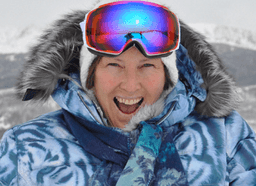

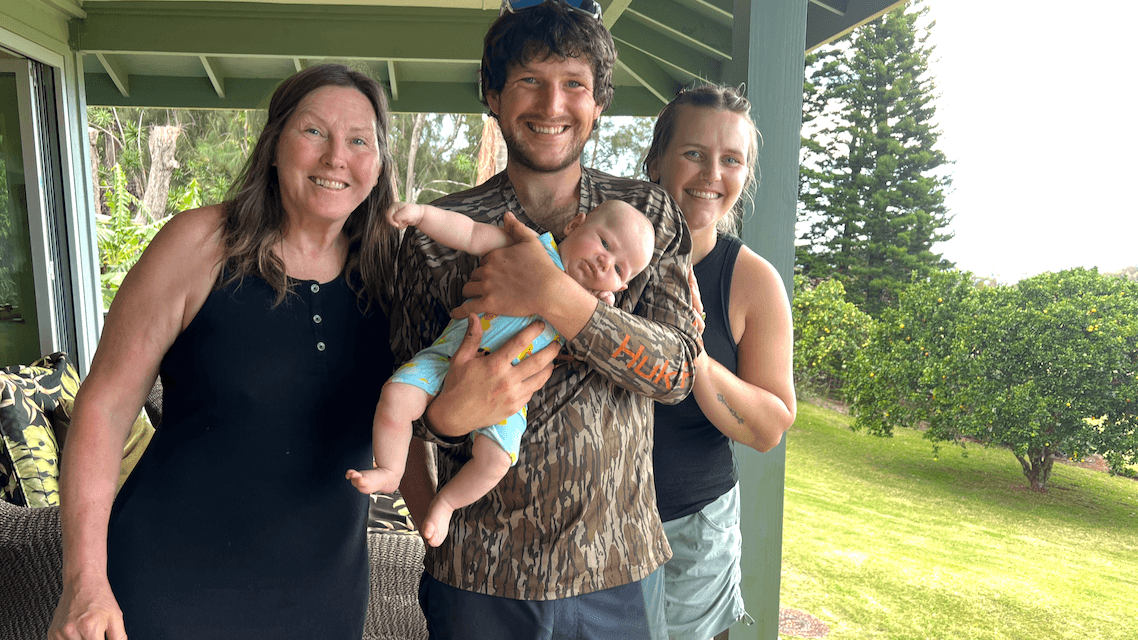
Photo Credit: Kat Haber, timed selfie from the selfie queen
Family
The morning I truly understood climate change, I couldn't get out of bed. Not because I learned something new – I'd been studying environmental science for years, immersing myself in research papers and data sets that painted an increasingly dire picture of our planet's future. But because I'd just held my newborn son, McKenzy, and suddenly the abstract future became a beautiful, vulnerable face depending on choices I might never make.
Those early days blur together now – sleepless nights punctuated by feedings and diaper changes, but also by an overwhelming sense of responsibility that went far beyond the immediate needs of caring for an infant. I'd spent months researching glacier melt in preparation to walk across the country in the Great March for Climate Action, analyzing data that showed accelerating ice loss, rising seas, and disrupted weather patterns that would reshape the world my son would inherit. The statistics were staggering: Arctic sea ice declining at a rate of 13% per decade, global temperatures rising faster than any point in human history, and ecosystems collapsing at unprecedented rates. Grewingk Glacier
But holding my baby in those quiet pre-dawn hours, I felt the weight of every decimal point, every projected temperature increase in ways that transcended mere intellectual understanding. The future wasn't a graph anymore – it was his future, and I was drowning in the enormity of what we'd already lost and what we stood to lose if we didn't act decisively and immediately.
The transformation from academic understanding to visceral knowing was devastating. Where I once could compartmentalize the grief of environmental destruction, now it lived in my bones. Every climate report felt personal. Every news story about extreme weather events, species extinctions, or ecosystem collapse hit me like a physical blow. I found myself calculating constantly – by the time McKenzy turned ten, what would the coral reefs look like? There was a 90% bleaching of the Great Barrier Reef in Australia this year. By his twentieth birthday, how many species would we have lost that we did not even know existed? What kind of world would he raise his own children in?
My days became a blur of feeding schedules and environmental research, of baby care and climate activism planning. I'd rock McKenzy to sleep while scrolling through news about rising sea levels, or change his diaper while listening to rare news reports of obscure and extreme weather occurrences in Earth or about regenerative agriculture. The juxtaposition felt surreal and necessary – this tiny human who represented hope and vulnerability embodied everything I was challenged by.
My mom found me crying over McKenzy's crib one afternoon, tears streaming down my face as I watched him sleep peacefully, unaware of the crisis unfolding around him. The weight of knowledge felt unbearable that day. I'd just read a report about accelerating permafrost melt releasing methane at rates far exceeding scientific projections, and the implications terrified me.
"I don't know how to protect him from what's coming," I whispered to her, my voice breaking. The helplessness was overwhelming – how do you shield someone you love from something as vast and systemic as climate change?
"You start by staying," she said simply, her words cutting through my spiral of despair. "You don't get to check out because it's hard."
Those words became my anchor. Staying present. Staying engaged. Staying in the arena even when the odds seemed insurmountable. Because checking out wasn't an option when I had this beautiful human depending on the choices we made today.
That night, I wrote my first letter to McKenzy, documenting the world I was inheriting and the world I was desperately dreaming to leave him. I wrote about the species we'd already lost and the countless smaller species disappearing before we even knew their names. I wrote about the gut punch I felt the day a fellow wilderness conservationist told me that the the northern white rhino down to its last two females teetering on the edge of extinction and would likely go extinct within our lifetime.
But I also wrote about hope. About the communities already facing climate impacts and the ones building resilience with innovative solutions. About the young activists around the world demanding change that I had marched with. About the scientists working tirelessly to develop clean technologies. About the indigenous communities whose traditional knowledge held keys to living regeneratively with Earth.
I kept writing to him through the months and years, balancing truth with hope because he would need both. Because staying in the room with hard truths is how we find our way to solutions. Because love demands we feel everything – the grief and the hope, the ending and the beginning. Those letters became my way of processing the complexity of raising a child in the climate crisis while maintaining both honesty about our challenges and faith in our capacity to address them.
Now he is grown up and married with a son of his own. The circle completes itself in ways that both comfort and concern me. They are moving from Hawaii, making the difficult decision to eliminate flying so we can be physically present with his family while reducing our carbon footprint. It's a sacrifice that reflects the values we've tried to instill – that our personal choices matter, that proximity to loved ones can coexist with environmental responsibility.
Yet the challenges persist in unexpected ways. His next-door neighbor uses toxic sprays on his plants that blow directly into the forty-two organic tropical fruit trees we planted together over the years. Those trees represent so much – hope, fruitfulness, the long-term thinking required to plant something today for future generations to enjoy. Watching chemicals drift across the property line onto our carefully tended organic space feels like a metaphor for the larger challenge we face: how to live together in a world where everyone shares distinct values.
He holds the weight of what I have taught him – both the solutions and the fears. I see it in his eyes when he looks at his own son, that same mixture of fierce love and protective concern that I felt all those years ago. He understands the urgency of climate action not as an abstract concept but as an immediate threat to everything he holds dear. He's learned about renewable energy and regenerative agriculture, about the power of community organizing and the importance of political engagement. But he and his generation have also inherited the anxiety that comes with knowing too much, with understanding the scope of the crisis we face.
Now it is for us both to squeeze out those fears and transform them into love – for our sons, our planet, and ourselves. This transformation isn't about denial or naive optimism. It's about channeling the energy of fear into productive action, about using love as a force for change rather than paralysis. It means continuing to plant trees even when neighbors spray toxic chemicals. It means making difficult choices about where to live and how to travel. It means staying engaged for our planet's future even when the odds seem overwhelming.
- Environment
- Survivor Stories
- Climate Change
- Earth Emergency
- Global