
How to Be Rich, Poor and Still Travel First Class - A Masterclass by Africa’s Ruling Elite
Apr 28, 2025
story
Seeking
Encouragement

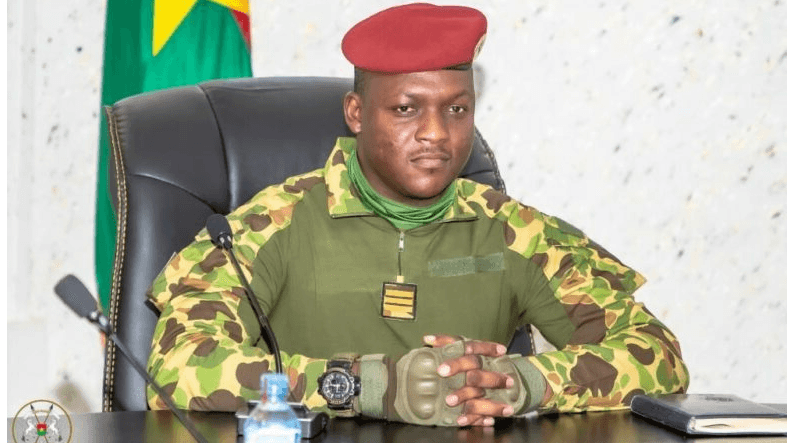
Photo Credit: Source Unknown
"A continent with 60% of the world’s uncultivated arable land asks countries that have to import food to teach them farming."
Ibrahim Traoré, the young, fiery President of Burkina Faso, once posed a question that sliced through the fabric of Africa’s modern political farce with the sharpness of satire and the sincerity of heartbreak.
He said his generation simply could not understand how a continent blessed with so much — minerals that make smartphones smart, oil that fuels the world’s thirst, and fertile lands kissed by sunlight — could simultaneously carry the label of “the poorest.”
Even more puzzling to him was how African leaders, who govern nations practically bubbling with buried treasure, somehow found it necessary to jet around the globe not as respected equals, but as professional beggars in tailored suits.
Traoré was not shouting, protesting, or picketing at the gates of former colonial capitals. No, he was just asking, really — a simple question on behalf of a generation that grew up watching their leaders lecture the youth on discipline while lounging in billion-shilling offices with golden curtain rods. He couldn’t wrap his mind around it: How could one sit atop diamond mines yet send their finance minister to Paris with a begging bowl instead of a business proposal?
It wasn’t just a complaint; it was a generational riddle — the kind of enigma that makes the youth of Africa question not only the sanity of their leaders but also the GPS coordinates of common sense.
Traoré, with the unfiltered candour that comes from not being too deeply marinated in diplomatic hypocrisy, spoke for millions who have grown tired of press conferences announcing “strategic partnerships” that somehow always leave Africa with the debt and Europe with the diamonds.
The contradiction is not just bizarre — it’s almost theatrical.
Picture this:
Africa, draped in natural riches, sitting on enough rare earth minerals to power the green revolution, yet showing up at international summits like a guest who forgot their wallet. And still, our heads of state arrive in convoys longer than airport runways, trailed by personal chefs, praise singers, and distant cousins on government payrolls, only to request aid from countries they once supplied with cocoa and copper.
Meanwhile, back home, their citizens queue at embassies in heat-stricken capitals, begging for visas to countries whose GDPs were once financed by their forefathers’ sweat and stolen gold. Irony has truly been working overtime.
One might ask, where does all the wealth go? A great question. Some of it is locked up in offshore accounts that have never seen an African sunset. Some is quietly buried beneath flagship projects that cost triple the global average per kilometre. And a good chunk of it is invested in foreign real estate portfolios that will never house an African child. All while citizens are told to be patient, to tighten their belts, to “accept the harsh economic reality.”
And as Traoré hinted — or perhaps shouted, depending on how satirical your hearing is — there is an art to this absurdity. African leaders don’t just beg; they curate it. They craft compelling PowerPoint presentations showing why countries that once pillaged African economies should now kindly “assist” in rebuilding them. There’s usually a nice dinner after. Lobster, salmon, or whatever else colonisation didn’t ruin.
It’s almost a spiritual experience — a pilgrimage of pride swallowed whole.
A continent with 60% of the world’s uncultivated arable land asks countries that have to import food to teach them farming. Nations drowning in sunshine plead with snow-covered countries to fund their solar panels. And leaders of oil-rich states stand in climate conferences seeking funds to buy firewood for the poor. It's tragic, but it's also... well, deeply and undeniably comic.
To Traoré and his peers, this is not just bad economics — it’s an identity crisis in motion. Their generation grew up with satellite TV and smartphone screens that broadcast both the decadence of political corruption and the desperation of social inequality. They watched pensioners from European capitals fly into African cities to give financial advice to governments that can't balance their own books but can somehow organise five national holidays for a single dead politician.
Traoré’s statement was more than a lament. It was a generational indictment, one drenched in both confusion and defiance. It exposed the cognitive dissonance that has allowed leaders to measure national progress by the number of summits attended rather than by the number of children fed, schools built, or roads completed.
But here’s the kicker: the world keeps applauding. Every year, some well-dressed diplomat with a charming accent presents Africa with a humanitarian award, while subtly ignoring the looters wearing designer suits in the front row. The same leaders whose families have not seen a public hospital since colonial times are the ones being flown out for kidney treatments while their countrymen die waiting in line at clinics with no syringes.
So, to Traoré’s point — and it bears repeating — how does a continent so extravagantly wealthy end up so tragically poor? Perhaps because it has mastered the fine art of leaking from the top while mopping at the bottom. Because instead of producing policy, we produce poetry about resilience. Instead of industrialising, we institutionalise mediocrity. And instead of exporting innovation, we export our brightest to build dreams for others.
In Traoré’s mind — and increasingly in the minds of millions of African youth — something has to give. The continent cannot continue to wear the mask of the victim while refusing to confront the faces of the villains within. It cannot dance to the drumbeat of global development while its leaders sleep through accountability meetings. Africa must either claim its seat at the table or stop attending the banquet entirely.
In the end, begging may get you a cheque, but it won’t get you respect. And if there’s one thing this new generation craves more than foreign aid, it’s dignity.
And so, as another delegation prepares to board a flight to Geneva, Washington, or Beijing to discuss “urgent development needs,” Traoré’s words echo louder than ever — not as a complaint, but as a challenge.
How can a continent so rich be so poor?
How, indeed?
- Leadership
- Education
- Peace & Security
- Human Rights
- Economic Power
- Youth
- Global