
I Almost Said No.. But This Changed My Life
Nov 9, 2025
story
Seeking
Encouragement
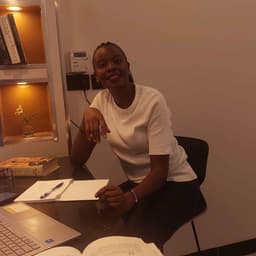

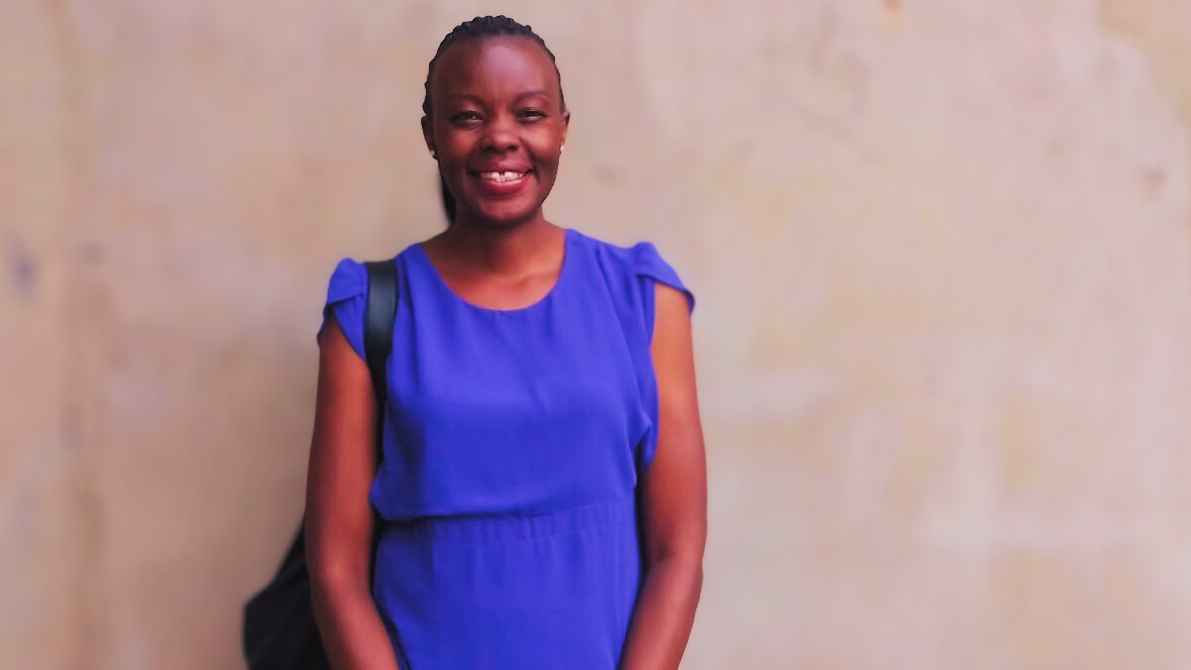
I've always been comfortable expressing myself one-on-one. I can share my ideas, debate points, and voice my thoughts freely, without hesitation. But the moment someone told me to speak in front of a group, a wave of fear would wash over me. My chest would tighten, my heart would race, and my mind would become a tangle of doubt. It was a fear I had carried for years, but it became impossible to ignore after the COVID-19 lockdown in 2021, when opportunities were scarce and every chance to earn a little income counted.
A close friend of mine was working on a multi-national research project in collaboration with Johnson & Johnson, focusing on managing pediatric patients requiring third-line antiretroviral treatment for HIV. Caregivers of children receiving medicines from the donation programme were to be interviewed to understand first-hand the impact of the programme in their lives. She was looking for someone to interpret for focus group discussions with the caregivers, from English into Luganda, a local language widely spoken across Uganda.
Now, I am not professional interpreter, plus the thought of speaking publicly terrified me but she wanted me to earn some money during those hard times. She believed I could handle it, to step into an opportunity I might have otherwise hesitated to take. I felt a swell of gratitude and pride that she had faith in me, but underneath it, a knot of terror twisted in my stomach.
She asked me, "Do you have a laptop?" I shook my head. I told her I was trying to save, hoping to buy myself one someday. What I didn't tell her was that I had no savings whatsoever. She looked at me straight in the eye and said, "Do this job, and use the money to buy yourself a laptop." This meant I didn't just have to interpret words; I had a chance to invest in myself. I owe my first laptop to her trust in me - a gift born out of courage and opportunity.
The task ahead felt enormous. Interpreting is already hard enough when you are confident in a language. However, doing it from English into Luganda, with technical terms related to HIV/AIDS involved, made it nearly impossible. I could almost feel the weight of the responsibility on my shoulders.
I knew preparation would mean everything. I printed out the materials I was expected to translate and studied them carefully. The documents were filled with medical terms and complex ideas I had never encountered before. I couldn't afford for the caregivers to misunderstand; their understanding was crucial. I spent hours researching the meanings of complex words, asking friends fluent in Luganda how to communicate the concepts accurately, and even calling my sister, a nurse, to explain the medical terminology in simple words I could convey naturally. Every moment I could spare, I practiced. I practiced aloud, I practiced in front of a mirror. I paced about, repeating each sentence until it felt natural. I repeated each phrase until it sounded confident, until the trembling in my own voice felt manageable.
The first day of the sessions arrived. I felt a familiar tightening in the chest as we drove to the meeting. The caregivers were waiting, and my friend gave me one last briefing. "You're ready?" she asked calmly as we got out of the car. I nodded, though inside, I was a whirlwind of nerves. I quickly said a silent prayer asking for help from above.
When my friend began speaking in English and I started interpreting in Luganda, the first few sentences stumbled out awkwardly. My voice shook, I stammered, and a few times I almost forgot the words entirely. I could feel the gap between what I wanted to say and what came out. I wondered if I was doing it right, if I was making sense, if I was letting everyone down.
Then, I took a deep breath and reminded myself why I was there. I thought of my friend, who had believed in me; of the caregivers, who were relying on accurate information to help their loved ones; and of myself, who had spent hours preparing, researching, and practicing. I couldn't fail - not for them, not for her, and not for me. I focused on the words I had practiced, pushed aside the stammering, and began again. Slowly, I found a rhythm. The words began to flow.
I remember one caregiver looking directly at me, nodding as I translated a certain technical concept, as if to say "I get it." That simple gesture gave me courage. Every sentence that came out clearly made me feel a little stronger. I was no longer just repeating words; I was connecting with people, bridging understanding, and creating a space for learning. With every passing minute, the fear that had gripped me began to loosen. Courage, I realized, isn't the absence of fear. It is choosing to move forward anyway. By the end of that session, I was exhilarated. I had done something I had thought impossible.
Walking away from that experience, a deep sense of pride settled on me - but the truth is, the fear hasn't completely disappeared. Even now, when I'm asked to speak in front of a group, a flicker of self-doubt creeps in. I sometimes question my competence and wonder if I'm truly capable. Yet, I've learned to accept those feelings as part of the growth curve.
Each time I step into a situation that scares me, I remind myself that progress is not about never feeling fear - it's about acting despite feeling fear. It wasn't just success that stayed with me - it was the tangible proof of that effort. The money I earned from that job bought me my first laptop, a symbol of both her faith in me and my willingness to step into fear. I've grown more confident, more comfortable, and more willing to find my own voice, to speak out for myself, and for others when the occasion arises.
That experience taught me something powerful: opportunities often appear disguised as challenges, and the people who believe in us can help us see our own potential, And sometimes, courage comes with a reward - like a first laptop. a symbol of possibility, growth, and the belief that I can achieve more than I ever imagined. Now, every time I push past the nerves, I take another step towards the person I aspire to be - a woman who stands her ground, speaks up, and contributes meaningfully, even when the odds are against her.
To every woman reading this: fear will always appear, and self doubt may try to hold you back. But growth comes from moving forward despite it. Trust yourself, embrace the learning curve, and step into the moments that challenge you. Your voice is yours to find, to nurture, and to share. And each time you speak, you inspire others to find theirs too. Nevertheless, even in moments of trembling, hesitation, or uncertainty, there's strength in trying, courage in persistence, and power in finding your voice, one word at a time.
- Girl Power
- Becoming Me
- Global