
"I fight for dreams": Danielle Medeiro and her work in Generating Life
Jan 21, 2015
story
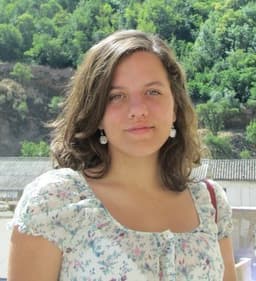

This is my draft for a profile of a woman activist from Brazil. Feel free to suggest improvements and criticize. I would be very happy to hear your views!
Danielle Medeiro wrote two books about the history of slavery in Brazil. At the age of 13.
This is not the only accomplishment that is impressive about Danielle. Despite her young age, this 23 year-old young woman already has a remarkable record of activism and academic achievement in her constant effort towards social change. She is an activist: a Law student, a writer, a researcher, a religious leader, the president of a NGO. Managing her time is undoubtedly a great challenge, but she seems to be able to conciliate everything in one single statement: "I love people and this feeling is what make me dedicate my body and soul to the lives who need help."
After the release of her books on slavery, she was invited to the Seminar on Affirmative Actions and Africa in Diaspora in Bahia, Brazil, when she was 17. She worked for two years in Morro da Providência, the oldest "favela" (a poor community that lacks infrastructure and basic services) in Rio de Janeiro. She also founded and presides the NGO Gerando Vida (or "Generating Life") in Vila Mimosa, the prostitution zone in Rio de Janeiro. Besides, she is a Law student in the Catholic University of Rio de Janeiro and she is one of the youngest preachers for the Protestant church.
"I have always been committed to the social issues in my community", she affirms. She recalls that when she was 13, she prepared a school work about the end of slavery in Brazil, without her teacher having asked for anything. From then on, she has always been engaged in changing the reality for people living in the streets or in a situation of social vulnerability.
As a Law student, she worked in Morro da Providência promoting juridical assistance to the community. Most people who live in "favelas" in Brazil do not have access to a good education and often lack knowledge about their rights. Her role was thus to inform and orient the population when they needed to fight for their rights before the courts. Moreover, she and her group promoted educational sessions about human rights. One interesting project, held last year, prepared children to act as human rights junior agents. The aim was to empower children of the community, by raising their awareness about human rights. In the words of Danielle, "it was great because they could learn a lot and we also learned a lot from them."
With the creation of her NGO, she can promote programs to tackle various social issues that, although different from each other, are very interconnected in their very roots and effects. In the reality of Vila Mimosa, not only the sex workers suffer the negative impacts of exploitation, poverty and prostitution. Danielle's NGO works with the children of the community, trying to expand their choices through education, so that they are not compelled to follow the same destiny as their parents. They offer school support, artistic and cultural activities. They also work with the youth and adults, who need professional empowerment. According to Danielle, "there are many people marginalized from the labor market because they lack the skills to compete for a job. But the courses are expensive and thus hardly accessible, which makes them lose their hopes of a better life." With this in mind, "Gerando Vida" offers good-quality courses for free, with certificates that are recognized by respected educational institutions in Brazil. Besides, they work with homeless people, offering food, clothes and social assistance services. Their dream is to build a shelter so that they can offer better care for people in such a fragile situation. Finally, they work with the sex workers themselves, at the prostitution zone, where they give assistance to the girls and women who want to get out of this life. Danielle and her group manage to send some of the girls to their place of origin, others to specialized shelters and others to empowerment courses and job placements. The goal is to expand their possibilities and make them realize they can have a different life. "I fight for dreams", Danielle affirms. It is all about encouraging people to dream and to fight for their dreams, in situations in which many people have forgotten what it means to have a dream at all.
Of course, all these projects demand a great amount of dedication, hard work and time. It is not always easy to promote all these different approaches to the complex problems we face in Brazil's poor communities. When I asked Danielle about the main challenges she faces in her work as an activist, she answered it was certainly the lack of resources and infrastructure. Because they do not have a permanent monthly income, the NGO depends on eventual donations and this often gets in the way for the development of the projects. She says the NGO will keep it up even without much money, as it has always been, but, as she says, "our space is small for our dreams, and we dream really big!" She adds that she wants to provide the best education, the best equipments, the best library, the best rooms, because it is with people they are dealing and all people deserve to be treated with dignity.
I asked her about how she thought her work impacted the people around her and the communities she worked in. She answered: "I believe my work has changed my life more than anyone else's". But the social impact of the projects is evident, for they are lifting people out of poverty, changing the destiny of abandoned children, helping youth to leave behind their lives in marginality, prostitution and drug-dealing, among many other important effects. As says Danielle, "we are changing not only people's lifestyle, but also their way of thinking. We are generating life, by helping people follow their dreams and that is simply wonderful."
Her example can be replicated in any of the many poor communities in Brazil's urban areas, for in general they all are victimized by the same kinds of social problems. It is true that individuals or civil society alone cannot change everything overnight. Danielle highlights many of the actions her NGO promotes are actually trying to remedy the failure of the government to provide basic services that are accessible to all. In Brazil, socio-economic inequality is a central feature that shapes the whole country's reality. Therefore, the government needs to act more effectively in combating poverty. And, in fact, they are making considerable achievements. According to the IPEA (a Brazilian social statistics organization), between March of 2002 and June of 2009, the metropolitan region of Rio de Janeiro registered the highest reduction in the number of people below the line of poverty: 1,4 million people became no longer poor. This, however, is clearly not enough, as there are still other millions of people in a very fragile situation. Therefore, people like Danielle, whose dream is to enable other people to dream too, are inspirational role models, whose words must be heard attentively and whose ideas must be spread.
- Latin America and the Caribbean