
I was not born to feel and see the pain and do nothing about it.
Jun 19, 2025
first-story
Seeking
Collaboration
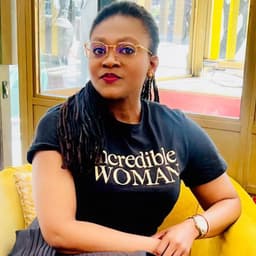

Walking through the exhibition, Untold Secrets and Never-Ending Stories: The Embodiment of Women in War, I could not resist contemplating my own journey and the overlapping themes I address in my current research. This research emphasises the concept of wounds. Visible and emotional wounds located in the conscious and subconscious mind. With my work, The resocialisation of the angry black woman: putting an end to the self-perpetuated cycle of oppression, I aim to bring to light the concern of predetermined bitterness of women. Women are pungent and infuriated. This is a result of recurring generational wounds and scars of the past and the present. Wounds that are enforced by societal norms and expectations - and this just aggravates our anger.
The installation of Jan van der Merwe, Cleaning Instructions (2003) haunted me. The artist highlights and educates us about a hierarchy of priorities performed by soldiers during wartime. Cleaning your gun is a ritual and evidently more important than cleaning your own wounds and for me the gun represents mothers and the wounds of their children. I realised that emotion- al wounds, physical wounds and scorched earth that carry the evidence of wounds, are striking elements in this exhibition. These themes are parallel to my own work. My instinctive attraction to the artworks created by Nomusa Makhubu, The Self Portrait Series (2007), is due to her exploration of photographed women that were captured through the lens of the colonised photographer. Makhubu aims to disrupt the stereotyped image of the black women in the archival photographs. She interrupts the images by inserting a projection of her own body, like a ghost figure. For Makhubu it was impossible to overwrite the colonial imagery of the past. The original image is perpetually visible through the artists projected body. This work, for me, is connected with the immediate outcome of the circulation of collective trauma called the mother wound.
Current generations of women, youth and children are not living in the present moment. They are raised on past generations’ pre-lived anger, which is perpetuated through the cycle of socialisation. As Makhubu states, for her, “post-memory is lived memory”. The artist further describes memory as a way of coming to terms with the persistence of the same repressive structures (Makhubu 2017:30).
We, as women, are at war. We are at war with our parents. We are at war with our partners. We are at war with our siblings. We are at war with our peers. We are at war with society. We are at war with systems, but the greatest war we are engaged in is the one we have with the person staring back at us when we look into the mirror.
We are wounded, and our wounds are covered in plasters. We are silenced and encouraged to continue the cycle of oppression. We are told “kgotlella, mosadi wa mamella” and called resilient when we allow the abuse to continue. We are applauded when we bow before patriarchy and sing its praises; therefore, worthy of being celebrated.
Our country celebrates women without fail; on Mother’s day, because we are such great mothers, on International Women’s day, to reflect on progress made and celebrate acts of courage and determination of ordinary women. We get honoured once again on National Women’s day, as well as 16 Days of Activism, to oppose violence against women and children because we are that important.
Women, you are great! Do not fear patriarchy. Do away with the belief that you need to carry deep-rooted wounds. That will only be passed on to your children and those around you. The future of upcoming generations relies on the strength of mentally stable women who are self-aware and forever standing their ground. Make time to learn about yourself. Allocate the root of the pain you carry. It is only through your own healing that you can heal others.
*Kgotlella, mosadi wa mamella : Persevere, ‘a woman’s duty is to endure’.
- First Story
- Caring for Ourselves
- Stronger Together
- Collaboration Stories
- From Distraction to Collective Action
- Global