
INDIA: My Secret Struggle with Fertility and Abuse
Nov 6, 2025
story
Seeking
Encouragement
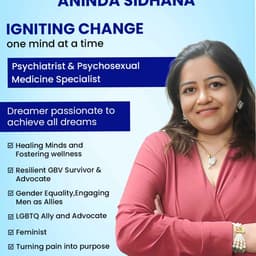

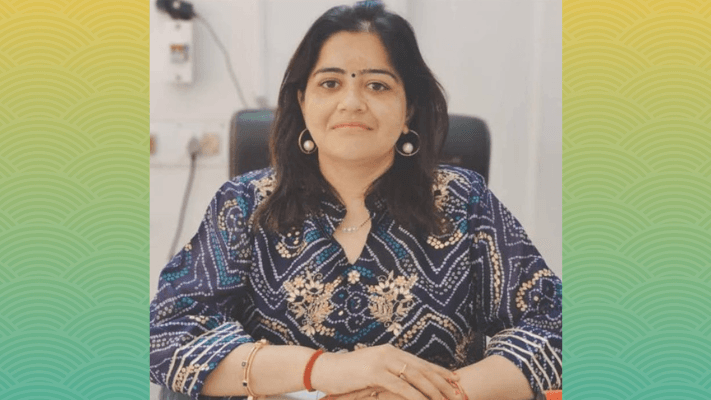
Dr. Aninda Sidhana’s journey through infertility, medical trauma, and domestic violence reveals the hidden cost of cultural silence and the resilience it takes to survive.
"A divorced daughter is far better than a dead daughter—or one who is dying every day in silence.'’
Today, my body trembled. A conversation about Diwali (the Hindu festival of lights) and being my niece's birthday brought the memories flooding back. A hematoma appeared again, and with it, a surge so violent I could barely breathe. It was a portal to a time when my body was a battleground, my silence a survival strategy, and my worth measured in injections and expectations.
Every morning during those years, I woke to pain. Not just the physical ache from IVF and IUI treatments, but the emotional weight of pretending everything was perfect, that we were the happiest couple. I wore my brave face like armor, moving through the world as if I were just another woman waiting for motherhood. But behind closed doors, I was enduring a quiet war.
The pressure to conceive began the moment I got married. My in-laws wanted a child, specifically a male heir or twins, but refused to fund the treatments. In our bedroom, a photo of my husband's child from his previous marriage loomed like a reminder of what I hadn't delivered yet. I was prescribed hCG injections and clomiphene citrate —fertility drugs meant to stimulate ovulation and increase the chances of twins—before we'd even tried naturally. My body was not mine. It was a vessel, a project, a test.
When my husband left me at my parents’ house, I told myself it was only temporary, that he was just overwhelmed. But he vanished. I kept up the performance—smiling, saying we were just waiting for the right time. But the truth was darker.
One day after he insisted on drinking and driving, I expressed fear. "Home is just 40 kilometers away," I told him. "You can go and drink after reaching." He responded with violence. Bruises bloomed on my thighs. He left me there, and I lied to my gynecologist about the marks, carrying both the bruises and the silence.
I found solace in small things, playing with my niece, clinging to moments of innocence.
Even my parents couldn't help me; my uncle's battle against cancer consumed them. I went to the procedures alone. I faced hysteroscopy while my uncle—who was like a father to me and had performed my kanyadan (marriage ritual) at my wedding—was critically ill, battling between death and life. My husband would show up for a few hours, then disappear again. I was alone in every sense.
The waiting periods after treatments were unbearable. I asked to come home. They said I was "irritating," that I "didn't earn," that I "didn't do anything.", and I was a burden. I was suffocating, but they told me to stay away.
I got pregnant twice. Both times ended in miscarriage.
The second miscarriage happened two years ago, on Diwali. I discovered a small dustbin filled with used syringes and condoms—evidence of betrayal I didn't fully process in the moment. At first, I didn't understand what I was seeing. As a psychosexual medicine specialist, my clinical mind tried to rationalize it: the syringes for his addictions, the hormonal fog from IVF clouding my judgment. Then reality broke through: Why condoms when I hadn't been here for three months?
When I asked my husband to empty the dustbin because it looked embarrassing, something in him snapped. He locked the door, disconnected the intercom, and beat me so badly I bled from my head. It was 3 PM. His parents witnessed it all, just stood there. They didn’t say a single word.
There was no humanity in that house. His father brought him a bag full of alcohol to "cool down."His mother came to me every fifteen minutes asking me to cook for him because he was drinking on an empty stomach and might get acidity. I was bleeding from my head, my face swollen and deformed, yet she worried about his digestion.
At first, I just cried. I didn’t reply. But when I saw my face in the mirror, blood trickling down, my face deformed, I finally told her, “Please, can’t you see my face is paralyzed and you're worried about his acidity?”
They handed him alcohol while I bled. They asked me to cook because "Raja Beta will get acidity." That sentence still echoes in my bones. In India, Raja Beta refers to a son who is pampered and treated like a prince, shielded from responsibility, and excused for mistakes.
There are no words for that kind of cruelty, the moment you realize your pain is invisible to those who should protect you.
I wasn't just abandoned. I was even forced to get ready for the Diwali pooja. They locked the doors, took my phone so I couldn't run or call for help, as if nothing had happened. I was frozen and numb.
When I finally asked for a divorce, they dismissed my injuries. "It was just a hematoma," they said. A 40ml blood collection on the right side of my face that took three months to resolve. His parents told me, "He has an anger issue. We informed you on your second day of marriage. But he's so rich and handsome. Who will marry you if you divorce?”. In India, a divorced daughter is a stigma. “Besides, we chose you because you're a psychiatrist who can take care of both sons." His younger brother had treatment-resistant schizophrenia.
At the time, both miscarriages devastated me. Now, I see those losses as a strange mercy. If I'd carried those pregnancies to term, I might have remained trapped in that abusive life forever.
My mother-in-law, a renowned gynecologist, never once visited me during treatment. IVF specialists were terrified to take my case because of her reputation. When treatments failed, they blamed my weight and age.. No one considered that my husband's substance use (alcohol, smoking, cannabis) might be a factor. Even when he agreed to a sperm test, my mother-in-law refused to allow it. The blame stayed with me.
This was my secret struggle: a life curated for appearances while I endured medical trauma, emotional abandonment, physical abuse, and total isolation. I was scared of a single injection, yet I endured hundreds. I was told I was worthless, yet I kept going. I was alone, yet I survived.
Today, when the memory haunted me, my body remembered. It trembled. It froze. But I didn't.
I wrote this to unfreeze the silence. To say: This is my truth. I was there. I lived it. And I'm still here. Your pain is real, your story matters, and you are not alone.
The most dangerous people are not those who do evil, but those who watch it and call it normal. A narcissist's biggest enabler is often the mother who refuses to see.
I dream of turning my life story into a Bollywood film, to show the world that domestic violence is a reality, that divorce is not a stigma. I dream of a world where men are allies, where sons are raised to see women as equals, where men can speak about emotions without shame, and where "Raja beta" culture is replaced with mutual respect.
Domestic violence is a pandemic. We only talk about it when it happens to celebrities, but it's happening everywhere. And no caste, creed, educational status, or financial status is spared.
A divorced daughter is far better than a dead daughter, or one who dies a little every day.
For every woman who's been told to cook while she bleeds. For every survivor who's been silenced by "Raja Beta" culture.
This is for you.
STORY AWARDS
This story was published as part of World Pulse's Story Awards program. We believe every woman has a story to share, and that the world will be a better place when women are heard.
- Gender-based Violence
- Survivor Stories
- Becoming Me
- Featured Stories
- Global