
INDIA: When Loitering Is Revolutionary
Jun 17, 2019
first-story


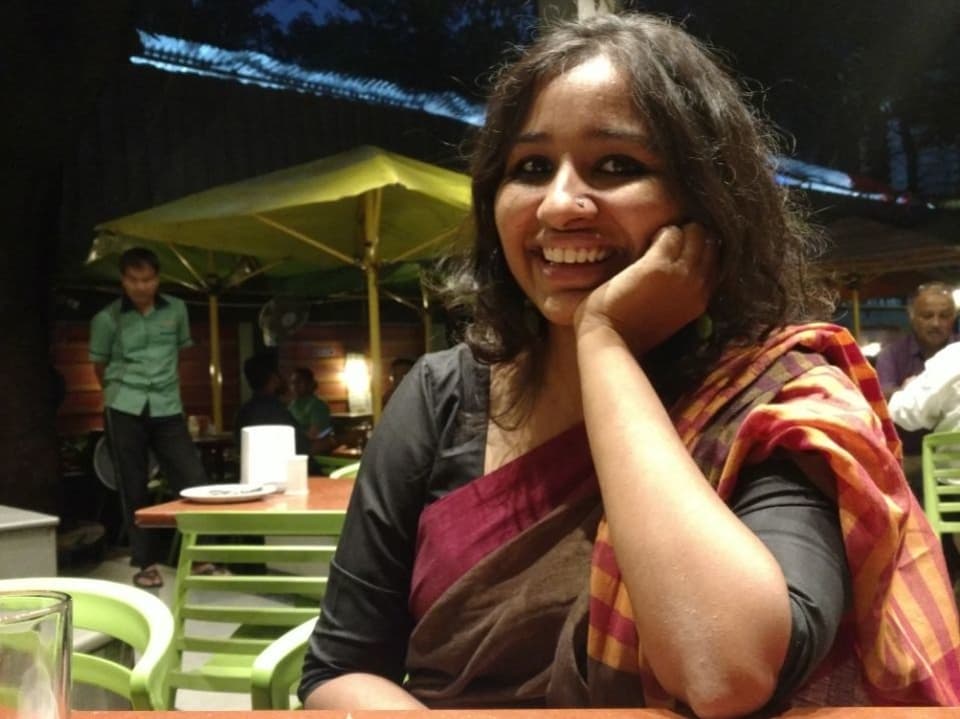
Shatakshi Gawade thinks it's time to shake up our approach to women's safety in public spaces.
I want the city to belong to me, and I want to belong to the city.
Every time I am out late at night, my mother stays up worrying about my safety. My grandmother suggests that I should be married off. And me, I just want the freedom to navigate the city at any time of day or night.
While working and traveling as a reporter, I have noticed that there are many more men than women out in the street, especially late at night. They might be enjoying a cup of tea, a smoke, or just standing around shooting the breeze. Sometimes I see girls in these groups, but I have rarely ever seen a group of girls just chilling in public spaces.
I am lucky that I have only been on the receiving end of catcalling once on a dimly lit street on my way to a metro station in Delhi. Many women are not as lucky. I want well-lit streets with sufficient police patrolling, better public transport, and clean toilets, so that I can come home when I want to. I want to be able to stay out late for work or just have a good time with my friends.
Whenever I am out late, I zip by on my two-wheeler, rushing home to “safety. ” My city, Pune, in the western Indian state of Maharashtra, is a fairly safe city to live in. It has been ranked 25th out of 111 cities in the country for safety and security. Yet, I feel a load on my chest while riding home at 1am. The pressure is much too real.
We need policing and better infrastructure, but I don’t think this is enough help our case. In a tedx talk, author Shilpa Phadke explains how \"safety\" is a restrictive concept. She says the fear of strangers attacking women persists despite data that says more women are attacked in personal spaces.
Phadke turns the safety argument on its head by arguing that women should not submit to the restrictive concept of safety. She encourages women to access public spaces, while keeping in mind the potential risks of such spaces. She calls this a woman’s “right to risk”.
I was surprised by one of Phadke’s suggestions for reclaiming public spaces: loitering! Women Are not expected to be out in the streets unless they are productive or busy. Phadke argues that loitering is a tool that challenges gender norms, allows one to physically claim the city, and amplifies inclusion.
I want the city to belong to me, and I want to belong to the city. I want to claim public spaces like roadsides, parks, bus stops, food stall corners, lakesides and river banks, and long stretches of roads covered by trees. I want to laugh loudly with my friends by tea shops on the side of the road. I want to taste the night breeze without tasting the fear of being attacked.
I think the city would be safer with more and more women claiming public spaces like this. And I agree with Phadke that this idea should also be extended to include other marginalized people, like migrants. After all, there is strength in numbers.
I am ready to claim my right to loiter. Will you join me?
STORY AWARDS
This story was published as part of the Future of Security Is Women digital event and is sponsored by our partner Our Secure Future. World Pulse runs Story Awards year round—share your story with us, and you could be our next Featured Storyteller! Learn more.
- Gender-based Violence
- Human Rights
- First Story
- Future of Security Is Women
- South and Central Asia