
Ink and Hope: A letter to the Nation
Jul 2, 2025
first-story
Seeking
Feedback

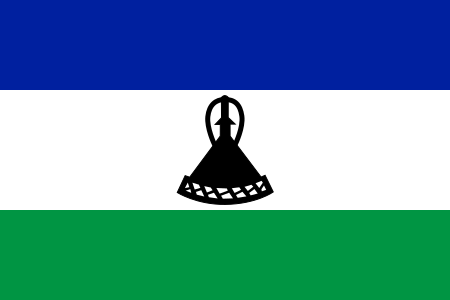
In the heart of southern Africa lies the Kingdom of Lesotho, where youth unemployment has long been a silent crisis. For years, young people graduated into uncertainty; armed with degrees, but no jobs to show for them. With unemployment estimated between 38–49%, frustration among youth began to boil over.
It was early 2025 when a wave of organized resistance took form. A coalition of youth-led organizations—Bacha Shutdown, On-Point Foundation, SAYYE, Youth AIDS Free Foundation, and others joined hands to speak with one voice. They had a message: enough is enough. Using press conferences, online platforms, and public petitions, they brought the issue to the nation’s attention. But it wasn’t until Charlene McPherson, a youth development advocate and HR professional, put pen to paper that the movement truly caught fire.
Charlene wrote an open letter to the Prime Minister, Mr. Samuel Ntsokoane Matekane, outlining the pain and hopelessness felt by young Basotho. She urged the government to declare youth unemployment a national disaster, establish an emergency employment fund, and meaningfully involve youth in policymaking processes. The letter wasn’t just a cry for help, it was a blueprint for action.
As the campaign gained momentum, the letter became a rallying point. The youth used social media to share it widely, organized discussions, and confronted the silence with relentless advocacy. At the National Youth Dialogue held at Manthabiseng Convention Centre on June 18, 2025, the youth took the stage again—this time, face-to-face with the country’s top leadership.
Then came the moment that made history.
During his address at the end of the dialogue, the Prime Minister Mr. Matekane officially declared youth unemployment a state of emergency in Lesotho. He acknowledged the severity of the crisis and expressed Cabinet’s full support in tackling it. What’s more, the government pledged to create up to 70,000 job opportunities for young people—a figure that gave hope to thousands across the country.
This wasn’t just a government response, it was a victory for advocacy.
The campaign had all the elements of an effective advocacy plan: it identified a problem, targeted a decision-maker, proposed solutions, mobilized public support, and pushed for tangible change. A single letter, backed by a movement, had shifted national policy.
For the youth of Lesotho, this wasn’t the end—it was the beginning of a new chapter. One where their voices were not only heard but acted upon.
- First Story
- From Distraction to Collective Action
- Africa