
Introducing myself and my journal
Apr 28, 2022
story

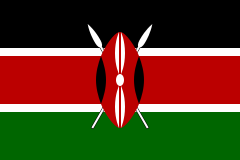
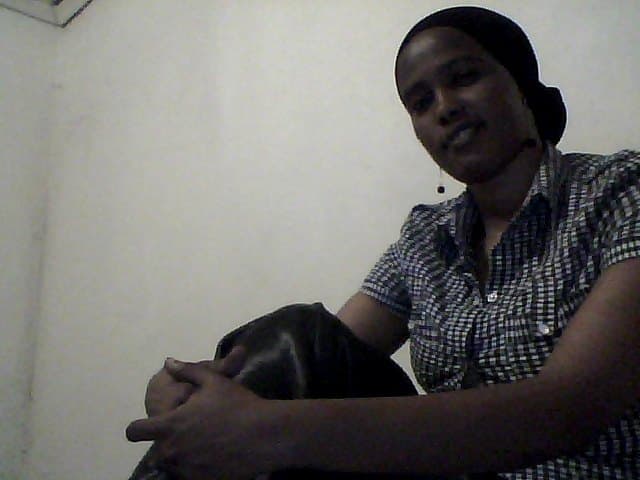
About Me: I'am Fardosa Muse,working with CARE International in Kenya as an Assistant Gender Project Officer in Dadaab refugee camps;the biggest refugee camp in the world.Dadaab is located in Northeastern part of Kenya,Lagdera county .Dadaab host more than 300,000 thousands refugees around Africa.96%of the refugees are Somalis community who flee from Somalia after the fall of Siad Bare regime.Over five thousand refugees arrived in the camps monthly due to constant change of political dynamic and religious insurgent.
The Somali communities practice female genital mutilation in large scale, this practice is applicable to all girl child both rural and urban area; it’s a practice that is widely seen as honor and dignity once applied to girl child.
FGM is combined social, cultural and traditional deep-rooted practice that is difficult to eradicate totally. Several attempts have been made by international and local organizations through lobby and advocacy to stop the vice by demonstrating the effect and psychological implications it has to girl child but with little success because it’s inclined their beliefs and traditions.
FGM is mostly done during school holidays in Urban and rural area, refugee camps and for the pastrolist during rainy season. The main reason why community practice FGM is to ‘’curb the sexual desire of women and girls and preserve there sexual honor before marriage’’.
Gender and Development sectors is primarily responsible for prevention and response to sexual and gender base violence in the refugee camps. Gender Based violence-including rape, domestic violence, murder and sexual abuse-is a profound health problem for women across the globe. Although a significant cause of female morbidity and mortality, Recent World Bank estimates of the global burden of disease indicate that in Established Market Economies, gender-based victimization is responsible for one out of every five healthy days of life lost to women of reproductive age. Violence against women has only recently begun to be recognized as an issue for public health. The existing data on the dimensions of violence against women worldwide and reviews available literature on the health consequences of abuse. It argues that the health sector has an important role to play in combating violence against women through increased research, screening, referral of victims, and behavioral interventions. Any strategy to confront violence must address the root causes of abuse in addition to meeting the immediate needs of victims. This means challenging the social attitudes and beliefs that undergird men's violence and renegotiating the balance of power between women and men at all levels of society.
Gender-based violence includes a host of harmful behaviors that are directed at women and girls because of their sex, including wife abuse, sexual assault, murder, marital rape and dowry-related, selective malnourishment of female children, forced prostitution, female genital mutilation, and sexual abuse of female children. Specifically, violence against women includes any act of verbal or physical force, coercion or life-threatening deprivation, directed at an individual woman or girl that causes physical or psychological harm, humiliation, or arbitrary deprivation of liberty and that perpetuates female subordination .
My Passions:
To assist gender base violence victims
My Challenges:
Never back down
My Vision for the Future:
end Gender base violence in my community
My Areas of Expertise:
T o Advocate and eradication Sexual and Gender base violence
- Africa