
Invisible Mothers
May 8, 2025
story
Seeking
Collaboration


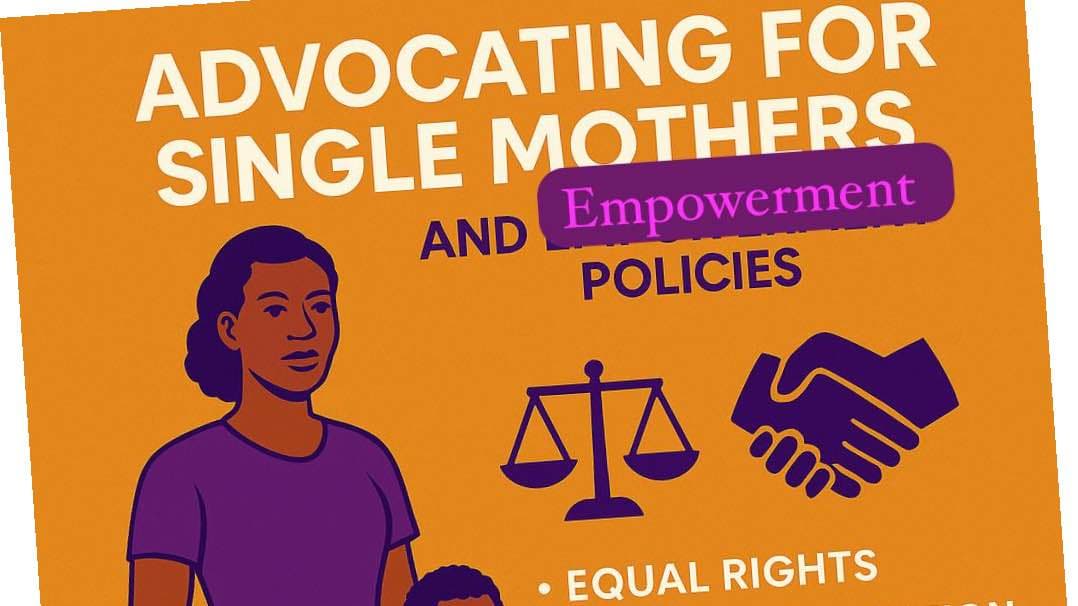
Photo Credit: Ai design
Invisible Mothers
Invisible Mothers: Confronting the Stigma Against Single Mothers in Nigeria
By, Kubiatabasi Idem (Kuby Idem)
Writer & Founder, Kubiez Care Foundation
Left alone to carry the burden of child-raising, single mothers in Nigeria navigate judgmental eyes and the deafening silence of a society that often refuses to see them.
They are everywhere—yet invisible. Not because they don’t exist, but because society has chosen to look away, allowing them to “carry the weight of shame” alone.
We forget that motherhood—the sacrifices, the sleepless nights, the emotional, physical, and psychological investment in a child—remains the same, whether she is married, widowed, divorced, or never married. A mother is a mother.
But in Nigeria, to be a single mother is to live under constant scrutiny. Her strength is mistaken for irresponsibility. Her dignity is questioned at every turn.
These women are reduced to whispers and stereotypes. But behind every label is a story—of a woman fighting to protect her child, surviving poverty, and trying to reclaim her worth.
Second-Class Citizens in Relationships and Society
Single mothers are too often treated as “second-hand goods,” especially when seeking love or companionship. Potential suitors approach with condescension, believing they are offering charity rather than genuine affection. And when love finally finds her, judgment follows—from friends, from family, and often from the mother of the man she loves.
“My son can never marry a single mother,” they say, with no awareness of the weight behind such words. You’d expect compassion from a fellow woman—perhaps one who understands the trials of motherhood. But instead, what greets her is silence or scorn.
When the Children Bear the Stigma
The stigma doesn’t stop with the mother—it spills onto the child. Children of single mothers are often dismissed, unfairly labeled, and robbed of opportunities, simply because of how they came into the world. They’re not seen for their potential or their individuality, but for their “broken” background.
How can a mother be expected to raise confident, emotionally healthy children when society already deems them unworthy?
A Society That Forces Silence and Suffering
And yet we wonder why our teenage daughters risk their lives with unsafe abortions.
Why newborns are abandoned in gutters.
Why women stay in violent relationships out of fear of being judged if they leave.
Why a young woman would rather die silently than speak up and be branded a failure.
The answer is simple—and deeply uncomfortable. The reason is us.
It’s the teacher who mocks the “child of a single mother.”
It’s the church that denies them leadership.
It’s the neighbor who spreads rumors.
It’s the system that offers no support, no shelter, no safety net.
A Call for Reorientation and Reform
It’s time to stop the cycle of shame.
It’s time we honor the resilience of single mothers instead of punishing them for circumstances many didn’t choose—and those who did, for their own survival, should not be condemned either.
Single mothers deserve more than pity. They deserve policies that protect them. Platforms that amplify them. Support systems that uplift them.
At Kubiez Care Foundation, we believe in reorientation—reshaping how society perceives and treats single mothers. We believe in empowering women to reclaim their voice, their dignity, and their future.
Conclusion
This is more than a plea for empathy—it’s a demand for justice.
For every woman who has been reduced to a whisper, and every child who carries stigma not of their own making—this is a call to look again.
To see them. To honor them. To support them.
Because single mothers are not broken. They are whole. They are powerful.
And they deserve to be visible.
About the Author
Kubiatabasi Idem (Kuby Idem)is a Nigerian writer, advocate, and founder of Kubiez Care Foundation, a nonprofit focused on supporting marginalized women, especially single mothers. With a passion for social justice and women’s rights.
- Leadership
- Human Rights
- Revolutionary Solidarity
- Global