
Is This How You Will Behave In Your Husband's House?
Apr 30, 2025
story
Seeking
Visibility


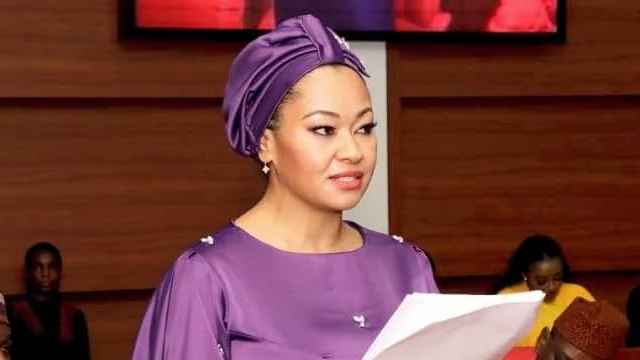
Senator Natasha Akpoti-Uduaghan
The Headlines: Female Senator Faces Down a ‘Classic Abuse of Power’ in Nigeria.
The backstory: After her microphone was rudely shut off during a complaint about seating arrangements, a confrontation ensues between Senator Natasha Akpoti and the Senate President. This confrontation results in her being escorted from the Chambers and in deliberations on her punishment. Senator Akpoti grants a TV interview, revealing that she is being victimised because she refused the advances of the Senate President, Senator Godswill Akpabio. She petitions the House to investigate the claims twice, the petitions are thrown out twice. Then, in a move that is both unconstitutional and illegal, the accused Senator Akpabio, along with other members of the House, suspend Senator Akpoti for 6 months without access to her office, her salary or her entitlements.
No independent investigation or inquiry has been made into the accusations, even though this will not be the first time the Senate President has been publicly accused of sexual harassment.
Three women spoke to the media about the Natasha/Akpabio debacle. Two are former members of the Senate, and the third is a serving member who had previously faced a similar gender battle. To the surprise and chagrin of many viewers, they all agreed on one thing: that women at the Senate level could not be sexually harassed.
A male Senator, a staunch loyalist to the Senate President, took it upon himself to defend the sexual harassment accusations in the media. His defence was that he was sure Akpabio would never harass Senator Akpoti. Also, Senator Akpoti was a woman of loose morals, not that attractive, married more than once with multiple children, so she was not worthy of harassment.
Another TV guest, this time a former member of a state parliament, said this was an indication that women should be subject to a mental stability test before they could hold public office.
The treatment Senator Akpoti is receiving is a symptom of a wider malaise. Women are accorded little to no respect in Nigerian society. The average Nigerian woman is considered an appendage to a man. There is no regard for her agency, her accomplishments, her rights, or even her life, unless it is harnessed to or validated by a man. So, a woman is only respectable if she is married, an aggrieved woman is only listened to if a man steps in, and so on.
This scenario of entrenched inequality begins in the home. From the moment they can communicate, female children begin training in homemaking and housekeeping. From small errands, it blossoms into managing all household chores and feeding the entire family daily. Any attempt to deviate from this is met with “How will you behave in your husband's house?”, “Is this how you want to act when you get married?” Their entire life is an audition for marriage. There's no equivalent training for the sons.
Children raised this way are then released as adults into society, one gender thinking they should live a life of subservience, and the other a life of entitlement to it. You can guess which is which.
That is why a male artisan can tell the woman who hired him to go and prepare something for him to eat when he is done working. That is why, after causing a car accident with a female driver, the offending man tells her to call her husband so he can resolve it with him, because he doesn't argue with women. That's why a man can violently assault a woman on the streets, tearing her clothes, because he disapproves of what she is wearing. It is also why a public servant accused of sexual harassment can sit in judgment over his case and punish his accuser. And these are all relatively harmless instances. There are the rampant cases of femicide and GBV that seem to have been on the increase in the last few years.
Three years ago, I was brutally beaten by my elder brother in the presence of my daughter. It wasn't the first time it was happening, and fearing for my safety in that house, I went to the police. The female officer I met listened to my complaint, then began to scold me. She asked me if I was too old to be ‘corrected’, implying that the beating was to correct some wrongdoing. In shock, I pointed out to her that being beaten wasn't correction. She then asked if I was too big to be beaten. I went to another police station where I met two male officers, but the outcome was not different. They told me to pray for my brother to stop being violent because it was the devil's work. It wasn't until I involved a high-ranking (male) politician that any action was taken.
Just a few days ago, a video clip emerged of a popular Christian youth pastor declaring to his congregation that 9 out of 10 female victims of sexual abuse in his church accuse their abusers falsely. A rather dangerous statement in a country where practically 1 in 3 women (31%) aged 15-49 face sexual/physical violence, and 86% of sexual assault victims seeking medical attention are women and girls. Yet, only 0.9% of perpetrators face trial, with almost none convicted, accounting for why victims are reluctant to report.
The most dangerous things about the Akpabio/Natasha imbroglio are these. Because this is happening at the highest levels of the Nigerian government, it sets a precedent for delegitimising sexual harassment complaints at every other level in Nigeria. Students being asked for sexual favours in exchange for grades by lecturers, staff by bosses, congregation by their leaders, etc, will all be dismissed as mischief and emotional instability. But beyond that, it also heralds the systematic silencing and erasure of women from public spaces. If our voices cannot be heard, whether in confrontation or dialogue, then we cannot be represented. And if we cannot be represented, our unique needs will never be met in society.
- Leadership
- Girl Power
- Human Rights
- Gender-based Violence
- Behind the Headlines
- Africa