
It is time to #ShiftThePower of decision making and resources to frontline feminists
Apr 27, 2025
story
Seeking
Collaboration


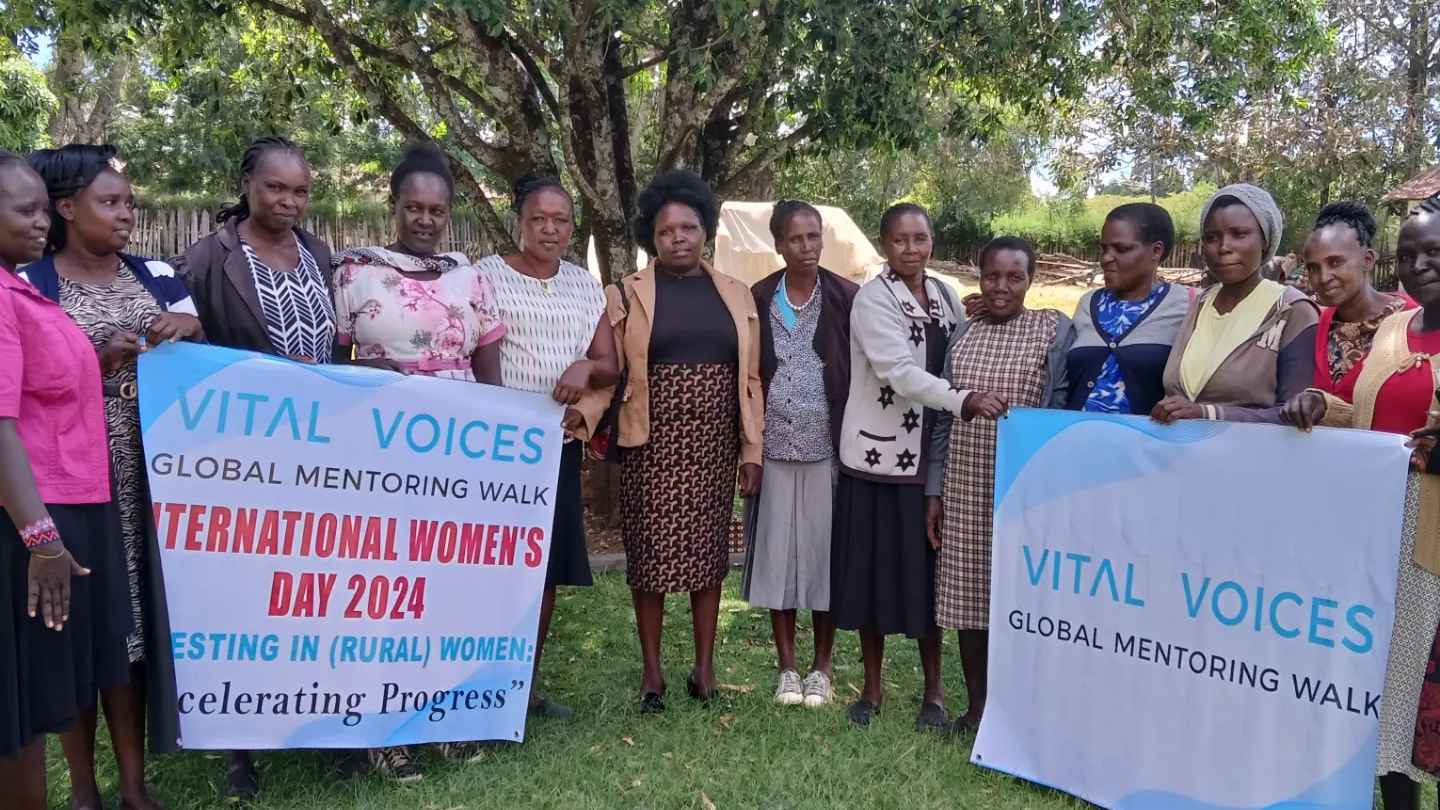
Photo Credit: Edna Chepkurui
Women in rural Kenya during celebrating International Women’s Day 2024
In 2023, a donor for our girls and women’s projects withdrew support just one year into the activities we had planned and already carrying out. We had just began, all hope and dreams starting to shape up, and now, we had to figure out how to communicate the news to our girls and women .
This came as a sudden surprise, we were in the middle of building the activities that would be the foundation for the projects. We had adequately consulted the girls and women to create what they wanted to work on in the project. All activities were not only in response to their feedback but aligned to the apparent needs of the communities. As project leaders, we were not imposing any solutions just to fill proposals and get funds, the community is where we too belong.
Without prior notice or any opportunity for negotiations, the supporter sent an email with finality: I hereby withdraw all the monthly support for the project from this month going forward. I do not see any meaningful activity from the proposals you sent and neither do I feel any impact of the activities carried out so far.
And that was final. There was no response to our follow up emails thereafter. It was difficult to know exactly where we had not met the expectations or what we needed to improve not just to maintain the support but also for the benefit of the project going forward.
We had done our best to craft the proposals and highlight all activities that were identified by the girls and women themselves for the project. We had been piloting the activities for six months and reporting to the donor every month. There were no indications of dissatisfaction or any detailed responses for the monthly submissions. At the end of the year was the final decision without much explanation.
This is the fate of most grassroots organizations especially those working with women and run by women. There’s often a tendency to view these organizations as incompetent or lacking in expertise to satisfy the requirements of donors and funding organizations .
Numbers don’t lie, it is said, and with glaring statistics, this is a fact that is being faced by Women’s Rights Organizations (WROs).
According to a report by a global women’s rights association: Significantly, less than one percent of all gender-focused aid is going directly to women’s rights organizations and institutions. Only 1% of Official Development Aid for gender equality gets to women led organizations and 0.4 of foundation aid is allocated to them . In the Global South , 48% of women’s organizations have a budget of below $30000 a year. Most operate on severe shoe string budgets yet carry the bulk of responsibilities of gender inequalities in the world .
So who gets the funding? Where are they working in and who are they working with? On paper, most the issues (SGBV, lack of quality health care, education for girls, climate change mitigation etc.) being confronted by gender equality movements are faced at the bottom of the societal structures . Therefore, are addressed by grassroots organizations; or rather supposedly. If the funding can’t be trusted to them, then how will the issues be addressed?
In the end, women in frontline communities and movements that work with them, continue to perform work without pay.
Studies have shown that, women carry out at least two and a half times more unpaid household/community and care work than men.
Women’s unpaid work subsidizes the cost of care that sustains families, supports economies and often fills in for the lack of social services. Yet, it is rarely recognized as “work “. Unpaid care and domestic/community work is valued to be between 10 and 39% of GDP and can contribute more to the economy than the manufacturing, commerce or transportation sectors. But unpaid labor rarely receives any recognition. This is the reality of women in communities and organizations supporting them to address the effects of inequalities in their communities.
If gender equality funding organizations are genuinely interested in solutions towards SDG 5 and progress towards overall sustainable development, then it is time to stop rhetoric and realistically work with those who face the inequalities first hand. Women in the frontlines possess knowledge and skills to tackle the issues that need to be addressed. Most grassroots organizations are run by educated women who are leading change locally with global knowledge. Even those with little education have indigenous knowledge and lived experiences that are crucial to tackling the challenges in their communities.
Funding organizations should work based on mutual trust and harmonize their expectations with realities at the communities. They should change their metrics from academic hypotheses to measuring real life impact based on real problems tackled in communities. Shifting the power will also mean giving communities and their leaders first priority in making decisions on what projects should be implemented and in which ways . Donors should also try to interpret the cultural contexts which might not easy to capture literally in reports.
Fast forward to 2024 in our organization and 2 well-wishers offered support for the projects. The amounts being way lower and one off compared to what the first donor used to offer in monthly contributions. In December 2024, we carried out menstrual hygiene awareness campaign and reached 200 girls, managing supply of sanitary towels and education support for at least one school term. In February 2025, we got support for our women farmers project for a small poultry farming business. In both cases, the decisions on what to implement was left to the organization and the community.
#ShiftingThePower is more about giving grassroots women’s organizations autonomy to confidently address the reality of their lives and communities. It is about trusting those who are trusted with the burdens of their families and communities because they shift the burdens away every single day.
#FundHerNow and #LetHerMakeDecisions on how the funding will be used in her community.
- #ShiftThePower
- #FundHerNow
- Global