
It's getting hot in here, Earth.
Oct 5, 2025
update
Seeking
Visibility


The Electric Highway: My 4,481-Mile (so far) Love Letter to America's EV Revolution
Let me tell you about the day I realized that road-tripping in an electric vehicle isn't just possible—it's actually better than the gas-guzzling, back road adventures of my youth.
Picture this: I'm standing at a Supercharger station somewhere between Kansas City and St. Louis, sipping water from my TED Summit well-reused water bottle while my car drinks electrons. Fifteen minutes. That's all it takes. Fifteen minutes to add hundreds of miles of range while I stretch my legs, check my texts, and watch a guy try to parallel park his massive gas-guzzling pickup truck. (He failed. Twice.)
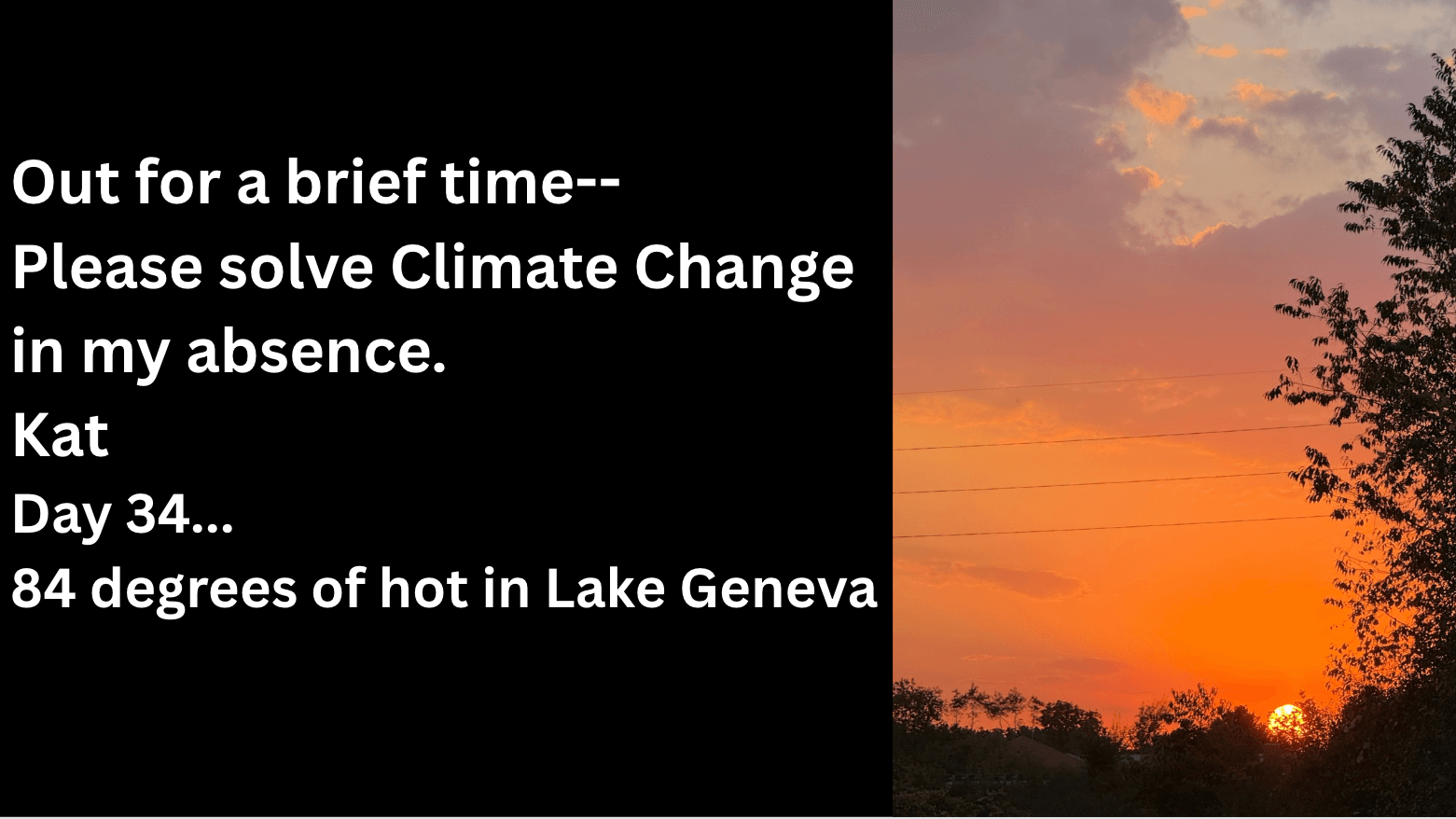
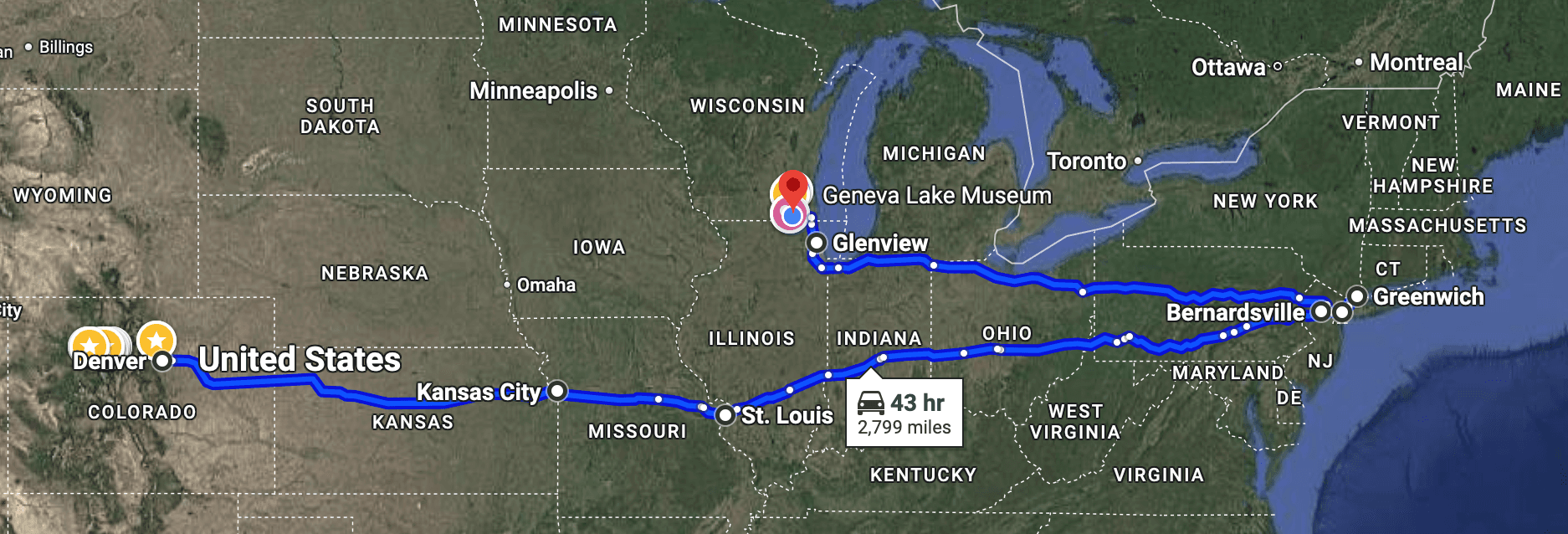
This wasn't supposed to be romantic. This was supposed to be research—one-third of a planned 13,444-mile cross-country EV odyssey to prove that electric vehicles are ready for America's wide-open roads. But somewhere between Denver's snow-capped Rockies and the unseasonably warm beaches of Lake Geneva (where yesterday, I counted dozens of sunbathers in October, mind you), I fell hard for this quiet, clean machine, Rouge. It was 84°F yesterday. Lake Geneva has an average high of about 68°F (20°C) and an average low of approximately 46°F (8°C). Typical October 4th Temperatures in Lake Geneva: Average High: 68°F (20°C) That is 16°F above normal temperature. It's getting hot in Earth.
The Anti-Road Trip Becomes the Road Trip
Traditional road trips are exercises in masochism: hours of monotonous driving interrupted by sketchy gas stations where the bathroom key is attached to a hubcap and the coffee tastes like regret looking at the faces of those souls who refilled. You emerge from your vehicle smelling like petroleum fumes, your hair plastered to your head, your spine compressed into the shape of your seat.
EV road trips?
They're forced self-care. Every 200-250 miles, Rouge politely suggests I take a break. And because charging stations are typically located near civilization (not in the apocalyptic wastelands where gas stations thrive), I actually discover places. In Indianapolis, my 15-minute charging stop led to the best vegetarian tacos of my life. In Greenwich, I gathered with my girlfriend's friends in a lunch spot that employs other abled residents and the veggies from the historical society garden presented a new view on Connecticut.
The charging infrastructure has come so far that range anxiety is now just... anxiety about having anxiety. According to Plug In America's tax credit resources, even though the federal rebates have been withdrawn, the EV transformation continues to accelerate. The network is real, folks. It's here. It works.
The Climate Plot Twist
Here's what nobody tells you about EVs and climate change: it's personal now.
Driving through New York City seven degrees warmer than it should be in October isn't just strange—it's unsettling. I grew up remembering Lake Geneva Octobers as rainy, bone-chilling affairs when you'd race from car to doorway. Now? Beach weather. Sunbathing weather. What-parallel-universe-did-I-wake-up-in weather.
Every silent mile I drove felt like a tiny act of rebellion against that warming trend. According to the World Economic Forum's analysis, Europe uses CO2 emissions regulations to encourage EV sales, while China uses quotas and credits—and it's working. EVs aren't just good for the environment in theory; they're becoming the only way automakers can meet emissions standards.
And get this: Forbes reported that the lifetime cost of a small car to society is $689,000, with $275,000 of that subsidized by taxpayers. Meanwhile, I've driven past wind turbines in Kansas, getting charged by increasingly clean energy, creating zero tailpipe emissions, and paying dramatically less per mile than gasoline.
The math isn't just in EVs' favor—it's screaming at us.
What Women Know (That the Auto Industry Is Finally Learning)
Women make up 80% of consumer purchasing decisions, yet the auto industry has historically marketed EVs like tech toys for men. They missed the point entirely.
Women don't want a car that announces itself. We want reliability, safety, and intelligence. Tesla's safety data shows that EVs—with their low centers of gravity and advanced driver assistance—are statistically safer than gas vehicles. The instant torque means we can accelerate out of dangerous situations. The quiet cabin means we can actually think.
And the practicality? I charged my car for less than the cost of a breakfast bagel. I never stood in the cold pumping gas. I never had to calculate whether that sketchy station's prices were highway robbery or just regular robbery.
The Biden-Harris Administration's investments in affordable EVs recognized what women already knew: practical, affordable electric transportation isn't a luxury—it's the future.
The Policy Roadmap We Actually Need
Here's what America needs to turbocharge (pun intended) EV adoption:
Restore and expand federal tax credits for middle-income buyers. The transformation is underway, but we can't let momentum stall.
Require charging infrastructure in all new commercial development and multi-family housing. Apartment dwellers deserve EV access too.
Invest in e-bike rebate programs nationwide, following Vail Valley's example. Not every trip needs a car.
Create "EV corridors" with guaranteed charging every 50 miles on major routes, like Europe has done successfully.
Support DRIVE Electric initiatives that make EV education accessible to everyone, not just early adopters.
The Revolution You Can Actually Join
As I write this from a café in Lake Geneva (yes, charging nearby), I'm thinking about the remaining two-thirds of this journey. But I'm also thinking about every person who told me EVs weren't ready, weren't practical, weren't real cars.
They were wrong. Spectacularly, completely, hilariously wrong.
This isn't about sacrifice. It's about discovering that the clean, green, definitely-not-mean way to travel is also the better way. It's quieter, smoother, smarter, and yes—when you factor in societal costs and subsidies—ultimately cheaper.
The electric highway is calling. It's warmer than it should be, the charging is faster than you think, and the future?
The future is already here. It's just waiting for you to get in and drive.
Next stop: 9,000 miles to go.
- Leadership
- Peace & Security
- Earth Emergency
- Indigenous Rights
- Peace Building
- Climate Change
- Global