
“It’s Okay Not to Fit In: Guiding Our Children Beyond Peer Pressure”
Aug 28, 2025
story
Seeking
Encouragement


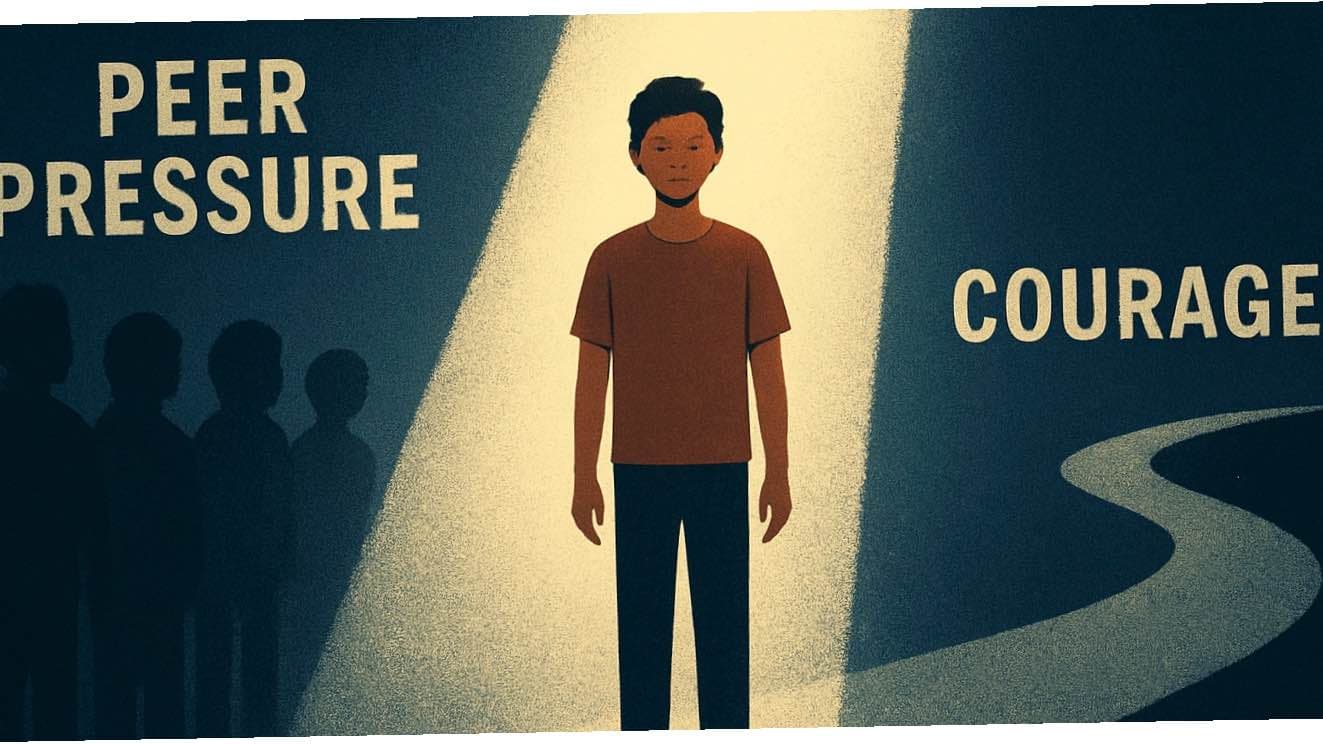
Photo Credit: Ai image generated by Ekwopi
⚖️ “Too many young lives are lost to peer pressure—not because they are bad, but because they are searching for belonging in the wrong places. The law can punish, but it cannot replace the guidance of a parent, guardian, or mentor. Let us remind our children: it is okay not to fit in, because their uniqueness is their strength.”
Puberty is one of the most fragile and defining stages of life. It is a season where children are no longer small but not yet fully grown, where they wrestle with questions of identity, belonging, and self-worth. In this space of uncertainty, peer pressure often becomes the loudest teacher, sometimes louder than parents, teachers, or even the child’s own inner voice.
I have witnessed, from a legal standpoint, how devastating this pressure can be. Many young offenders did not wake up planning to commit a crime. Instead, they were swept into poor choices because “everyone else was doing it,” or because saying “no” seemed harder than the risk of saying “yes.” Behind many juvenile cases, there is not malice but a desperate need to fit in.
The pressures are painfully common: experimenting with drugs or alcohol to gain acceptance, engaging in early sexual behavior without knowledge of the risks, joining gangs that promise belonging, skipping school, or taking part in theft, fights, and cyberbullying. One decision made in haste can trigger a chain of events that alters the course of a young life forever.
But here lies a truth every child must hear: it is okay not to fit in. Fitting in is not the measure of worth. True strength comes from standing apart when the crowd chooses the wrong path. Choosing differently may feel lonely in the moment, but it is often the choice that protects their freedom, dignity, and future.
This is where parents, guardians, and mentors hold an irreplaceable role. Too often, guidance comes only after mistakes are made. But prevention begins long before a courtroom—it begins at home, in classrooms, and in conversations where children feel heard without fear of judgment. It begins when adults teach that uniqueness is not a weakness, and when they consistently affirm that their child’s value does not depend on following peers.
Encouragement must be intentional. A child who hears “you are strong enough to say no,” “you don’t need to follow the crowd,” and “I am proud of you for being different” will grow up with a shield against pressure. When home becomes a place of unconditional acceptance, the need for dangerous approval outside weakens.
To the youth: your future is worth more than a moment of popularity. Every choice you make is a brick in the foundation of the life you are building. You are stronger than peer pressure, and walking your own path is not a burden it is wisdom, courage, and freedom.
To the adults: never underestimate your influence. A single conversation, a word of encouragement, or the willingness to listen can redirect a child from harm to hope. Guidance is not simply advice it is protection, and it may be the most powerful form of justice we can offer.
The law exists to hold people accountable, but true justice is bigger than punishment. It is about prevention, protection, and creating a society where children feel secure enough to stand tall even if it means standing alone.
I share this reflection not only as someone who has seen the consequences from a legal perspective, but as a human being who knows these children are ours. They are our sons and daughters, our brothers and sisters, our neighbor’s and students. And the wake-up call is clear: if we do not guide them, the streets will; if we do not affirm them, peer pressure will; if we do not step in today, the law will step in tomorrow.
Now I turn the question to you: what pressures did you face as a young person, and how did you find the strength to choose differently? And if you are a parent, guardian, or mentor how do you encourage your child to embrace being different? Share your voice. Your story may be the light another child or another parent needs right now.
✍️ From the eyes of an advocate, from the heart of a human.
#ItsOkayNotToFitIn #BeDifferentBeStrong #PreventionNotPunishment #GuidingTheNextGeneration #YouthVoices #ParentingWithPurpose #JusticeForYouth #StandTall #ProtectOurFuture #VoicesOfChange
- Human Rights
- Caring for Ourselves
- Survivor Stories
- Youth
- Our Impact
- Global