
KENYA: I Grew Up Romanticizing America. Now I Mourn.
Dec 17, 2021
story
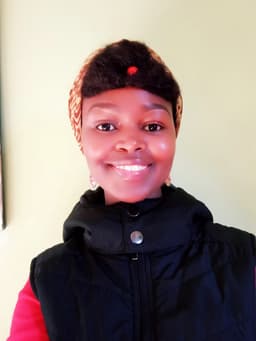
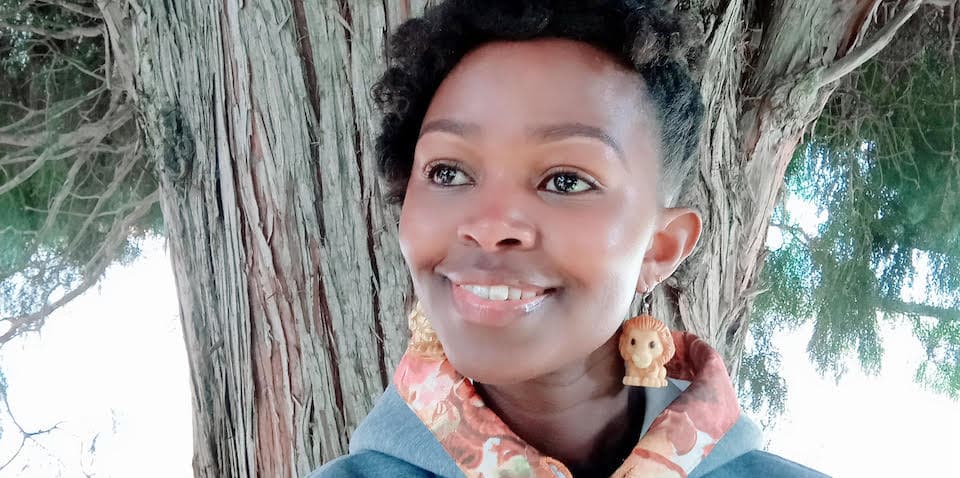
As a child in rural Kenya, Nini Mappo longed for a green card. Now, she reacts to the discovery of an America that subjugates its people.
I mourn for the Afro-American hopes that have been dashed to pieces, crushed into pulp by 'the system'.
Growing up in rural Kenya, two and a half hours outside of Nairobi, we spoke of America in reverent tones: America was generous. She was kind. She sent plenty of aid in corn oil and dried yellow corn to keep our bellies full in times of drought and famine.
America also sent missionaries to look after the orphaned and the destitute. And when the AIDS epidemic hit crisis levels in the early 2000s, America stepped in through PEPFAR with arvs, nutrition, and health education. AIDS ceased to be as scary and an HIV diagnosis was no longer viewed as a death sentence.
The green card was everyone’s dream. Scoring one was like winning the lottery—but better. We all wanted to go to this wonderful America where corn and corn oil would be on tap and we'd never go hungry again.
In the last few weeks, I have discovered a new America, and my mind is clouded by an overwhelming sadness.
I am in mourning. For the America unfolding in my adulthood causes me grief.
I speak of America's systemic injustices against her Afro-Americans. I speak of police brutality, of death, of protests met with inaction, of the systemic injustices deeply embedded in her difficult history bolstered by human capital.
This new America has me wondering about the politics of power and diplomacy that drive a country to solve the problems of other nations while working hard to consciously create greater problems in their own backyard.
The 13-year-old village girl inside me asks; \"Why did America cross oceans to 'save' Africa while grinding the Africans in America to the ground? Where Is the moral integrity in traversing the seas in search of poor Africans in need of help, while systematically impoverishing the ones at their front door? \"
While in Brooklyn, New York in 2009, a Caucasian American came up to say hello to me, but really, he wanted to talk about my braided hair. I had landed at JFK airport that morning on my way to Colorado, and was exploring the city on my layover.
The admirer of my braids deduced from my accent that I was not an American and said, \"You know, they'll respect you more if they realize that you are not an African American\".
I am only now beginning to understand what he meant.
At the height of the George Floyd protests, I listened to scholars like Carol Anderson, author of White Rage, and Paul Vischer, whose video explaining racism in the US went viral. Anderson and Vischer describe a racism that is structural across the United States: policies to suppress the Black vote, to unfairly target Black Americans for misdemeanors in order to fund police departments, to decrease job opportunities for people of color.
As I listened, I asked myself: Will Africans in America ever have a fair chance to feel sufficient? To Feel significant? To Feel secure? To Aim for satisfaction? These People who built America, will they ever have a fair chance to belong?
I also wondered if all that was needed was another Martin Luther King Jr, another human rights movement to address current challenges. But the more I learned the more I realized that if the Civil Rights Act, passed into law following the 1960s Civil Rights movement, is anything to go by, then a 21st century movement to match the magnitude of the 1960s might not accomplish much.
The situation is almost comparable to the infamous British colonial rule. In my country, for instance, the crown left Kenya only when it was good and ready, though we Kenyans like to believe that it was because of our fight for independence. In a similar way, the U. S. Government of the ‘60s may have passed human rights laws, but they immediately created new policies to frustrate those human rights gains and crush the Afro-American fighting spirit.
If that be so, then what is needed is not another human rights movement: It is for the American government to honor what the '60s accomplished. It is for this government to begin valuing the lives and livelihoods of its African population and reflect that into its policies on education, housing, employment, and the rule of law.
It is for the same government to care when Black schools are economically disadvantaged in terms of infrastructure, resources, and curriculum delivery and invest into these schools programs that can bring learning to par with most of the white schools. Because if education is power, then this power has been systematically taken away from Afro-Americans by the very government that purports to protect them.
And so, I mourn.
I mourn for the Afro-American hopes that have been dashed to pieces, crushed into pulp by 'the system'. I mourn for all of the hearts beating arrhythmically in both fear and despair. I mourn the loss of lives through physical death and psycho-emotional death.
I mourn the concept of American freedom—for it is a freedom to subjugate others and a freedom built on the subjugation of her own citizens. I mourn this faux freedom that seems a mockery of the very people that ought to feel liberated by it. And that in the land of the brave and home of the free!
And I mourn the realization of this metaphor: that the white policeman's pressure on George Floyd's neck that deprived him of air and eventually led to his death, that pressure has been, metaphorically speaking, applied to Afro-Americans in all aspects of life, suffocating their dreams, their purpose, their ambitions, and their contributions to society in full view of everyone. And even so, the world might still find ways to blame them for having had the nerve to suffocate.
One might feel compelled to remind me of the merits of America. Thank you, but I am all too painfully aware of them and that is why I mourn the perfect America I so romanticized in my childhood.
Let us save America's merits for a time when we can think of them untainted by this mourning. With the 4th of July celebrations still fresh in our memories, I hope that you toasted the America that the world awaits with baited breath; the America that is brave enough to make herself, for the first time in four centuries, the land of the free.
This story was published as part of World Pulse's Story Awards program. We believe every woman has a story to share, and that the world will be a better place when women are heard. Share your story with us, and you could receive added visibility, or even be our next Featured Storyteller! Learn more.
- Human Rights
- Black Lives Matter
- Africa