
(Kuma waydi) stories of lost nubian language
Jun 18, 2022
initiative
Seeking
Encouragement


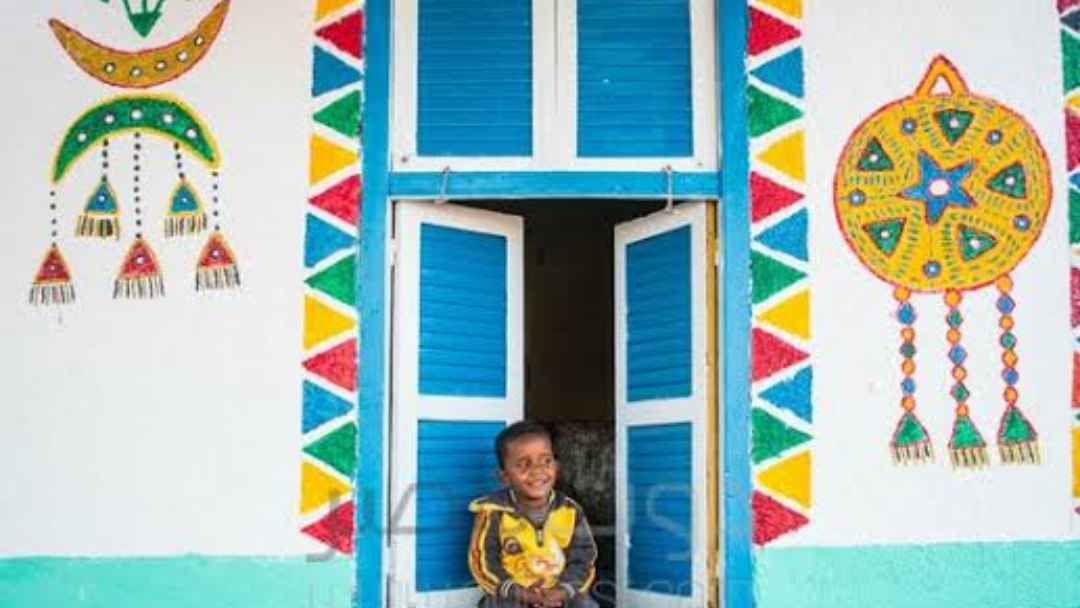
HOY NuBa
Talking about endangered languages as the nubian language in South of Egypt &Sudan is about to extinct for the new generation aren't aware of their heritage n identity and the old grandparents passed away with their history without passing it through ..this initiative to build a platform for practicing Nubian language for the science research and for the heritage preservation as part of our identity and a way of communicating that still have place whuch witnessed our ancient history
Some facts about Nubian language
The Nubian languages (Arabic: لُغَات نُوبِية, romanized: lughāt nūbiyyah) are a group of related languages spoken by the Nubians. They form a branch of the Eastern Sudanic languages, which is part of the wider Nilo-Saharan phylum. Initially, Nubian languages were spoken throughout much of Sudan, but as a result of Arabization they are today mostly limited to the Nile Valley between Aswan (southern Egypt) and Al Dabbah as well as villages in the Nuba mountains and Darfur.
- Nobiin, the largest Nubian language with 545,000 speakers in Egypt, Sudan, and the Nubian diaspora. Previously known by the geographic terms Mahas and Fadicca/Fiadicca. As late as 1863 this language, or a closely related dialect, was known to have been spoken by the arabized Nubian Shaigiya tribe.[4]
- Kenzi (endonym: Mattokki) with 100,000 speakers in Egypt and Dongolawi (endonym: Andaandi) with 180,000 speakers in Sudan. They are no longer considered a single language, but closely related. The split between Kenzi and Dongolawi is dated relatively recently to the 14th century.
- Midob (Meidob) with 30,000 speakers. The language is spoken primarily in and around the Malha volcanic crater in North Darfur.
- Birgid, now extinct, was spoken north of Nyala around Menawashei, with the last known speakers alive in the 1970s. It was the predominant language between the corridor of Nyala and al-Fashir in the north and the Bahr al-Arab in the south as recently as 1860.[5]
- Hill Nubian or Kordofan Nubian, a group of closely related languages or dialects spoken in various villages in the northern Nuba Mountains; in particular by the Dilling, Debri, and Kadaru. An extinct language, Haraza, is known only from a few dozen words recalled by village elders in 1923.[6][7]
Old Nubian is preserved in at least a hundred pages of documents, comprising both texts of a Christian religious nature and documentary texts dealing with state and legal affairs. Old Nubian was written with a slanted uncial variety of the Coptic alphabet, with the addition of characters derived from Meroitic. These documents range in date from the 8th to the 15th century AD. Old Nubian is currently considered ancestral to modern Nobiin, even though it shows signs of extensive contact with Dongolawi. Another, as yet undeciphered Nubian language has been preserved in a few inscriptions found in Soba, the capital of Alodia. Since their publication by Adolf Ermann in 1881, they are referred as 'Alwan inscriptions' or 'Alwan Nubian.'
Traditionally, the Nubian languages are divided into three branches: Northern (Nile), Western (Darfur), and Central. Ethnologue's classifies the Nubian languages as follows:.[8]
- Northern (Nile)Old NubianNobiin
- Old NubianNobiin
- Nobiin
- Western (Darfur)Midob
- Midob
- CentralKenziBirgidDongolawiHill (Kordofan)Kadaru-GhulfanGhulfanKadaruUnclassifiedDairDillingEl HugeiratKarkoWali
- Kenzi
- Birgid
- Dongolawi
- Hill (Kordofan)Kadaru-GhulfanGhulfanKadaruUnclassifiedDairDillingEl HugeiratKarkoWali
- Kadaru-GhulfanGhulfanKadaru
- Ghulfan
- Kadaru
- UnclassifiedDairDillingEl HugeiratKarkoWali
- Dair
- Dilling
- El Hugeirat
- Karko
- Wali
Glottolog groups all non-Northern Nubian branches in a single group named West-Central Nubian. Additionally, within Hill Nubian, Glottolog places Dair in the same branch as Kadaru.[9]
The relation between Dongolawi and Nobiin remains a matter of debate within Nubian Studies. Ethnologue's classification is based on glotto-chronological research of Thelwall (1982) and Bechhaus-Gerst (1996), which considers Nobiin the earliest branching from Proto-Nubian. They attribute the current syntactical and phonological proximity between Nobiin and Dongolawi to extensive language contact. Arguing that there is no archeological evidence for a separate migration to the Nile of Dongolawi speakers, Rilly (2010) provides evidence that the difference in vocabulary between Nobiin and Dongolawi is mainly due to a pre-Nubian substrate underneath Nobiin, which he relates to the Meroitic. Approaching the inherited proto-Nubian vocabulary in all Nubian languages systematically through a comparative linguistic approach, Rilly arrives at the following classification:[1
- Nile NubianOld NubianNobiinKenzi-DongolawiDongolawiKenzi
- Old NubianNobiin
- Nobiin
- Kenzi-DongolawiDongolawiKenzi
- Dongolawi
- Kenzi
- Western NubianBirgidMidob-KordofanMidobKordofan
- Birgid
- Midob-KordofanMidobKordofan
- Midob
- Kordofan
- Environment
- Education
- Human Rights
- Collaboration Stories
- Our Impact
- She Transforms Tech
- Stronger Together
- Youth
- Shout Your Vision
- Global