
Let's Talk mental health
Sep 2, 2025
story
Seeking
Visibility

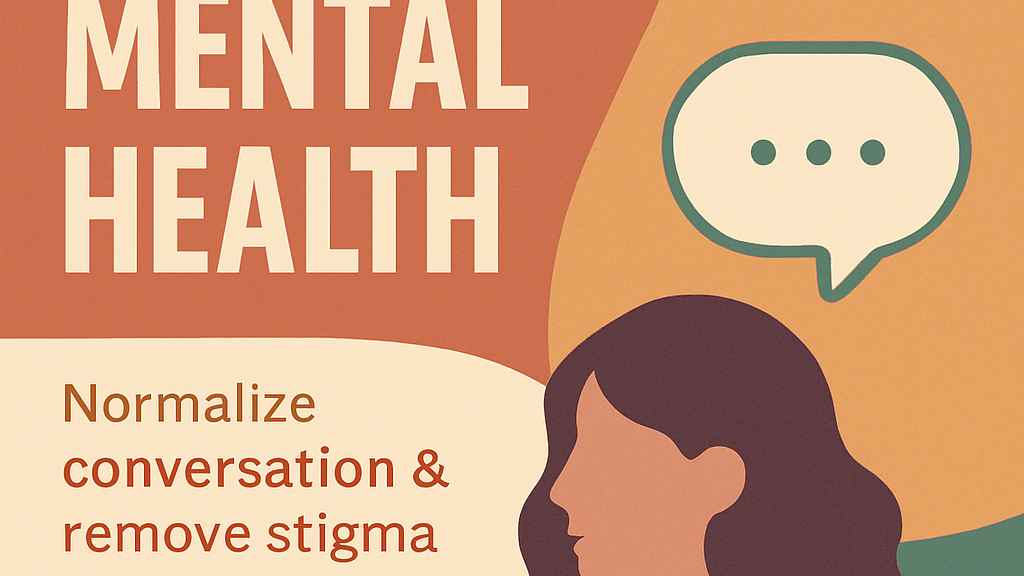
🧠 Mental Health Is Daily, Not Distant: A Call to Normalize Conversation and Remove Stigma
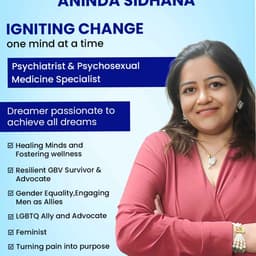
By Dr. Aninda Sidhana, Psychiatrist & Survivor-Informed Systems Architect
Mental health is not a diagnosis tucked away in a file. It’s not a crisis that arrives unannounced. It’s part of our daily rhythm—woven into how we wake up, how we relate, how we cope, and how we care. And yet, for too long, mental health has been treated like a secret. Something to hide, whisper about, or only discuss when things fall apart.
I believe it’s time to change that.
I believe it starts with conversation.
And I believe that conversation must be emotionally safe, survivor-informed, and rooted in dignity.
---
🌱 Why Talking About Mental Health Is Urgent Now
We live in a time of emotional overwhelm. Burnout, anxiety, and loneliness are no longer rare—they’re routine. Globally, nearly 970 million people live with mental health conditions. In India alone, 15% of adults require intervention. And yet, stigma still holds power.
Stigma thrives in silence. It tells us that care is weakness, that vulnerability is shameful, and that healing must be hidden. But when we normalize mental health conversations, we replace fear with connection. We say:
- “You’re not alone.”
- “You’re allowed to feel this.”
- “You deserve care.”
Talking about mental health doesn’t just raise awareness—it builds relational infrastructure. It makes care visible, accessible, and communal.
---
🔄 Awareness That Heals, Not Just Informs
Awareness is often called the first step. But awareness without emotional safety can feel like exposure. My initiative begins by reframing awareness as invitation—not instruction. We use language that honors lived experience, not clinical detachment. We design visuals that signal care, not surveillance. And we center stories that model boundary dignity, not performative vulnerability.
Mental health is not a label. It’s a landscape. And every person walks it differently.
---
🧭 What Normalizing Looks Like
Normalizing doesn’t mean forcing people to share. It means making it safe to do so. It means:
- Saying “How are you really?” and meaning it
- Including mental health in school curriculums, workplace policies, and community programs
- Designing spaces—online and offline—where people can speak without shame
- Training listeners, not just responders
It also means changing the language we use.
Instead of “What’s wrong with you?” we ask, “What’s hurting?”
Instead of “Be strong,” we say, “It’s okay to rest.”
---
📚 Books as Blueprints, Not Bandages
As a psychiatrist and survivor-informed systems architect, I turn to literature not for escape, but for design. Authors like Audre Lorde, Ocean Vuong, and Bessel van der Kolk offer frameworks that help us build care systems with nuance, not noise. Their words remind us that healing is political, poetic, and deeply personal.
> “Caring for myself is not self-indulgence, it is self-preservation.” — Audre Lorde
Books are not just companions. They are blueprints for communal healing.
---
🌍 How World Pulse Is Creating Space for Global Healing
World Pulse is more than a platform. It’s a digital sanctuary. A place where women and allies share their stories, build movements, and speak truth to systems. It’s where mental health becomes part of the conversation—not as a crisis, but as a rhythm of life.
Through storytelling, World Pulse helps:
- Break stigma across cultures
- Amplify survivor-led advocacy
- Connect people who care deeply, even across borders
- Turn personal pain into collective power
It’s a space where mental health is not a taboo, but a shared language of resilience.
---
💬 My Initiative: Designing Systems That Reflect Care
My initiative doesn’t stop at conversation. It builds infrastructure. We embed mental health into menstrual care kits, hostel signage, and peer-led listening spaces. We train facilitators not just in psychology—but in emotional literacy, boundary clarity, and communal healing.
We believe:
- Care-seeking is courage, not weakness
- Resilience is relational, not solo
- Healing is not linear—and never owed
Through campus carousels, community dialogues, and digital storytelling, we invite people to rewrite the language of mental health in their own words.
---
🌀 A Global Invitation
This is not just advocacy. It’s architecture. Survivor-informed, emotionally intelligent, and rooted in dignity.
So here’s my invitation:
Let’s talk.
Let’s listen.
Let’s build a world where mental health is not hidden, but held—with clarity, care, and community.
Because healing doesn’t begin in isolation.
It begins in dialogue.
- Human Rights
- Our Impact
- Digital Ambassador Events
- Digital Skills
- Stronger Together
- Becoming Me
- South and Central Asia