
Lived Experience Is Leadership:
Aug 14, 2025
story
Seeking
Encouragement

🟥
Reimagining Mental Health and Gender Justice Through Survivor-Centered Systems
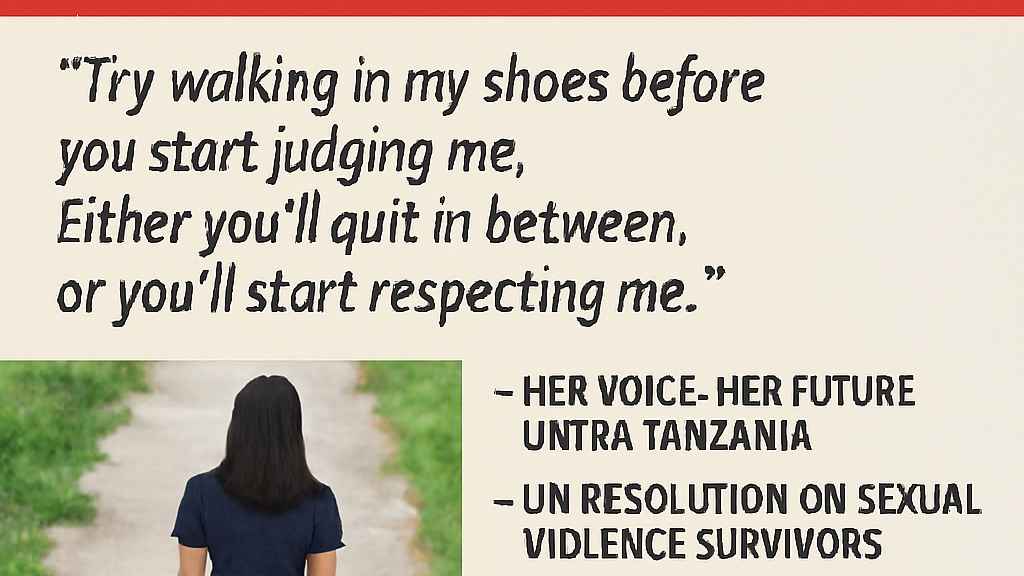
"Try walking in my shoes before you start judging me. Either you’ll quit in between, or you’ll start respecting me."
This quote is not just a plea—it’s a mirror.
A mirror held up to systems that have long pathologized pain, silenced resilience, and medicalized survival.
It speaks to the lived reality of survivors—not only of sexual violence, but of gender-based violence (GBV), mental illness, and systemic neglect.
Their stories are not defined by diagnosis or trauma alone.
They are shaped by resistance, by radical hope, and by the power to lead change.
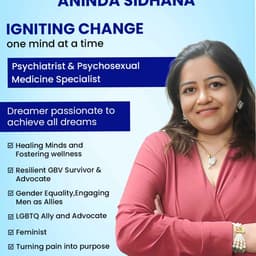
As a psychiatrist, educator, and survivor-centered advocate, I’ve witnessed how trauma-informed care—when guided by lived experience—becomes more than a clinical framework.
It becomes a cultural blueprint.
A way to move from clinics to communities, from prescriptions to presence, from systems of silence to ecosystems of dignity.
---
💜 Survivor-Led Approaches: The Architecture of Empathy, Compassion, and Collective Healing
Survivor-led approaches are not merely inclusive—they are transformative.
They shift the center of gravity from institutional authority to lived wisdom.
From clinical detachment to relational depth.
From service delivery to soul restoration.
🌱 Why Survivor Leadership Matters
Survivors carry not only the imprint of trauma—but the blueprint for healing.
Their leadership is forged in the crucible of lived experience.
It is shaped by:
- Navigating systems that dismissed or misdiagnosed them
- Reclaiming dignity in spaces that once denied it
- Building community in the aftermath of isolation
This lived wisdom cultivates a leadership style that is:
- 🫂 Empathetic—because they’ve felt the ache of being unheard
- 💞 Compassionate—because they’ve held others through pain
- 🔄 Collective—because healing is never a solo act
Survivor-led spaces are not hierarchical—they are relational.
They honor ambiguity, silence, and emotional nuance.
They make room for grief, rage, joy, and transformation—all at once.
---
🔍 Empathy as Expertise
In survivor-led models, empathy is not a soft skill—it is a diagnostic tool.
It allows leaders to:
- Sense emotional undercurrents others miss
- Create safety in spaces of vulnerability
- Design care systems that feel human, not mechanical
Empathy becomes a form of emotional literacy.
It informs everything—from how a support group is facilitated to how a policy is worded.
---
💗 Compassion as Culture
Survivor-led initiatives don’t just offer services—they cultivate cultures of care.
Compassion is embedded in:
- The language used in outreach materials
- The pacing of conversations and interventions
- The way silence is honored, not rushed
Compassion is not performative—it is embodied.
It shows up in how survivors hold space for each other, how they navigate triggers, and how they build bridges across difference.
---
🤝 Collective Healing as Strategy
Survivor-led spaces recognize that healing is communal.
They reject the myth of individual resilience and instead embrace:
- Peer support networks
- Intergenerational storytelling
- Community-based rituals of restoration
These approaches are strategic—not sentimental.
They reduce isolation, increase retention in care programs, and foster long-term recovery.
In SheShakti, for instance, survivor-led circles have shown how collective healing can:
- Rebuild trust in mental health systems
- Foster cross-sector collaboration
- Inspire policy reform rooted in lived reality
---
🌍 Global Movements: Survivors Leading the Way
Across continents, survivors are not waiting to be heard.
They are leading.
They are legislating.
They are redesigning the very systems that once failed them.
🔹 Her Voice, Her Future – UNFPA Tanzania
In Tanzania, girls and women who’ve survived female genital mutilation (FGM) are not just recipients of aid—they are architects of change.
Through UNFPA’s initiative, survivors are trained in life skills, entrepreneurship, and advocacy.
They lead community education, challenge harmful practices, and shape policy reform.
Their lived experience becomes curriculum. Their leadership becomes culture.
🔹 UN Resolution on Sexual Violence Survivors – Led by Rise
In 2022, the UN General Assembly adopted a historic resolution recognizing survivors of sexual violence in peacetime.
This was not just a symbolic gesture—it was a seismic shift.
Led by Rise, a survivor-led movement, this resolution reframed survivors not as passive victims but as agents of international law and justice.
It marked the beginning of a new era: one where lived experience informs global governance.
🔹 Hear Her – UN Women
UN Women’s “Hear Her” campaign calls for listening to survivors of all forms of violence and discrimination—including those living with bipolar disorder, depression, PTSD, and other psychiatric conditions.
But listening alone is not enough.
Survivors must shape the systems that serve them—from mental health care to legal frameworks, from media narratives to educational curricula.
---
🧠 Mental Illness Is Not a Barrier—It’s a Lens for Systemic Insight
Survivors of mental illness—including those navigating bipolar disorder, schizoaffective conditions, or complex trauma—carry deep wisdom about what care should look like.
Their lived experience offers:
- 💡 Insight into what dignity-based care feels like
- 🛡️ Strategies for navigating stigma, isolation, and recovery
- 🔧 Vision for redesigning systems that often fail those most vulnerable
Mental illness is not a deficit—it is a diagnostic lens into the soul of our systems.
It reveals where care collapses, where empathy is absent, and where reform must begin.
---
🇮🇳 India’s Imperative: Survivor-Centered, Trauma-Integrated, Mentally Inclusive
In India, we must move beyond labels.
Beyond diagnosis.
Beyond the binary of “well” and “unwell.”
We must build trauma-integrated systems that honor psychiatric lived experience as expertise.
This means:
- 📚 Embedding emotional literacy in clinical, educational, and policy spaces
- 🤝 Building multi-sector coalitions across psychiatry, media, and grassroots networks
- 🎙️ Ensuring survivors of GBV and mental illness lead the design and delivery of care, advocacy, and reform
India’s emotional architecture must be redesigned—not by institutions alone, but by those who’ve lived its fractures.
Survivors must be at the helm—not as tokens, but as torchbearers.
---
🛠️ Designing Systems with Survivor Wisdom
To truly honor survivor-led approaches, systems must:
- Include survivors in every stage of design—from ideation to implementation
- Compensate lived experience as expertise, not volunteerism
- Create feedback loops that center survivor voices in evaluation and reform
This is not charity—it is justice.
It is the redesign of care, advocacy, and governance through the lens of those who’ve lived its failures and imagined its possibilities.
---
🔔 A Call to Action
Let survivor wisdom lead your next campaign, curriculum, or coalition.
Let empathy be your compass.
Let compassion be your culture.
Let collective healing be your strategy.
Because when survivors lead, systems don’t just change—they heal.
- Gender-based Violence
- Collaboration Stories
- Survivor Stories
- Global