
Long held views die hard: Need concious reflection (confused)
Jan 21, 2015
story
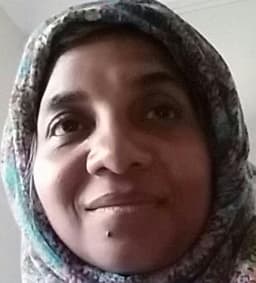
I hope I am on the right track - confused as any other Maldivian women LOL :-)
I was forced into this life on, an early Thursday morning, 17 May in Male' the capital of Maldives. I grew up wondering, making decisions, learning from mistakes, independent, and with a resolution to fight. With a sense of great loneliness and confusion I grew up. I kept my thoughts to me. I trusted nearly non. I am sceptical of any kindness shown towards me. I still strongly believe that nothing is for free. Yes, I was born with expectations, a belief system and a culture that has a specific status for girls and women. I grew up regularly being reminded that I will be married and I will be looking after kids, staying home cooking and washing for the men. The adults may have been joking but what they did not realise was that they were cultivating and proposing a destiny of a girl. A girl who is resolved to fight for equality and prove they were wrong
Kids in Maldives are seen not heard and 'talking back” as a matter of fact answering questions posed by an adult is seen as utmost rudeness. The questions usually asked are rhetorical not really to be answered. Yet, in my mind I always scream at the adults that I will be better than the boys, I will not cook and wash clothes and be a housewife. I stare at them with wrath and anger. I felt they were my enemy and they were the barriers to may success. I did not know how I was going to prove them wrong. I went to school but school did not help me much. I was giving up on things feeling I was inadequate and others should have the opportunity. I felt was useless as one of the teachers repeatedly stated “... you are a disgrace to your family...” I can still hear this in my mind. My result at school were random. I put effort to study when teachers were good and just among the student. I regarded my success as 'happy go lucky' as I did not put much effort. I believe I have the ability to achieve, resist and fight for what I believe is just.
Thirty years of one party ruling in Maldives was brought down in 2008. A new ruling party with new hopes took the position of ruling the Maldives that also brought multi-party competitions. Now there is greater divide in the community because of the political parties. The key two parties create the blue and yellow divide in the country. This leads uncertainty through out the country and division among families leading to hostility. The important issues as education, health and justice are neglected as the political leaders focus to be in power or to obtain power by any means. Political outlook have changed in Maldives but the vulnerability of children are still the same. Children who are orphaned, abandoned, neglected and abused have limited support and it is an enormously sensitive issue in the silent Maldivian community.
It is a culture in the Maldives that children from the islands, in their teens, move to Male' the capital island and live is homes of people in Male'. Some would be fortunate enough to get an education later to be free and independent while struggling in the to satisfy the owners demands. These children suffer tremendously in these households at the hand of the owners. Some are subject to all sorts of humiliations, physical and emotional abuses. I have heard stories from people who have experienced sufferings and witnessed people subjected to ridicule.
I met Honey when she was in her twenties living in such a household. Honey started to live in this house in Male' at her age of 11 in hope to achieve an education and have a better life. She was one of those children who moved to Male' in hope but she was treated as a house maid. She did the house work cleaning, helping with the cooking, sweeping, doing laundry and assisting in the grocery shopping. Honey went to school and studied in her spare time. She was not the brightest 11 year old, hence, she needed much more time to study which she did not have after her duties as housemaid.
Unfortunately she gave up her studies as she was not achieving at school and became a full-time housemaid of an atoll-chief’s house in Male' serving his wife and children. I found that Honey as a strong, positive and person with a good sense of humour. Even when the humour was at her expense she still had a way of laughing off and focus on things that did matter.
We became close friends and I sensed her sadness of the treatment. She never spoke ill of people but expressed the situation as her destiny. Some evenings we discuss issues of life but we never came up with solutions that could change the situation. It was discussion of survival in the situations we were in. This is how ordinary women think in Maldives. The women I refer are not the minority elites who have the opportunity to educate them and have a different world view from the majority of women in Maldives.
Honey got married at age 25 had a boy and then was divorce later. I must mention here Maldives one of the countries with the highest divorce rate. After the divorce, she and her son continued to lived in the atoll-chief’s house working as a maid in hope to provide a better education for her son. After 12 years of divorce she re-married the father of the son and had two more son. After remarrying she returned to the birth island and started a new life in her own community. It was short-lived, her husband died of cancer in 2010, now a widow with 2 young children and a adult boy. She works at the health centre in her island and is struggling to bring up two kids and support his eldest son. Though she went to school I found she still cannot read or write to assist her kids in a meaningful manner.
I recently spoke to her over the phone and was talking about her eldest son, age 19 and she said “... is not working because he did not get the job he wanted....” This is common situation in Maldives. Children are brought up without teaching them to take responsibility and kids either blame the parents or the system. Even my 3rd brother who is in his 30s still is much the same. Kids from wealthy and affordable families will be studying or pretend to study overseas wasting money and getting spoilt. These children are immature and have no sense of responsibility. The parents struggle and continue to support their children's adult life.
The government does have a responsibility for the welfare of orphans hence I asked Honey whether she had to register her kids as orphans. She said “I did not register and the island office did not inquire either... some people give me money on Eid's and during Ramadan.” This is holy month of fasting and in the name of god to help the orphans people would give her money. She is independent and looking after herself. She also added “ I haven’t asked anyone to give me anything. By God's help I am surviving” Honey, is an inspiration to me.
The issue of safety of children came to discussion in Maldives in the 1990s when Maldives signed the United Nations Convention of the Rights of the Child. It was in 2004 an institution named “Kudakudhinge Hiya” was established. The capacity of this institution allows up to 60 children reside here. Currently there are 31 children and they are orphans, victims of abuse and children of parents who have committed major crimes and serving their sentence in confinement. Further outreach centres were initiated in 2006 in a southern island of Maldives. Lack of expertise and human resource hinders development in this area to assist the children who are most vulnerable. This is an extremely sensitive area as families view this service as government interference in the private lives of families . The challenges are huge for the people who work in this area.
I also probed about the politics in her island and she said with annoyance and a hint anger “MDP got rid of the staff working at the atoll-chief’s house stating that they do not need the workers any more but MDP hired people who belong to their party.... this is so unfair...” Unjust and corruption at every level and people like Honey suffers tremendously when the political parties are at war to gain votes. Imagine in a country of less than 400,000.00 people with several parties fighting between each other as if in a war. The members of these parties get as low and attack people at a personal level calling names, creating gossips and causing violence in the country. Maldives is like a bubbling volcano ready for a big explosion.
I was talking to Hasia about orphan and she wanted me to tell her story stating that “... how can my kids not be orphans when their father abandoned them in a foreign country.” This reminds me that one on my cousin's also abandoned his children and fled. Unfortunately, for these children their mother too abandoned them and the four siblings were left at the mercy of their father's relatives. It was the eldest girl who looked after her siblings.
Hasia got married to the man she loved against the will of their parents. She was a trained primary teacher. She gave up her job when she had her children. She has a boy and girl. The marriage was not going well specially with criticism and constant disapproval. I reconnected with Hasia in 2004 when I was going through my divorce. She visited me when she learnt about my situation. We spent hours telling our stories and catching up and I found my self listening to her. Reflecting on her life and comparing with mine. I found that her marriage was only connected by a fine thread. Anything could separate them and end up in a divorce like mine.
It was in 2006 I heard that Hasia's husband has abandoned her an the kids while they were in Sri Lanka. Away from home without anyone to reach for help. Now Hasia, divorced, with her two children are totally dependent on her siblings. During my visit to Maldives in 2009 I met Hasia and she the story completing with sign and said “I am fortunate that my family is looking after me and the children.” My resistant to be depended and to educate myself have given me the opportunity to provide and education to my children.
Three of us, Honey, Hasia and me have similarities and difference. We all lacked support and a network to assist us to communicate and benefit. We all struggled on our own as most Maldivian women do. We do not express our thoughts and discuss to empower ourselves. Rather we have faith and continue to survive. When I talked over the phone from what I felt was that we believe that the situation we are in is our destiny even though it is sad and depressing. There is always some reason to show that nothing can be changed. There is always something to make them feel helpless. I believe we can change though it is the most stressful event in life. The way women perceive themselves can help children to grow with change to break the vicious cycle and women to be seen as equal humans.
Looking forward to receive some comments... I am running late.... :-)
- South and Central Asia