
Maternal Mortality: Should Women Die Giving Life?- Draft
Jan 21, 2015
story


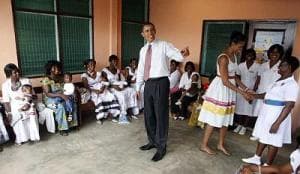
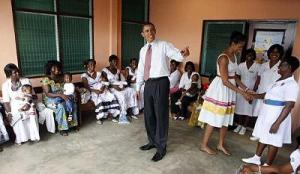
Camera men rushed ahead of the entourage. Journalists were poised with their tools. Few who had the opportunity shoved through the crowd as the Obamas stormed the La General Hospital during their historic visit to Ghana. Heads were up, hearts swelled with pride, eyes gazed in admiration as the first African- American president and his wife made their way through the throng of people to La General Hospital in Accra –Ghana. At the hospital the Obamas interacted with several expectant mothers, touched and held babies and smiled at them sweetly. The US president noted and remarked during his visit to the hospital that “…the rate of both infant mortality [and] Maternal Mortality is still far too high…” in Africa hence the need to address poor Maternal Health. There is an urgent need for us to tighten our belts in our efforts to save the lives of pregnant women in Ghana and every other woman around the world.
As many girls and women conceive daily, some live to experience the joy of motherhood yet many more pass away during pregnancy and its related complications. But should women die in the process of giving life to others? For how long should we watch women slip through our fingers because of Maternal Mortality when these deaths can be aborted in the first place? Can we achieve Millennium Development Goal (MDG) 5 of reducing maternal mortality by 75 per cent by 2015 as a country or continent?
The World Health Organisation (WHO) defines Maternal mortality as “the death of a woman while pregnant or within 42 days of termination of pregnancy, irrespective of the duration and the site of the pregnancy, from any related to aggravated by the pregnancy or its management but not from accidental or incidental causes”.
As the clock ticks by the minute a girl or a woman dies due to pregnancy related complications or during childbirth. Statics by W.H.O, UNFPA and UNICEF suggest that about half a million women worldwide die every year. Should we sit and crossed our legs watching our women die or wail after they have gone?
Maternal mortality knocks at the door of many pregnant girls and women in Ghana. Available statistics indicate that about 80% of these maternal deaths are caused by obstetric complications –haemophage, sepsis, unsafe abortions, pre-eclampsia and eclamsia and prolonged or obstructed labour due to some socio-cultural, economic and political factors.
Although there exist relatively an advanced health system in Ghana Maternal Mortality is still soaring high. The evidence?
One, W.H.O and the International Journal of Gynecology & Obstetrics both estimates Ghana's maternal mortality ratio to be 560 per 100,000 live births. In 2007, the Ghana Maternal survey estimates 451 deaths per 100,000 live means meaning about 5,000 women die annually as a result of pregnancy.
Two, the Daily Graphic on Thursday August 27 reports that “Health institutions in Kumasi Metropolis recorded a total of 133 maternal deaths last year as against 108 in 2007”.
Three, in the Tema metropolis( which is part of Accra) 30 pregnant women died through complications out of 7,800 deliveries at the Tema General Hospital in 2007 and in 2008, there were 28 maternal deaths out of a total of 8000 births at the same hospital according to the Ghanaian Journal.
From conception to delivery the Ghanaiangirl or woman is prone to death. Poor girls and women especially those living in rural communities are the most vulnerable and are at the highest risk of maternal mortality as there is a delay in accessing a medical facility and also difficulty in affording medical health from cost of transportation to drugs.
25% of women die of haemorrhage (severe bleeding), 15% because of infections, 12% beacue of eclampsia, 8% because of obstructed labour, 13% because of unsafe abortions and 20% as a result of of indirect causes.
In an interview with some women in some communities in Accra-the capital city of Ghana and in Bantima a town in the Ashanti region of Ghana; the women interviewed between the ages of 20 and 45 who had between one and four children share their experiences from conception to delivery. Many have dreaded from the moment of conception through to the day of delivery as they wonder how to afford and access effectively quality health service during this period of their life.
Most of these mothers interviewed had basic education, were married and worked as house wives and traders feel strongly about the need for every woman who conceives to be able to access and afford medical health and also and also think that more clinics should be built in communities.
“I do not think that it is fair for a woman to die during childbirth when we can actually prevent this death as a country. We cannot justify to the child who grows up to learn that he lost his mother giving birth to him because of drugs, unskilled attendant or whatever” Gladys, a mother of two children could not hide her feelings during the interview.
“My sister was pregnant. There was no clinic in my community. We had to walk form ours to the next to get a car which comes only twice a day before we could take her to the clinic. It was a painful and a sad moment for all of us as we wondered whether she would survive “. Another woman shared her experience.
There exist a myriad of root causes which encompasses socio-cultural, economic and political factors that attribute to the high rate of maternal mortality in Ghana.
Cultural Factors such as traditional norms, beliefs and practices is a contributing factor to the high rate of Maternal Mortality on Ghana.
For instance in some rural communities in Ghana some people believe that a pregnant woman must drink some concussions as a traditional practices or norm. These traditional concussions are believed to be powerful and protective. When it is not medically tested can affect the mother or the baby. Manu, a taxi driver in a short interaction laments “I still cannot believe that at this age and time, my father in-law still believes and threatens me if I do not allow my wife to travel all the way with the pregnancy to the village for a concussion
Social Factors including infrastructure, lack of health facilities in some communities, inaccessibility of health centers, poor roads, transportation difficulties, lack of education or information on pregnancy, child birth, lack of skilled or professionals-midwives, birth attendants are the numerous social factors that contribute to ....... of maternal death., In some communities there is no health facility at all, Where there is health facility, the roads are bad or there are few cars to transport these women to the health centres during complications. In some cases too, there is lack of water or electricity in some health centre. In some cases too there is lack of drugs for the pregnant woman suffering complications.
Again, there are times when there delays even at the health facility due to lack or shortage of professionals or skilled midwives. Most trained professionals refuse to live and serve rural communities. Some also migrate to the West to seek greener pasture because of low income at home.
Economically, Poverty plays a major role in maternal death. There is a correlation between poverty and maternal mortality as poor pregnant women and their families have less money for adequate health care facilities such as drugs etc. Affording a balanced diet or three square meals a day is another is another challenge for the poor pregnant woman due to lack of money.
Politically, the political will and commitment is not strong enough to create or implement policies on Maternal Mortality .Where are existing projects, programmes and policies on Maternal Health, there exist weak or zero systems or plans to monitor and evaluate progress of maternal health programmes
Statistics suggest that about a million children loose their mothers to maternal mortality. Babies who lose their mothers are likely to follow suit. The total development of children who loose their mothers is questionable.
Also, Maternal Mortality affects every sector of development as both women and children are vital to the development of every nation.
What is being done to save mothers in Ghana individually, locally and internationally?
- since the 1990s the Ghana Government introduced some interventions to reduce maternal mortality. This include
-Safe-Motherhood Initiative where at the grass root level, in various district hospitals, clinics and health centres women can access antenatal care, labour and delivery care, postnatal care, family planning, prevention and management of unsafe abortions, and health education. These interventions for are to help make pregnancy and child brith safer in Ghana
Prevention Maternal Mortality Programme (PMM). This programme focuses on interventions that improve the availability, quality and utilization of emergency obstetric care. Activities range from improving services at health facilities to improving access to care.
Making Pregnancy Safer Initiative. This include care during pregnancy and invloves Antenatal Care, Treatment of Severe anaemia, Treatment of syphilis, Treatment of other STDs such as gonorrhea, Chlamydia, and Treatment of malaria;
-Again, the policy provides for Delivery by skilled birth attendant including routine newborn care, Management of eclampsia, Management of postpartum haemorrhage, Management of obstructed labour/Caesarean delivery Management of sepsis, Management of basic of newborn complications, Postpartum care Management of abortion complication, and Management of post surgical care. There is also postpartum family planning including Condom, Depo-Provera, and IUD, Norplant, Oral contraception, and Sterilization; and Maternal and Neonatal Health Programme : Antenatal Care, Labour and Delivery Care, Postnatal Care, etc.
-In 1998, the Ghana Government again introduced free antenatal care to all pregnant women and in September 2003, a policy of exempting all users from delivery fees in health facilities was introduced
-In July 2008 the government granted free access to maternal health care for all women, covering them from pregnancy through to one year after birth.
Although all these policies and programmes that target at reducing maternal mortality in Ghana exist, there is still many more women who cannot afford have access to the medical health care they need during emergency.
The Way Forward
There is therefore the need to review as well as strengthen existing policies, programmes, strategies locally and globally through socio-cultural, economic and political means.
Socio-culturally- more proejcts and programmes to educate people on traditional beliefs, practices that threaten the health of a pregnant girl or woman should be introduced. More health centres, clincs and hospitals should be built to serve communities. Roads should be constructed and new transportation systems should be put in place for people to easily access health facilities.
Again, we need to train more professionals, treat them well.
Economically- national budget should respect Maternal Mortality programmes, projects and policies for effective delivery. There is also the need to empower women economically through investing by educating them and helping them as educated pregnant girls and women take better care of themselves during pregnancy and economically empowered women are able to afford quality maternal health care during pregnancy.
Politically, there is the need for political will and commitment to working towards reducing maternal mortality as a country by implementing maternal mortality policies. There should also be systems to monitor and evaluate existing policies on maternal health and ensure that polices are not only on paper but effective.
Reducing Maternal Mortality effectively calls for an international and local political commitment to support adopted strategies/ programmes/ projects etc that will enable
-women to have access to drugs, free medical care, information and education on Pregnancy
-l pregnant women to have access to skilled care at the time of birth
-All those with complications have timely access to quality emergency obstetric care
On the international front both action plans from the International Conference on Population and Development and Millennium Development Goals to reduce about 75 per cent of maternal mortality between 1990 and 2015 worldwide should be carried out religiously.
The international community can help by supporting projects and programmes in developing countries like Ghana that aim at reducing maternal mortality.
Making motherhood safe is urgent, critical and wise as we need mothers alive and healthy. No country can attain optimum development without healthy mothers to nurture their babies, groom and educate their children and to contribute positively to national development.
- Africa