
Mental Health with Social Justice
Oct 25, 2019
story
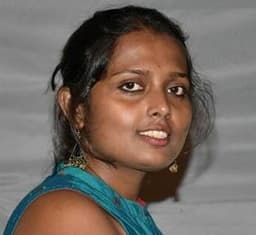
I am one of the few post-graduates from my nomadic tribe community of Gadiya Lohar in India. For a woman of this community, this achievement has come after a lifetime of struggles.
When I was 16, I stood second in my college in class 12 exams. I was extremely happy because marks of class 12 in India are extremely important because it decides one's admission to university. No one in my family though, or community, understood the significance of what I had done. This is because education is far removed from my hisorically deprived nomadic tribe. For a community that is still struggling for its basic identity and needs, higher education, that too for girls, does not feature in any way.
There wasn't enough money at home for me to take admission to university. And just like that my higher education stopped for want of a few thousand rupees.
This came as a big blow for a girl who had fought against discrimination, poverty, lack of resources and many other challenges to reach where I had. During this period I experience severe mental distress. I was utterly alone, guilty, confused, angry, dejected. No one could understand my humiliation then – not friends, not teachers. The future looked blank because without a college education, I had no chance to break out of the deprivation cycle. I had no language, support or even understanding of my mental health to ask for help. For someone like me, my mental health in such situations becomes very important and a basic right. Millions of youth like me in grassroot India face such serious mental distress with no social support.
India is a youth country. More than half the population is below 25. India also has one of the top youth suicide rates in the world.
In this scenario, days like World Mental Health Day which is today on October 10th, serve as a red alert for activists like me. What are our institutions, systems and society immediately doing for youth mental empowerment, to stop the suicides? Are they offering any concrete support in form of services (eg. counselling) or justice (in case of mental violence) for the most marginalized person? Are they even aware of basic provisions of the Mental Health Act in India? In our experience, no.
I feel that mental health cannot be seen disconnected from social justice; In fact, when other layers of social justice such as expression, dignity, equal participation, representation are violated, it directly affects our mental health.
My story as a young girl from a vulnerable community can be seen repeated hundreds of times in India, at times much more severely where our social and political rights are attacked. For eg. in case of Dr. Payal Tadvi's death by suicide which was brought on due to constant caste-based harassment by her seniors in medical college, when a vulnerable individual's mental health is attacked, the entire family and even community's mental health is affected. Every other youth from her Bhil Muslim community aspiring to be a doctor has been given the terrible message that such a fate could befall you.
This is not a message we can afford to hear quietly. At Anubhuti, the organization I founded in 2016, we have reached about 1500 youth along with their communities and colleges with mental health justice training and support. Youth are responding most sensitively to the need to stop harassing each other based on caste, gender, sexuality, disability, language.. They are asking for MH to be taught in school and college, for counselling support and for administration departments such as police to be mental health friendly.
Grassroot youth are taking ahead the movement for Mental Health Jusitce which we must continue to fight till the very last person is able to live with their mental health dignity.
- Health
- Gender-based Violence
- Education
- South and Central Asia