
Mindweave: A Survivor-Informed Framework for Holistic Wellness By Dr. Aninda Sidhana
Sep 1, 2025
story
Seeking
Encouragement
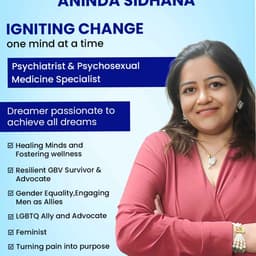

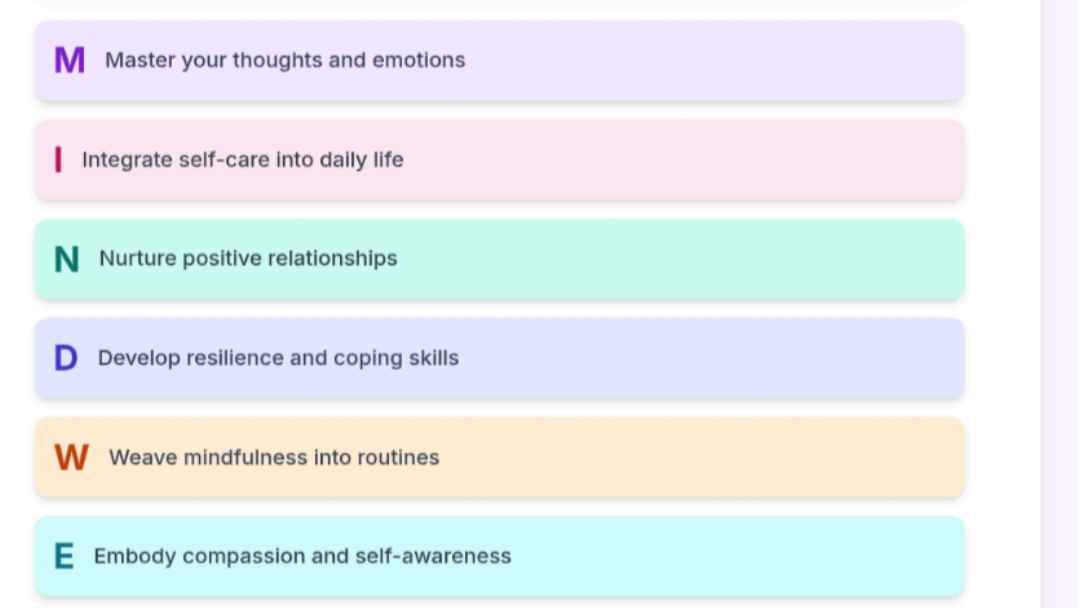
In systems that often reduce wellness to productivity and care to compliance, we need frameworks that restore emotional clarity, relational dignity, and lived wisdom. The Mindweave Mnemonic offers one such framework. It’s not just a tool—it’s a daily architecture for healing-centered living.
Each letter in MINDWEAVE represents a principle that, when practiced together, forms a survivor-informed blueprint for wellness. It’s simple enough to remember, but layered enough to guide real transformation. And unlike many wellness models, it doesn’t isolate the individual from their context—it integrates the personal, relational, and systemic.
Let’s walk through it:
---
M — Master your thoughts and emotions
This isn’t about control—it’s about clarity.
Survivors are often told to “manage” their emotions, as if feeling deeply is a flaw. But mastery here means understanding the patterns, naming the triggers, and reclaiming agency. It’s about emotional literacy, not emotional suppression.
---
I — Integrate self-care into daily life
Self-care isn’t a spa day—it’s a boundary practice.
It’s the decision to prioritize rest, nourishment, and emotional safety in the midst of systems that rarely make space for it. Integration means it’s not an afterthought—it’s embedded.
---
N — Nurture positive relationships
Healing is relational.
We don’t grow in isolation. We grow in connection.
This principle reminds us that wellness includes how we show up for others—and how we allow others to show up for us. It’s about reciprocity, not dependency.
---
D — Develop resilience and coping skills
Resilience isn’t just bouncing back—it’s knowing when not to.
It’s the ability to adapt without abandoning yourself.
For survivors, coping isn’t just about endurance—it’s about discernment. Knowing what to carry, what to release, and what to rebuild.
---
W — Weave mindfulness into routines
Mindfulness isn’t a luxury—it’s a survival tool.
It’s how we stay present in systems that try to fragment us.
Weaving it into routines means it’s not reserved for quiet moments—it’s practiced in the chaos, the caregiving, the advocacy.
---
E — Embody compassion and self-awareness
Compassion without collapse.
Self-awareness without shame.
This principle invites us to hold ourselves with the same dignity we extend to others. To recognize our patterns, honor our needs, and respond with care—not critique.
---
A — Achieve balance and harmony
Balance isn’t symmetry—it’s sustainability.
Harmony doesn’t mean silence—it means alignment.
This principle asks: What rhythms support your wellness? What boundaries protect your energy? It’s about designing a life that honors your capacity.
---
V — Visualize success and positivity
Not toxic positivity—intentional visioning.
For survivors, imagining a future is an act of resistance.
This principle invites us to see beyond survival. To name what thriving could look like. To believe in possibility without bypassing reality.
---
E — Elevate mental wellness and fulfillment
Wellness isn’t just the absence of crisis—it’s the presence of meaning.
Fulfillment comes from alignment, purpose, and relational safety.
This final principle reminds us that mental health is not a silo—it’s woven into every part of our lives.
---
Together, these principles form a living framework.
They don’t ask us to perform wellness.
They invite us to practice it—daily, imperfectly, relationally.
In psychiatric reform, Mindweave offers a counter-narrative to diagnostic reductionism.
It centers emotional safety, relational dignity, and daily integration.
It reminds us that healing is not a destination—it’s a rhythm.
In allyship work, especially with men, Mindweave becomes a guide.
It moves the conversation beyond guilt and into practice.
It shows that emotional literacy is not weakness—it’s leadership.
That kindness is not ornamental—it’s structural.
And in communal healing, Mindweave becomes a shared language.
A way to name what we’re building together.
Not just wellness, but wholeness.
Not just survival, but sovereignty.
So I offer Mindweave not as a prescription, but as a companion.
To anyone navigating systems that weren’t built with your dignity in mind—this is a framework that honors your wisdom.
To anyone reshaping care from the inside out—this is a guide that meets you where you are.
To anyone who’s been told they’re too emotional, too relational, too soft—this is a reminder:
You are not too much.
You are the architecture.
Let’s keep weaving systems where wellness is not a performance,
but a practice.
Where the mind can be kind,
and the heart can be brilliant—without apology.
WorldPulseVoices #MindweaveFramework #SurvivorWisdom #HealingCenteredCare #EmotionalLiteracy #RelationalLeadership #SystemicWellness #BoundaryCenteredHealing #CommunalCare
- Human Rights
- LGBTQA Rights
- Survivor Stories
- Becoming Me
- South and Central Asia