
Misogyny on the Campaign Trail? A Stark Reminder of Gender Discrimination in Politics
Apr 9, 2025
story
Seeking
Feedback


As the local and national election season heats up, so too does public scrutiny of the candidates—not just for their platforms or policies, but for their views on gender and the treatment of women. Once again, male candidates are making headlines not for their leadership potential, but for their sexist behavior and demeaning statements toward women.
In 2019, a celebrity-turned-politician drew criticism after his former partner accused him of using their past relationship as material for a campaign “skit.” On stage, he and another candidate joked about fooling her (to fall for him). Instead of addressing serious issues, he used his platform to mock a woman’s emotional experience for political gain. Though he apologized and said he only has respect for her and will always respect the mother of his son, the “skit” was done in very bad taste.
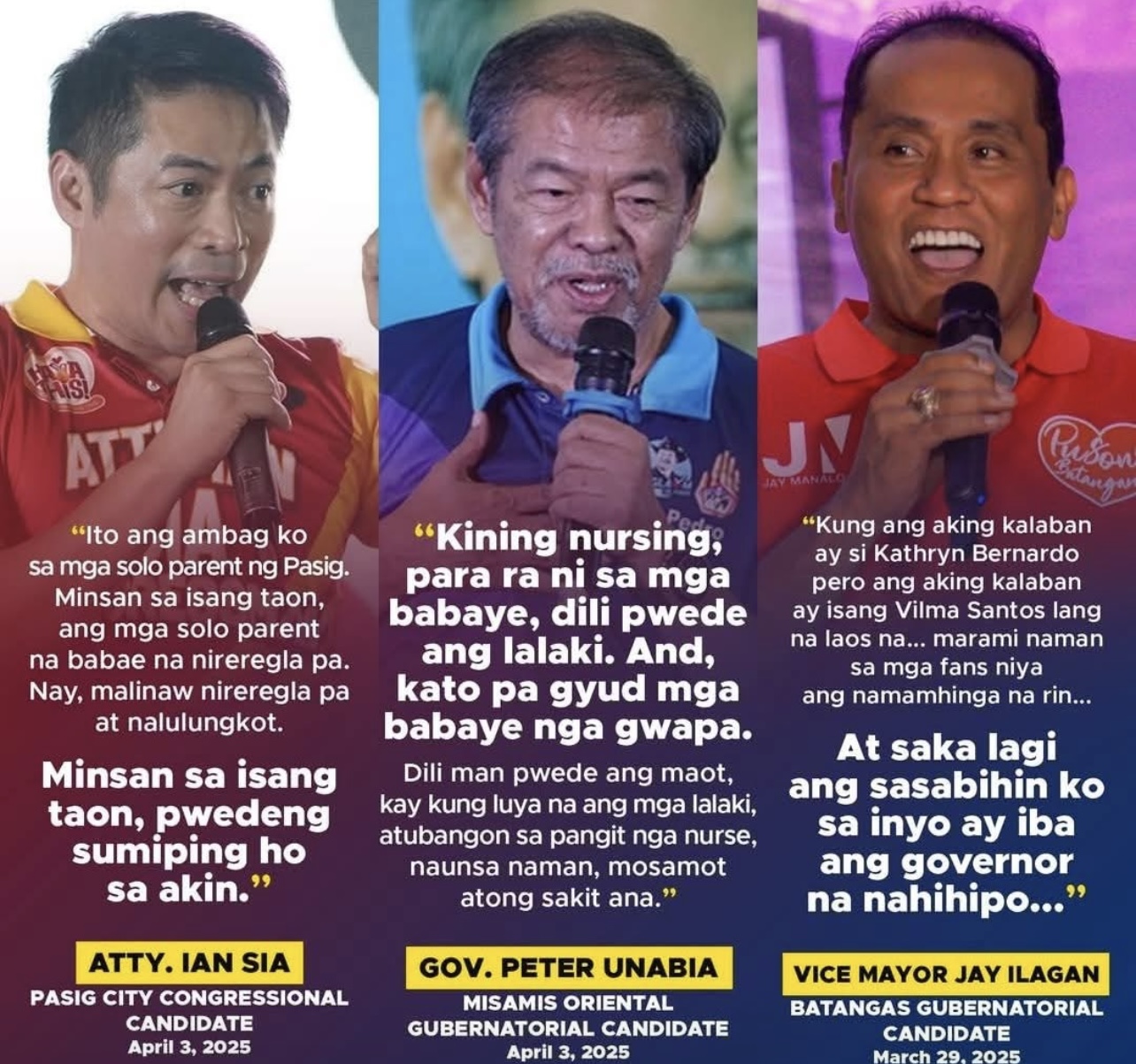
Fast forward to the current campaign, the pattern has only worsened. One candidate, already under fire, was issued a show cause order by the Commission on Elections (Comelec) after saying that single mothers who still menstruate could have sex with him once a year—a vile remark that trivializes both women’s reproductive health and their dignity. Just days later, the same candidate received a second order for body-shaming a former female staff member. In a twisted attempt to deny accusations of being a “maniac,” he called her onstage and insulted her body size, saying that someone like her wouldn’t be hired by a “maniac.”
Such language and behavior not only reveal a deeply ingrained misogyny, but also normalize the objectification and ridicule of women in the public sphere.
Unfortunately, he’s not alone. Another male candidate from the provinces was likewise called out for discriminatory remarks—this time about women in the nursing profession. In a translated statement, he claimed that only “beautiful women” should become nurses because “ugly” ones would worsen a sick man’s condition. He went further to claim that if his son lost in the election, their supporters would “wreak havoc” in the area. These statements earned him his own show cause order from the Comelec, citing violations related to discrimination, harassment, and incitement of violence. His defense? That he was taken out of context.
Another candidate showed disdain toward his female rival by calling her “laos”—an obsolete has-been—and said he wasn’t afraid of her. He went on to mention two younger female celebrities saying he would be scared if the two were to run against him in the elections.
His statements reduce women’s worth to their youth and appearance, not their qualifications or leadership abilities.
The Comelec has since reminded the public that gender-based harassment, bullying, and discriminatory behavior constitute election offenses. Comelec Chairman George Garcia emphasized that citizens, not just institutions, must play a role in demanding accountability by filing cases against violators instead of passively waiting for government action.
These incidents are not isolated lapses in judgment. They are symptomatic of a much deeper problem—a political culture that continues to tolerate, even enable, misogyny and gender discrimination. When those aspiring to public office belittle, sexualize, or mock women without fear of consequences, it sends a dangerous message: that sexism is acceptable as long as you have power.
This must change. The fight against gender discrimination is not just a women’s issue—it is a fight for a just, inclusive, and respectful society. Elections are a reflection of the values we uphold. If we allow misogynistic candidates to rise unchallenged, we reinforce the systemic barriers that continue to silence, marginalize, and endanger women in every sphere—especially in politics.
It is time to hold these candidates accountable—not just with show cause orders, but with votes, voices, and vigilance. Because when misogyny wins, democracy loses.
(ctto)
- Girl Power
- Human Rights
- Behind the Headlines
- Elections
- Global