
Molding positive social attitudes towards menstruation could help fight period stigma
May 20, 2025
story
Seeking
Visibility


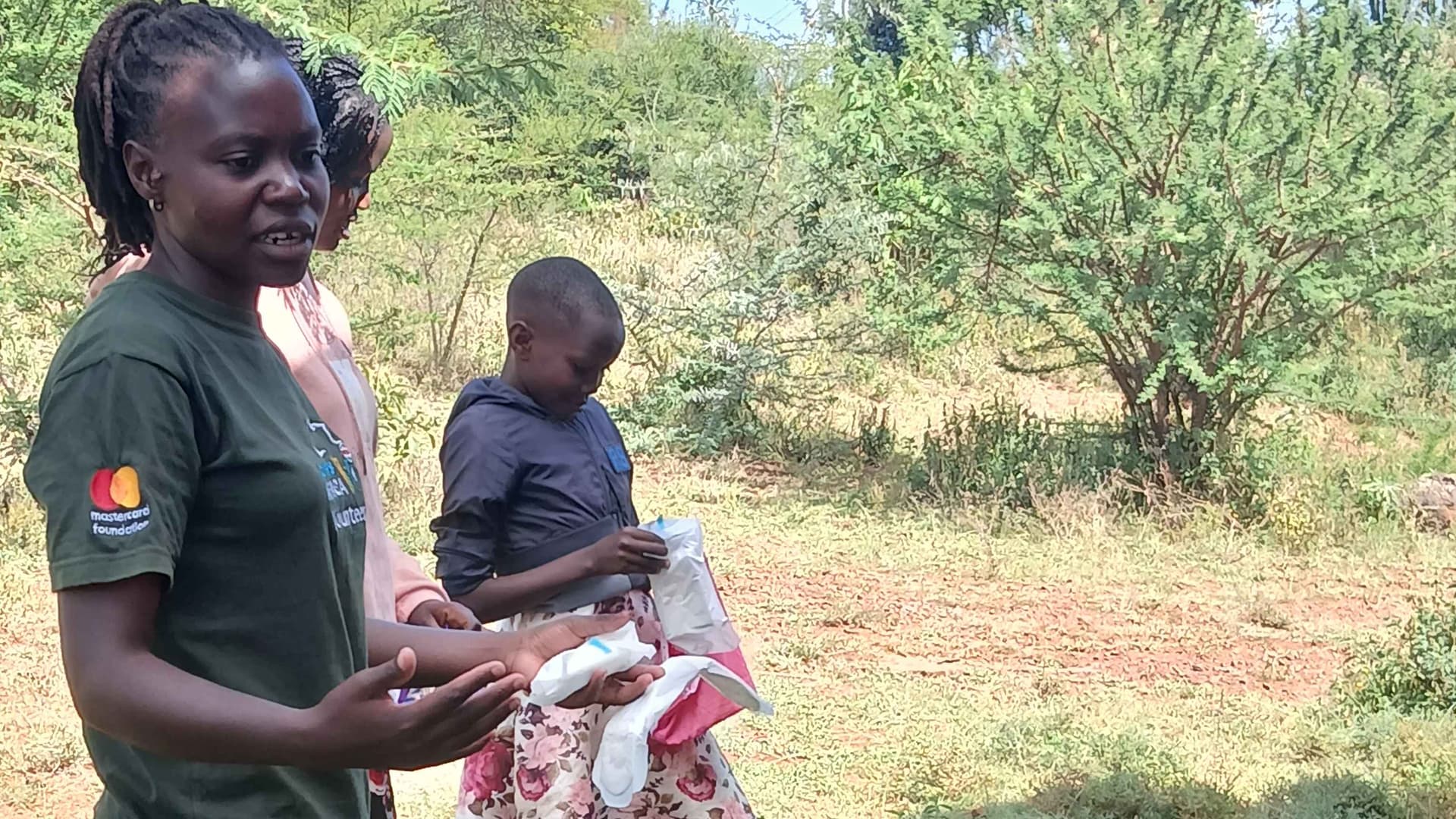
Photo Credit: Edna Chepkurui
Menstrual hygiene demonstration lesson
I don’t remember a time that I have gone to a shop, whether in a rural or urban setup, to buy sanitary towels, without it being wrapped. It doesn’t matter if I have a shopping bag or not but the towels have to always be wrapped in a paper or something to conceal it.
This scenario has been making me think about the social attitudes that are present around different life situations. Menstruation is definitely a personal and private matter but it is also a natural process, a health matter and something inevitable in the life of every female .
It is therefore beyond an individual and crosses the personal and private space to be communal. In the family set up, parents and guardians are supposed to be aware of their children’s growth and development milestones and be involved in helping them manage the processes that come with it. They are supposed to offer guidance and resources for them to be comfortable.
But looking at how menstruation is handled with secrecy and a degree of denial in some of our communities, girls have to handle the process on their own.
Reflecting on my own journey getting into teenage, I was only aware of menstruation from reading in books. That was definitely an advantage for me because I was aware that at a certain point of my life, I will experience the changes. But that was it, there was no further information about how to manage the process in terms of hygiene and health challenges that could come with it.
Looking back, I recall girls always missing school days often during our time in primary (elementary) school. At that time, I was not yet a teenager so it did not occur to me that menstruation could have been the reason why they would miss some school days. I started menstruation at the age of 15, so by that time, I was in high school. It made things a bit easier for me because there was more knowledge about handling the situation. However, as much as I had known about sanitary towels by this time , no one had demonstrated to me how to use them. I had to figure out and mess up a few times before getting it right.
Since everyone treated menstruation with silence and secrecy, it was difficult to ask for help or information. We had never discussed menstruation openly in class, at home or even casually with friends or older siblings.
Working with girls now, I realize that these norms end up being transferred from generations to the next. They become internalized and normalized. During our menstrual awareness workshops, it is evident how the girls and even young women in their 20s still find it hard to speak openly. Considering that our workshops are not attended by males, this become a matter of concern. Most
primary schools are mixed gender but the boys and girls are always separated during talks on matters touching on sexual and reproductive health . It is sad that even in the absence of males, the girls were very shy during the demonstration. We plan to have mixed gender awareness workshops in the future but the girls are still very skeptical about it and might decline attendance.
The idea of menstruation being private has evidently been used to perpetrate stigma in communities and families. Girls cannot openly ask for money to purchase sanitary towels. Parents on the other hand don’t buy the supplies for their daughters. This is one gap that allows for period poverty. A girl or young woman has to figure out where to get the money to buy the sanitary supplies even when they’re in school. Ultimately, most will either buy inadequate supplies or not buy at all if they don’t have money.
I recall that I used to spend my pocket money to buy sanitary towels because I wasn’t able to pick them from the shelves while shopping with my father. Unfortunately, he was the only one who used to take us for school shopping and so I would buy them separately using the money that was meant to sustain me in boarding school during the term. Still, I couldn’t discuss the matter with my mother because of all the secrecy that we were socialized with.
It is the 21st century and everything remains the same in most communities. Girls are still struggling with period poverty and stigma associated with menstruation. Many are silent about health issues like endometriosis, PCOS and other ailments associated with reproductive health.
They are suffering in silence since they can’t tall about it or the ailments are normalized. There are many girls and young women who believe that period pains are normal because they’re told so when they ask for help.
It is becoming important that we all mold positive behavior and attitudes around menstruation. We can start in our homes by making things like sanitary towels ‘normal’ just like other toiletries in the house. They should be placed where soap and tissue papers are in the bathroom areas .
Schools should have menstrual hygiene awareness for both boys and girls and make boys allies not speculators in the process. Father’s should make it normal to shop for sanitary towels for their female members of the families. This however, is becoming common in modern and younger families but a large section of the community especially in rural areas is still left out.
The next time you go to shop for sanitary towels, try to carry it in your hand without being wrapped and see what happens 😉 . I asked the girls why they all came with shopping bags during the workshops and they wondered what I expected. Stigma around menstruation is a lived experience which needs to be broken and stopped from continuing to future generations.
It starts with you and me to practice positivity around menstruation and spread it in our families and communities.
- Education
- Our Impact
- Becoming Me
- Stronger Together
- Sexual and Reproductive Rights
- Salud menstrual
- Africa