
My Abortion at 20 Weeks
May 5, 2022
story
Seeking
Collaboration
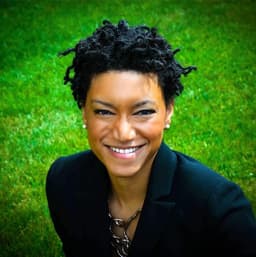
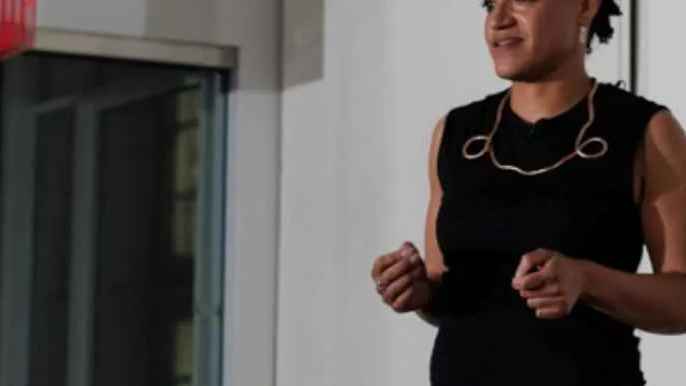
Photo Credit: Andreea Ballen
Sharing this story with the necklace in the shape of ovaries.
At the age of twelve, I could never imagine going through the process of having an abortion, but I also knew that it wasn't my place to tell a woman she couldn’t have one. Even at that age, my understanding of abortion was influenced by the way society shamed women for having one.
When I found out I was pregnant, in my last semester of grad school, I was committed to birthing my child. However, this was prior to the Affordable Care Act, and I didn't have consistent health care because I was no longer under my parent’s insurance. I didn't have a job yet, and I didn't have a place to live, so like many college students today, I moved back home to live with my parents.
In the end, it didn’t matter that I had a graduate degree, traveled the world and had a promising career ahead of me. As an unwed pregnant woman of color in America, with no direct means of providing for my child, the stigmatization of this reminded me that I didn’t have a problem, but that my existence was the problem. That coupled with the fact that applying for government assistance, would only add to the societal shame, stigma and challenge of providing basic needs for my child. However, that still would not have solved my need for proper health care in a country where more women die of pregnancy-related complications than in any other Global North country in the world, and these numbers increase for women of color. As Tocarra Mallard aptly wrote, “…there is no paid maternity leave, no universal subsidized child care, no continued birth parent care, and frequent inaccessibility to mental health care.”
To paraphrase Sister Joan Chittistler, “pro-birth” means wanting an abortion not to occur. In opposition to what we see in the United States, a “pro-life” movement forcing the survival of a fetus, but not the forced health, education, housing and financial support of that same fetus post birth. Deciding to not birth my child was most personal and hardest decision I ever made.
No individual wakes up thinking, “I want to have an abortion today.” We live in a world that teaches us to shame abortion and our bodies. For me personally, making this decision meant being wrecked with guilt, shame, depression, and even thoughts of suicide. The thought of not being able to provide for the financial health and physical well-being of my child made me feel powerless and utterly ill.
In hearing of the potential overturn of Roe v Wade by the U.S. Supreme Court, I can’t help but feel profound personal grief and the anguish of women across the country and the world. In addition to grief, I feel muted. That I had an abortion at 20 weeks that was not a result of physical rape, incest, or a health concern, almost seems like I shouldn’t share my grief without being shamed by others, or share the fact I had two abortions before my one at 20 weeks. And to speak it, brings dishonor, discrediting, and concerns of not feeling or being safe. But it does matter, because I was following my intuition, which was the best decision I could make at that time; and as a woman, following my intuition is the best decision I continue to make today and every day.
The past five years alone, women have been threatened to have decreased access to birth control and overall basic healthcare. My work in the world has been about how do we create a more consciously secure world. One where the feminine is centered. Where she is safe and protected. Where she is heard. That the systems of power and patriarchy in the world shift to create systems of equity centering the feminine. That is centering is so deeply rooted in my experience, and so many others of all genders, and our ancestral lineage, speaks to its truth. This ruling erodes that vision of women controlling their own bodies, having access to proper health care, having a right to privacy, and speaking their truth when they need to most.
Roe vs. Wade exists because it was proven to violate Jane Roe’s guarantee of personal liberty and the right to privacy implicitly guaranteed in several amendments including the First, Fourth, Fifth, Ninth, and Fourteenth. If a woman having a right to make decisions about her body doesn’t fit under privacy, then what does that mean for the larger conversation privacy in America where across the world there have seen sweeping privacy regulations to support privacy as a basic human right as in the European Union. What does it also say about the larger conversation of gender equality and equity where the respect for sexual and reproductive rights is essential?
This potential overturn of Roe v. Wade is a loss of women’s access to legal and safe health care and fundamental human rights. In 2013, a UN Special Rapporteur on Torture quantified denying women access to abortion as torture, stating it is an abuse of global human rights. I am thankful I had the option for a safe and legal abortion at 20 weeks, nearly 20 years ago, and I have no regrets. All women should feel empowered to make the best decision for themselves and their families. I am writing this and sharing my truth for all genders who stand impacted by this ruling and for all those in need of safe reproductive health care.
And I understand that reading these words can breach peoples own personal sensitivities. I understand someone may feel offended by my story. Someone may not like me if they know me, and some may not know me, but may be proud of me. I am sharing these words to inform because reproductive rights are health care rights, health care rights are women’s rights, and women’s rights are human rights.
Jessica Robinson is the Executive Officer of PurePoint International and Board Chair of World Pulse.
- Economic Power
- Leadership
- Peace & Security
- Girl Power
- Arts & Culture
- Gender-based Violence
- Our Abortion Stories
- Global